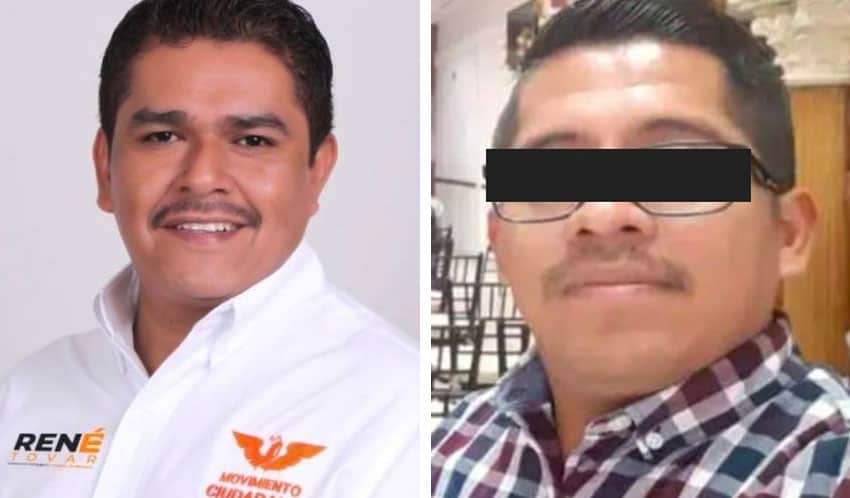
The mayor-elect of Cazones de Herrera, Veracruz, has been arrested for planning the murder of his party’s original candidate for the June 6 elections.
The man, identified only as Omar “N,” was campaign manager for Citizens Movement candidate René Tovar, who was shot and killed on June 4 when he resisted abduction from his home. One other person was wounded in the attack.
Tovar was posthumously elected two days later with his name still on the ballot, and Omar “N” was set to assume the role in his absence.
The state Attorney General’s Office believed that contradictions in the suspect’s police statements were grounds to pursue prosecution.
President López Obrador confirmed the connection between the victim and the accused at his morning news conference. “We are in the process of finding out whether one of the candidates in Veracruz — one of the possible people involved according to the investigations — was his campaign manager,” he said on Wednesday.
“We don’t want those horrors,” he added.
The electoral season for the June 6 vote was the most violent on record. Risk analysis firm Etellekt, which tracks election campaign violence, reported that there were 1,066 acts of aggression against politicians and candidates between September 7, 2020 and June 6, a 38% increase compared to the 2017–2018 electoral season, when a total of 774 such incidents were recorded.

One-hundred and two of the incidents were homicides; 36 of the victims were aspiring candidates.
Veracruz was the most dangerous place to run for office by some distance, where 152 acts of aggression were recorded. The second most dangerous was Puebla, with a considerably lower count of 100 such incidents.
The governor of Veracruz had attempted to maintain pre-election peace just before the killing, with the deployment of more than 5,000 security forces throughout the state.