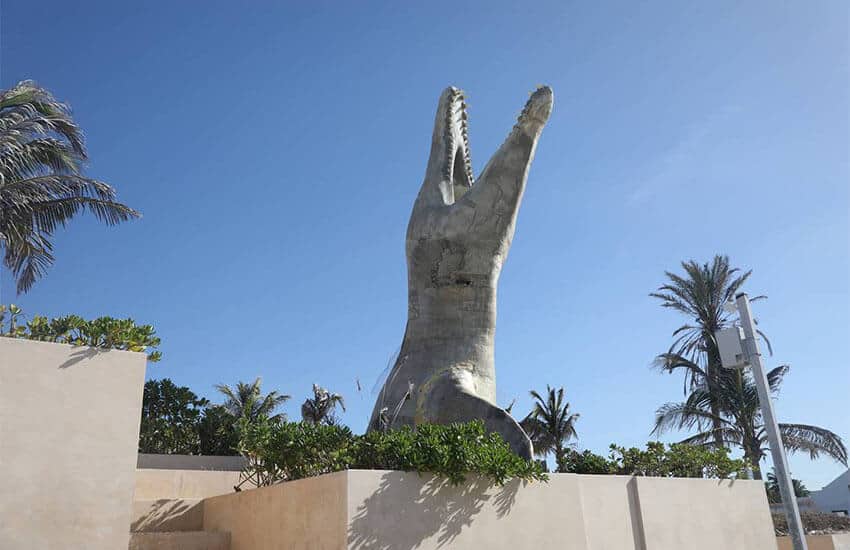
Meteorite Museum opens in Progreso, Yucatán

Sixty-six million years ago, a meteorite hit the earth where today the northwest edge of the Yucatán peninsula sits. Now a new museum has opened to pay homage to this and other meteorite events throughout history.

El Museo del Meteorito, or The Meteorite Museum, opened Tuesday in the port town of Progreso, Yucatán.

The museum, a project coordinated between the local and federal government, saw more than 1,000 local, national and foreign visitors streaming through its doors on Tuesday.

Adults and children followed interactive displays throughout the facility that tell the story of Yucatán’s Chicxulub meteorite — whose effects scientists believe wiped out 75% of all plants and animals on Earth, including the dinosaurs. The museum also explains the history of the planet as scientists understand it.
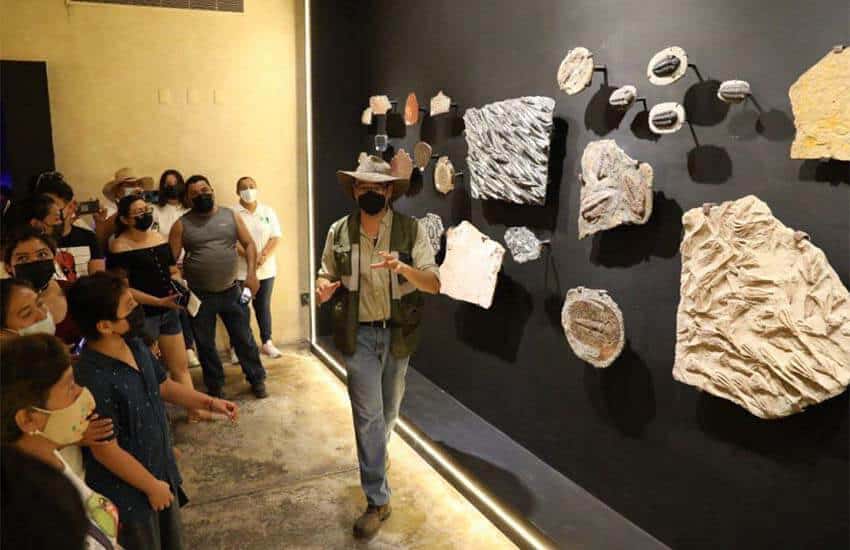
Meteorite museum in Progreso, Yucatan
The museum’s opening attracted crowds.

Replicas of some of the world’s greatest dinosaurs are on display throughout the building and its outdoor garden areas, as are real pieces of meteorites that guests can handle.

There are also video-mapping displays, tablets for visitors who want to design their own dinosaur and other interactive technologies to teach the public about Earth’s four major extinctions, life during the Cretaceous period, and the impact of the Chicxulub meteor on the Yucatán and elsewhere.

The museum is an attempt to foment more cultural tourism in a city that is better well-known for its port access for cruise ships, its beaches, and the Chichén Itzá ruins.

Joining the meteor party is the Chicxulub Crater Museum (Museo del Cráter de Chicxulub), an exhibit housed on two floors of Progreso’s Biblioteca del Parque Científico y Tecnológico de Yucatán, or The Library of the Science and Technology Park of Yucatán.

The Chicxulub Crater Museum exhibit is coordinated by the National Autonomous University (UNAM), which spent various years putting together an extensive display on this important extinction event with rooms dedicated to teaching about the history of life, biodiversity, evolution, massive extinctions and more.

With reports from La Jornada and Yucatan.com

Have something to say? Paid Subscribers get all access to make & read comments.
Manzanillo, Colima, México, 13 de marzo de 2026. La doctora Claudia Sheinbaum Pardo, presidenta Constitucional de los Estados Unidos Mexicanos en conferencia de prensa matutina, “Conferencia del Pueblo” desde Colima. La acompañan Indira Vizcaíno Silva, gobernadora Constitucional del Estado de Colima; Omar García Harfuch, secretario de Seguridad y Protección Ciudadana (SSPC); Raymundo Pedro Morales Ángeles, secretario de Marina (Semar); Bulmaro Juárez Pérez, divulgador de lenguas originarias, presentador de la sección “Suave Patria”; Ricardo Trevilla Trejo, secretario de la Defensa Nacional (Sedena); Jesús Antonio Esteva Medina, secretario de Infraestructura, Comunicaciones y Transportes; Bryant Alejandro García Ramírez, fiscal general del Estado de Colima; Fabián Ricardo Gómez Calcáneo; Rocío Bárcena Molina, subsecretaria de Desarrollo Democrático, Participación Social y Asuntos Religiosos de la Secretaría de Gobernación; Efraín Morales López, director general de la Comisión Nacional del Agua (Conagua); Marcela Figueroa Franco, secretaria ejecutiva del Sistema Nacional de Seguridad Pública (SESNSP) y Guillermo Briseño Lobera, comandante de la Guardia Nacional (GN). Foto: Saúl López / Presidencia

Mexico’s week in review: Congress deals Sheinbaum her first legislative defeat

0
The week of March 9 in Mexico was marked by standoffs between allies in Congress and adversaries at the airport. Here's what you missed.
A soldier displays seized handguns

The US and Mexico, growing together and growing apart: A perspective from our CEO

0
From a historic drop in homicides to opposite bets on electric vehicles, Mexico News Daily's CEO breaks down where the U.S. and Mexico are converging — and where they're not.
Veracruz Gov.

Veracruz governor blames private vessel for 200-kilometer Gulf Coast oil spill

1
The spill, which has spread to over 200 kilometers of Mexico's Gulf Coast beaches, has been traced to a private oil tanker off the coast of Tabasco.
BETA Version - Powered by Perplexity