Air passenger traffic slowed down in Mexico in January and February compared to the same period last year, but some outlying positive numbers, most notably in Durango, bucked the overall trend.
The Federal Civil Aviation Agency (AFAC) reports that the combined total of passengers carried by domestic and international airlines operating in Mexico in the first two months of this year reached a 1.5% year-over-year increase, while the increase registered in January-February 2025 was more than twice as high at 3.5%.
Even though the number of passengers was actually slightly higher this year than last, the deceleration qualifies the sector’s two-month performance as a slowdown.
The same slowing trend prevailed in other flight categories. For example, domestic operations went up by just 1.1% (to 9.6 million), a clear drop from the 3.9% increase recorded in 2025.
Between January and February, international flights by domestic Mexican airlines carried 2.9 million passengers, representing a 3.5% increase. That pales in comparison to last year’s 6.9%.
International airlines operating in Mexico were the one bright exception. The 7.7 million passengers served represented a 1.3% increase over 2025 — not huge by any means but considerably higher than the 0.6% increase in January-February of last year over 2024.
February numbers were lower than January’s this year, perhaps owing to the outbreak of violence after the death of cartel leader Nemesio “El Mencho,” Oseguerar on Feb. 22. The effect of the flurry of flight cancellations that took place in that period will be reflected in the March data.

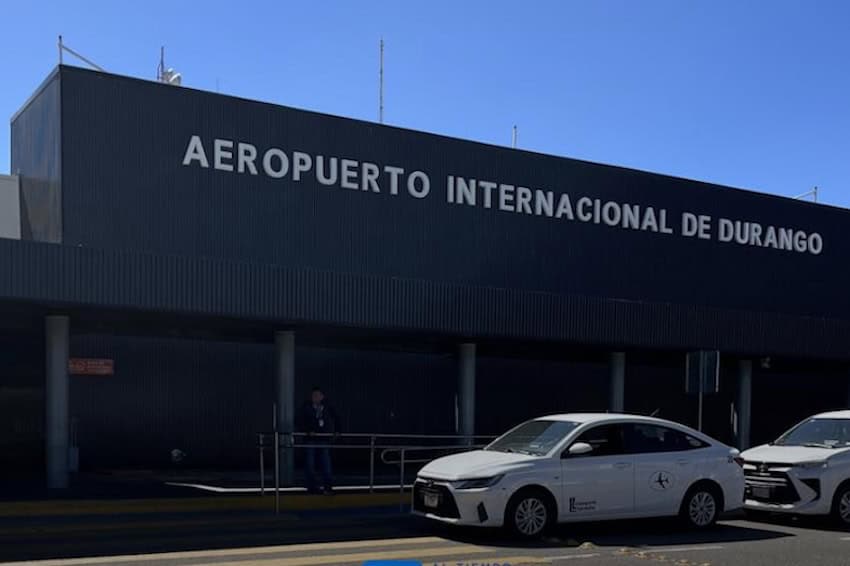
Durango International Airport (DGO) was one of several individual airports that bucked the downward trend with some positive numbers. It reported an extraordinary 18% growth in its January-February passenger figures, handling 95,000 passengers.
According to DGO’s office, the airport handled 570,000 travelers last year; at its current rate, DGO will double its traffic year over year.
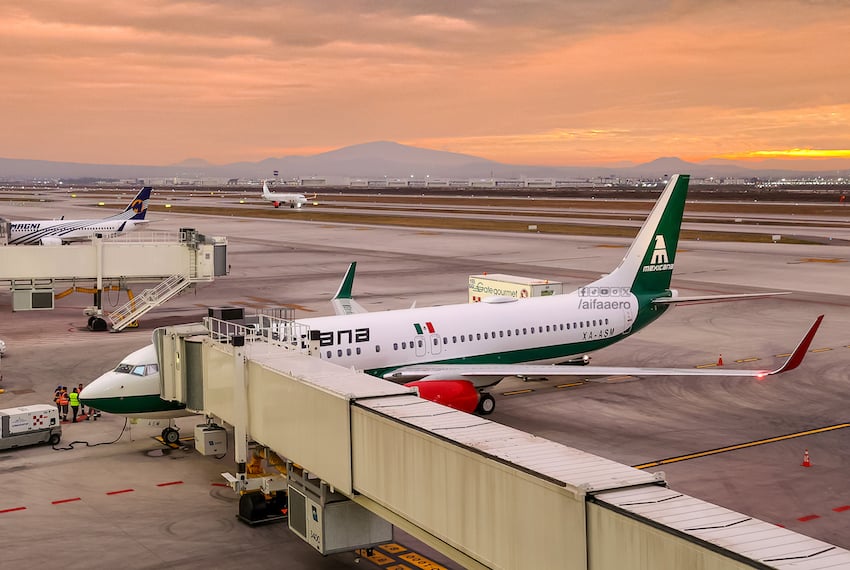
Meanwhile, Felipe Ángeles International Airport (AIFA) near Mexico City continues its consolidation process. Four years after its inauguration, the airport has handled more than 18.3 million passengers — growing from 913,000 travelers in its opening year of 2022 to over 7 million in 2025.
With 41 domestic and 5 international destinations currently on offer, AIFA is aimed at expanding its route network: state-owned Mexicana de Aviación announced today that it will add a direct connection to Acapulco in June 2026 and Hermosillo in July, with at least three further destinations in the pipeline and 15 new aircraft set to join the fleet this year. Despite this momentum, the airport’s traffic figures trail well behind those of Mexico City International Airport (AICM), which, with annual passenger traffic of approximately 45 million, remains the dominant hub in the region.
With reports from El Economista, La Jornada and El Sol de Durango