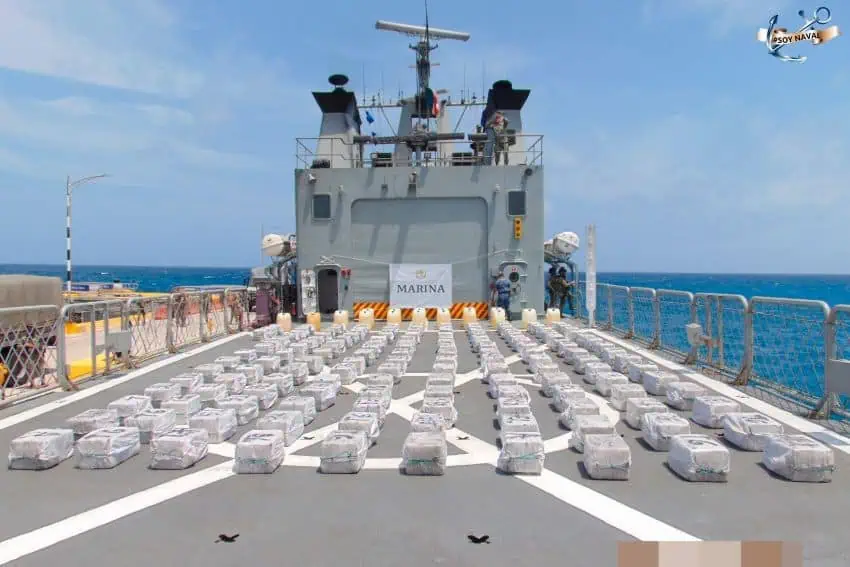
The Mexican Navy’s narcotics interdiction exercises continue to bear fruit: On Tuesday, the Navy Ministry (SEMAR) announced a drug bust involving more than 3 tonnes of white powder believed to be cocaine, from a boat in waters off the coast of the state of Quintana Roo.
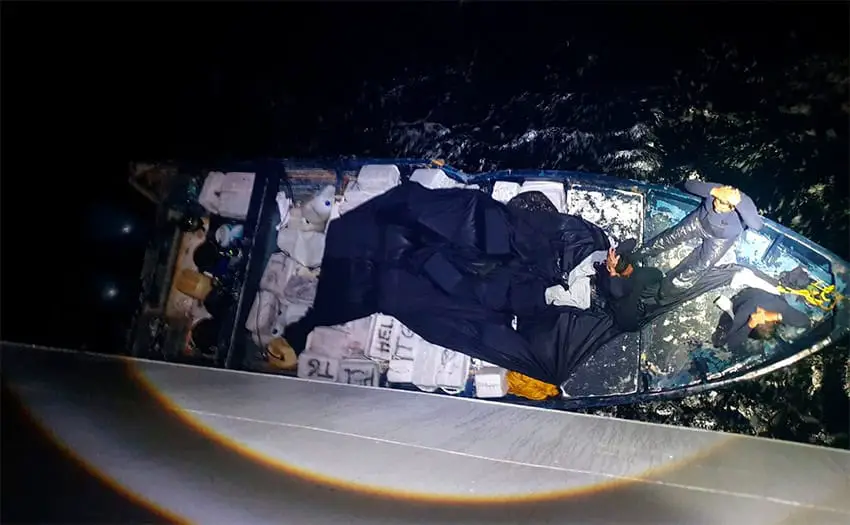
A SEMAR press bulletin indicated that personnel from the Ninth Naval Region and 17th Naval Zone stationed at the Caribbean bases of Isla Mujeres and Chetumal, respectively, were carrying out patrols when they sighted a suspicious vessel.
With Navy aircraft providing support, Navy personnel boarded the suspicious craft and searched its contents. A total of 153 rectangular packages of white powder — weighing in excess of 3 tonnes — was discovered.
In addition, the inspection netted an unspecified amount of a material identified as hydrocarbon hidden in 18 drums. Oil and gas theft — known in Mexico as huachicoleo — is a frequent crime in Mexico.
Three suspects were apprehended and processed in preparation for turning them over to federal authorities for prosecution.
This latest bust follows an April 24 SEMAR announcement that its personnel had confiscated 3 tonnes of presumed cocaine off the Pacific Coast near the port city of Manzanillo, Colima. On April 10, the Mexican Navy shared news of two separate operations in which a total of 2 tonnes of white powder was seized off the Pacific Coast.
SEMAR set a new record for drug seizures last year, with historic amounts of several different types of illegal drugs reported seized. The Navy also dismantled 15 floating storage platforms used by cartels to move their narcotics north through the Pacific Ocean.

A December 2023 report by the news site Infobae identified the Caribbean as a key corridor for South American cocaine suppliers sending shipments to Mexican distributors.
In addition to shipping the cocaine to hidden ports along the Mexican coast, traffickers fly the product onto the mainland via clandestine air strips in Quintana Roo. SEMAR and the U.S. Drug Enforcement Administration (DEA) identified at least three popular air routes utilized by the Sinaloa Cartel and the Jalisco New Generation Cartel (CJNG) to fly cocaine from Colombia.
With reports from Infobae