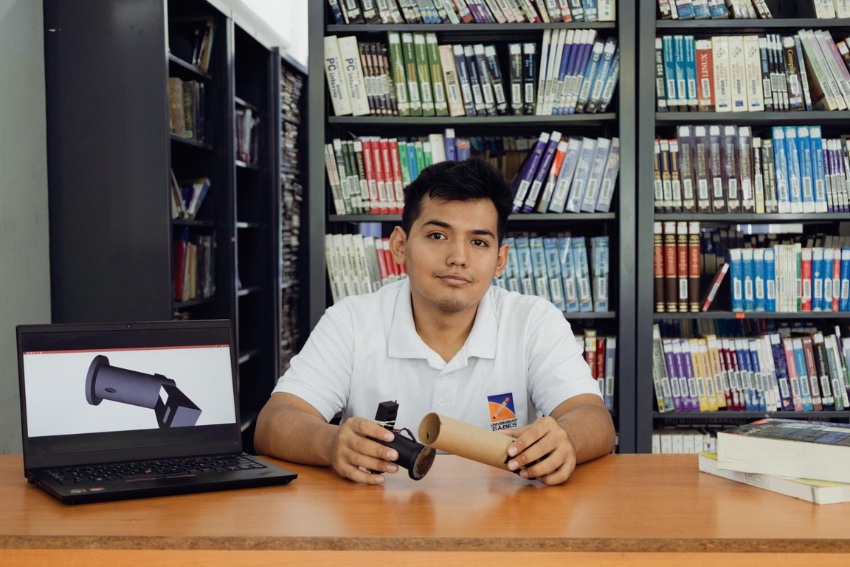
Mexican student Alejandro Aguilar, enrolled at SABES Celaya University in central Guanajuato, won the 2025 James Dyson National Award with his OpticalApp project, an innovative application that can diagnose ocular diseases from a smartphone.
Designed for users with no medical background, OpticalApp uses artificial intelligence to analyze eye photographs and detect up to 28 diseases of the retina in under 30 seconds.
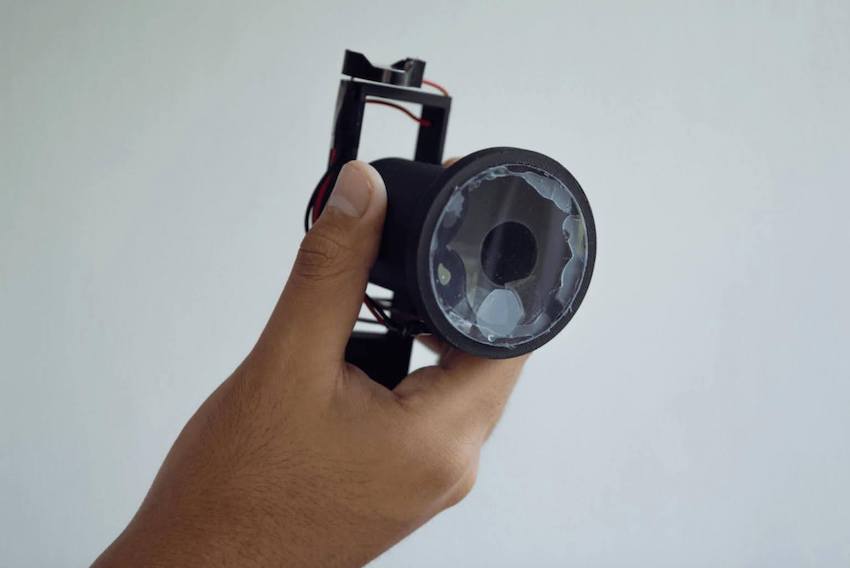
The app includes accessibility features such as an audio assistant and support for multiple languages, along with detailed explanations of symptoms. The system is paired with a low-cost, easy-to-manufacture adapter for capturing retinal fundus images, providing a more affordable alternative to professional medical instruments.
Aguilar was one of the 28 national winners selected from a pool of 2,100 entries. He came up with the idea after discovering a lack of high-technology models of mobile eye screening.
“The project began after discovering many publicly available datasets, but noticing a lack of accessible, fine-tuned models for mobile screening,” Aguilar said. “This gap sparked the idea that I could contribute something meaningful.”
According to INEGI, 45.8% of people with a visual disability in Mexico report difficulty seeing even with glasses, and experts say that in 80% of cases, blindness could be prevented with timely diagnosis.
With input from his mother, who has work experience in visual exams, Aguilar said he got a better understanding of the problem. However, he initially thought of developing an app for testicular diagnosis.

“Initially, the app aimed to support self-examination for testicular problems, but due to a lack of datasets, I pivoted to retinal diagnostics – another area that felt personal, as I’ve experienced floaters myself,” Aguilar said.
Aguilar used several AI tools to create the app, including Google Colab and ChatGPT, which he used as a coding assistant.

Mexican student Hector Hernández won a James Dyson National Award last year for his invention of the Signal Glove, a wearable translation device that helps deaf individuals who use Mexican Sign Language communicate with people who do not know it.
Two other Mexican inventions were runners-up in this year’s competition, including Rho, a menstrual garment for women experiencing poverty, and Lifecore, a transportation system for heart transplants.
Aguilar’s biggest challenge, he said, was “aligning the phone’s light to the pupil without blinding the subject,” he explained. “In future iterations, I plan to design a more stable, integrated structure with a stronger lens and better light control.”
Founded in 2002 by the James Dyson Foundation – part of the appliance company Dyson – international has supported more than 400 engineering inventions with global resources and visibility.
With this award, Aguilar has received financial support of 126,000 pesos (US $6,845) to continue the development of OpticalApp. The top 20 finalists will be announced on Oct. 15.
With reports from Emprendedor