A science project developed by two Mexican high-school students from Sonora has won the People’s Choice Award at the Stockholm Junior Water Prize after thousands of voters from around the world recognized it as their favorite water innovation.
Developed by Carlos Iván Erquizio Salazar, 17, and Fernando de Silva Hernández, 16, the “Shrimply the Best” project aims to increase shrimp production, ensure food security and decrease pollution by recycling 95% of the wastewater used in the cultivation process.
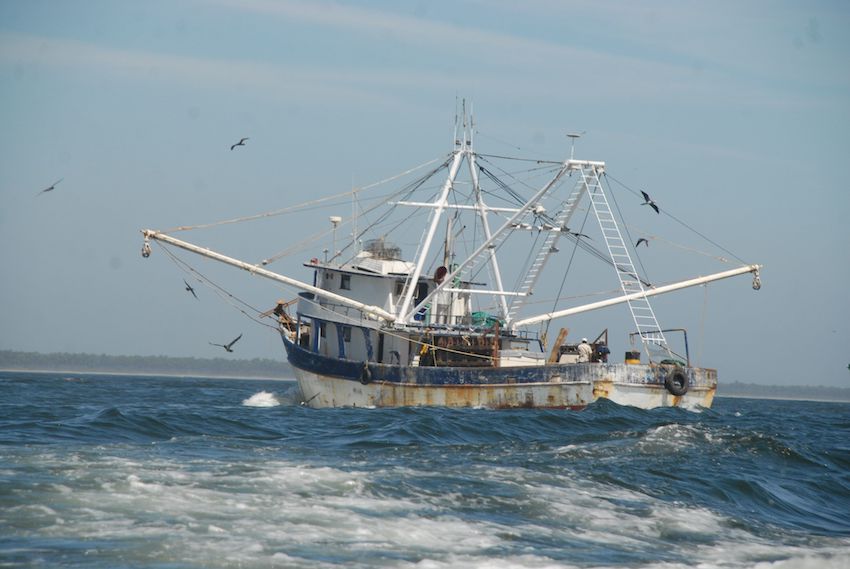
In an interview with Mexico News Daily, the pair revealed that inspiration for the project came after a school trip to Kino Bay, Sonora, where they found out that the rapid expansion of the shrimp industry in the region had led to adverse environmental consequences for the Gulf of California.
“In the trip to Kino Bay,” Carlos explained, “we were surprised to learn that to catch 1 kg of shrimp in open fishing, 10 kg or more of other species gets filtered in the catch and is later thrown into the ocean, polluting it and destroying the environment.”
Their research led them to recommend sustainable aquaculture techniques to carefully breed, select and process shrimp for catch.
“It was a process of identifying ‘the problem of the problem,’” Fernando said.
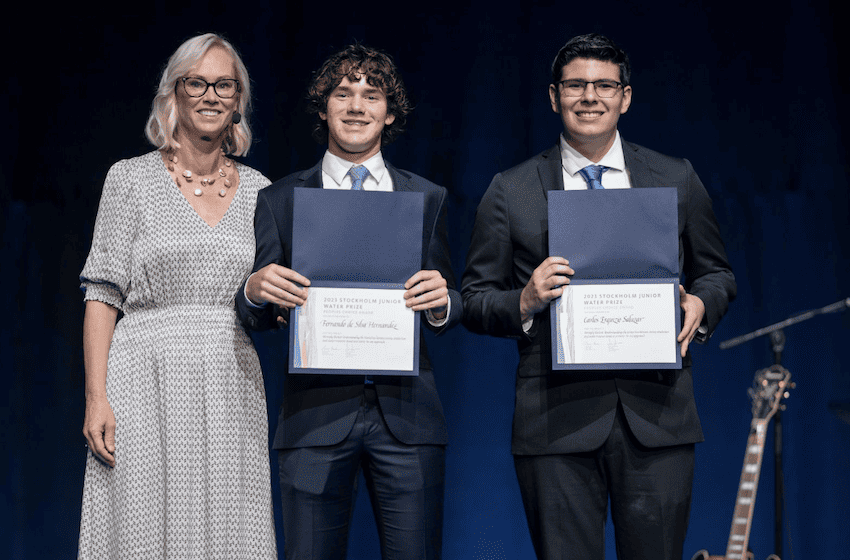
Before the project won recognition in Stockholm, it had previously won Mexico’s most important National Youth Water Award organized by the Autonomous University of Mexico (UNAM), paving the way to Stockholm.

“It is wonderful to have been able to represent our country in the manner that Fernando and I did,” Carlos said. “I would’ve never imagined this. I feel very grateful for all the support that we received along this journey.”
“It’s an honor to have been able to represent our country in problems of such relevance,” Fernando added.
According to the pair, the next step will be to bring the government, scientists, academics and shrimp producers together to implement their project. They will also be working on a project demonstration with UNAM.
This is not the first Mexican youth science project to win awards this year. In April, a group of teenage girls from Mazatlán, Sinaloa, won gold at the International Festival of Engineering Science and Technology in Tunisia (I-FEST²) for their demonstration of how to convert leftover shrimp waste into plastic substitutes.
With reports by Infobae