Mexico managed to avoid international sanctions for not taking more significant action to protect the vaquita marina porpoise in the northern Gulf of California.
In March, the federal government announced a new strategy to protect the vaquita after scientists announced that only 10 remained. But as critics feared, the strategy seems to have fallen short.
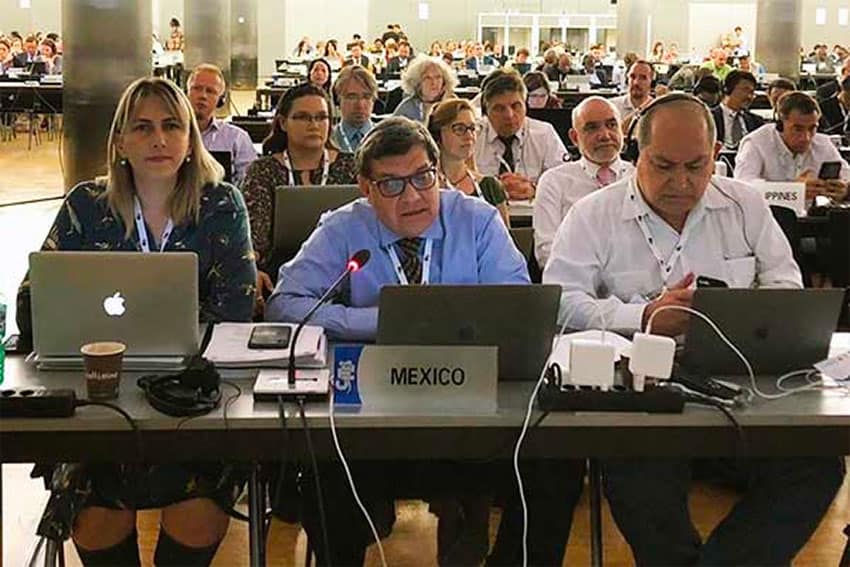
However, after negotiations with the United States, China and Liberia in Geneva, Switzerland, the Mexican government was able to ease the measures of an ultimatum set by the secretary-general of the Convention on International Trade in Endangered Species (CITES).
Head of the federal environmental protection agency (Profepa), Blanca Mendoza Vera, promised the 183 member countries that her office would turn in reports every six months detailing the efforts taken to protect the vaquita and the totoaba, which is also endangered.
In exchange, the document was modified to exclude the warning that the export of Mexican species on the CITES list will be suspended if it continues uncontrolled poaching in the vaquita’s habitat. Such products include shark fins, bighorn sheep hunting trophies and mahogany wood.
The change in the text, however, does not mean that Mexico no longer runs the risk of commercial sanctions from the international community. It will have to show improvement in its efforts by next year’s meeting.
Mendoza had previously offered the assembly a report of Mexico’s actions in the region which were primarily the results of actions carried out by the previous government.

Mendoza also lamented the difficulties in prosecuting totoaba poachers. She noted that from January until July, 249 people had been brought before the federal prosecutor’s office for poaching, but only 33 were punished.
The totoaba is highly prized in China for its swim bladder, making it pound-for-pound more expensive than cocaine.
Source: Excélsior (sp)