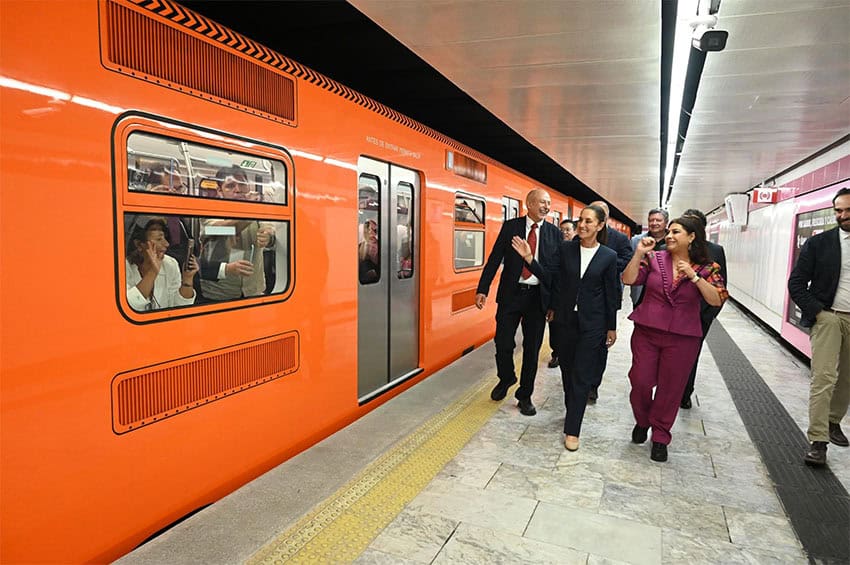
Four stations on Line 1 of the Mexico City Metro system that serve popular neighborhoods of the capital such as Roma and Condesa reopened on Wednesday, more than a year after they were closed for renovation.
Metro users can now access the following stations:
- Cuauhtémoc (providing access to the Roma Norte and Juárez neighborhoods)
- Insurgentes (Roma Norte and Juárez, including the Zona Rosa)
- Sevilla (Roma Norte and Juárez)
- Chapultepec (Condesa and Chapultepec Park)
The four stations closed in November 2023 as a company commissioned by the city government carried out a major upgrade of Line 1 of the Mexico City Metro, the system’s oldest and busiest line.
The project as a whole — including upgrades to tracks, stations and communications systems — began in July 2022, but still hasn’t been completed.
Three stations on the 20-station line — Juanacatlán, Tacubaya and Observatorio — remain closed. They are scheduled to reopen later this year. The Mexico City-Toluca train line will terminate at Observatorio once it is complete.
As things stand, Line 1 — known as la linea rosa or the pink line — is open between Pantitlán, a station in eastern Mexico City, and Chapultepec. New trains designed and built by the Chinese company CRRC Zhuzhou Locomotive are now running on the line.
Los trenes NM22 que circulan en #LaNuevaLínea1 están diseñados ergonómicamente para la población mexicana. Cuentan con asientos reservados para personas con movilidad reducida, y las cabinas de las y los conductores son más amplias, lo que permite una mejor visión de la vía y el… pic.twitter.com/Zp5epYJcX4
— MetroCDMX (@MetroCDMX) April 24, 2025

A Mexican subsidiary of that company won a 37-billion-peso (US $1.9 billion) contract to carry out the Line 1 upgrade and other ongoing work over a period of 19 years.
‘It’s as if a new metro line was built’
President Claudia Sheinbaum and Mexico City Mayor Clara Brugada attended a ceremony at Chapultepec Station on Wednesday to celebrate the reopening of the four modernized stations.
“It’s as if a new metro line was built,” said Sheinbaum, who noted that the Line 1 tunnel, through which trains run, was checked to ensure that it is structurally sound. The line opened in 1969, just two years after construction began.
Sheinbaum — mayor of Mexico City when the upgrade of Line 1 began — noted that the entire project was initially slated for completion in just one year.
However, she said the challenge was bigger than originally anticipated, and asserted that the completion of the project in “less than three years is a world record.”
Metro users spoke glowingly about the results in a video posted to social media by the Metro system.
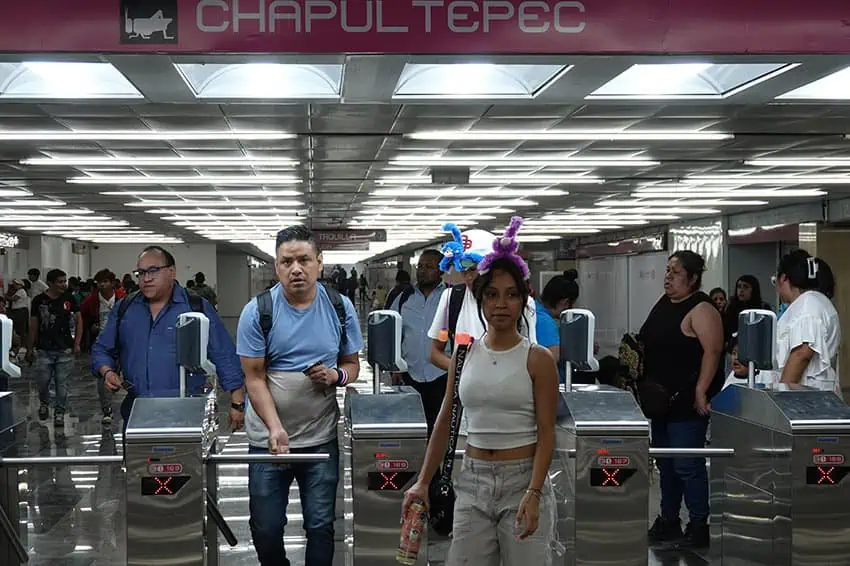
“The truth is it turned out very well. [The station] is now a bit brighter,” one passenger said.
In a post to social media, Brugada described the Mexico City Metro as “the heart of our city.”
“We will continue working for accessible and sustainable transport for the well-being of everyone,” the mayor wrote.
With regard to the Cuauhtémoc-Chapultepec section of Line 1, Brugada said that “all the systems were updated 100%: new tracks, new automatic steering, a new electrical system and new trains.”
“[Line 1 is] a completely new line that will benefit close to 500,000 people per day, with 17 stations already in operation,” she said.
“… Thanks to the leadership of our dear president @Claudiashein, today we have a faster, safer and more modern line,” Brugada said.
With reports from El Financiero and La Jornada