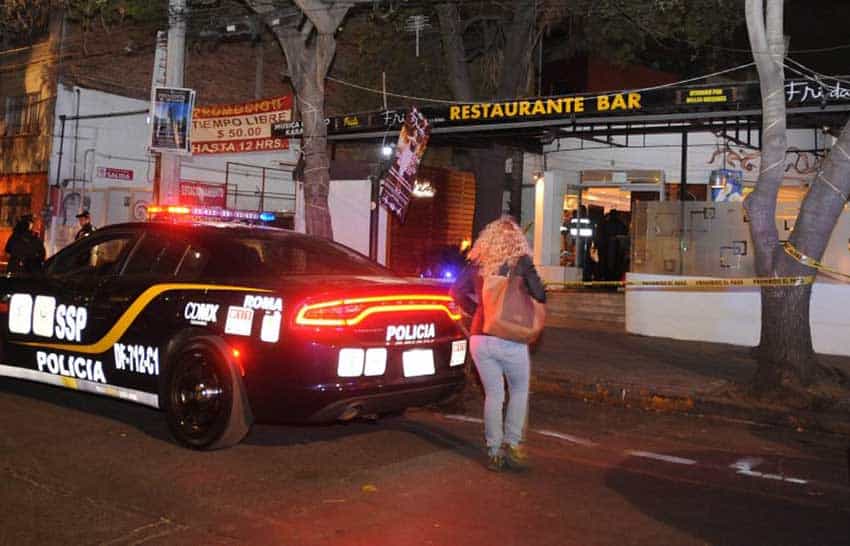
The Mexico City Attorney General’s office has identified the city’s six most dangerous neighborhoods, based on criminal investigations in 2018.
The historic city center, Doctores, Del Valle Centro, Roma Norte, Narvarte and Buena Vista led the city in homicides, extortion and theft according to the 255,313 investigations opened last year.
The government database Datos Abiertos indicated that a high percentage of the city’s criminal activity was concentrated in the those neighborhoods, from high-impact murders to the crime with the highest incidence — cell phone theft, followed by robbery of pedestrians and public transportation passengers.
On average, 7,000 cases were opened every 30 days in the six areas, and criminals were most active in the months of May, August, October and December.
Insecurity was compounded by impunity in the identified neighborhoods: the previous city administration prosecuted suspects in just 0.1% of 24,000 cases filed.
The database lists another statistic: 10,145 criminal acts went unregistered, either because the victim withdrew the complaint or was unwilling to file a police report.
Homicide statistics reveal that an average of 3.1 people were murdered every day during the last six months of 2018.

Source: El Universal (sp)