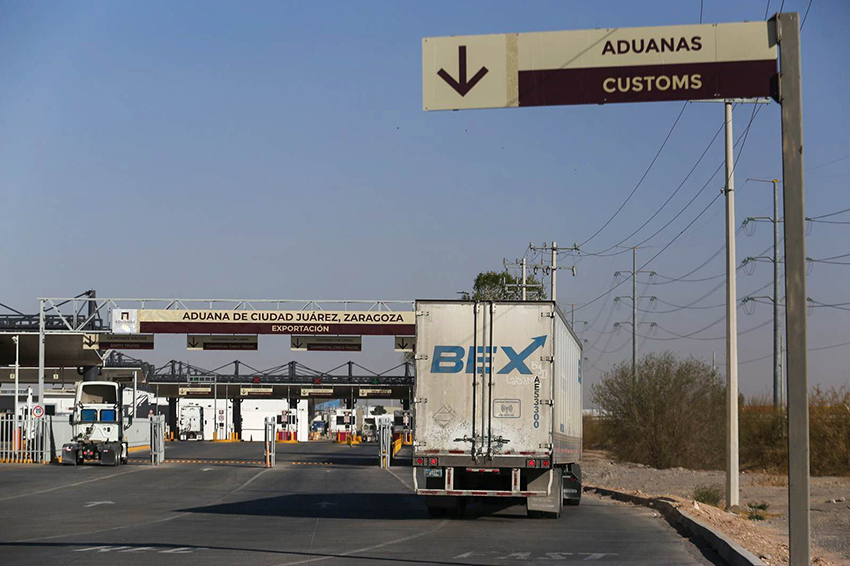
The Mexican government anticipates that it will collect an additional 3.49 billion pesos (US $190.2 million) in revenue in 2026 due to the modernization of information and control systems in customs, an initiative that also seeks to reduce the entry of contraband and tax evasion at Mexico’s land and sea ports.
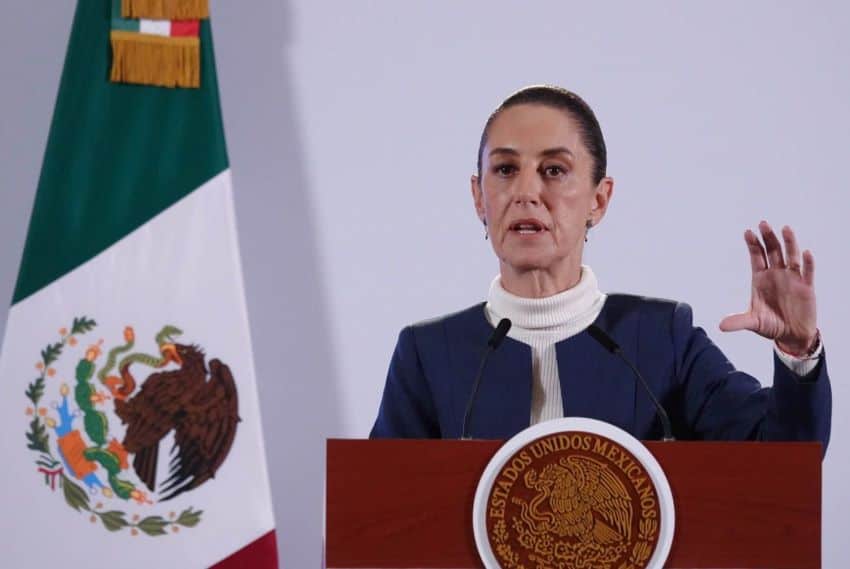
The plan to increase tax collection through the upgrade of customs systems was outlined in the government’s proposed 2026 budget. It is also part of a proposed reform to the Customs Law that was submitted to Congress by President Claudia Sheinbaum last week.
According to a report by the news website Expansión, the last time the government received additional revenue due to the modernization of customs systems was in 2007. From 2008 onwards, “the amount remained at zero,” Expansión wrote.
The additional revenue that is projected to be collected due to the modernization of customs systems exceeds the proposed 2026 budget of the National Customs Agency of Mexico (ANAM), which is slated to get 3.46 billion pesos next year.
Around 30% of Mexico’s tax revenue comes from import and export duties and other payments collected by customs. The Finance Ministry projects that the government will receive 5.83 trillion pesos (US $317.4 billion) from tax collection in 2026.
In the first half of 2025, Mexico’s customs offices collected almost 712 billion pesos (US $38.8 billion), with the office in Nuevo Laredo, Tamaulipas, taking in the most revenue in the period.
Modernization of customs systems aims to stop crime and promote ‘more efficient foreign trade’
In budget documents, the Finance Ministry (SHCP) said that cutting-edge technology will be used to detect and prevent criminal activity, including tax evasion, at points of entry to Mexico — i.e. land ports along the country’s borders with the United States, Guatemala and Belize, and sea ports on the Pacific and Gulf coasts.

To prevent tax evasion, corruption and other forms of criminal activity, customs will make use of tools such as artificial intelligence, biometric devices and non-intrusive inspection technology, as well as risk management systems, real time video surveillance systems and tracking systems that monitor the movement of goods.
Criminal activity at land and sea ports includes the entry of contraband such as narcotics, firearms and chemical precursors used to make synthetic drugs including fentanyl and methamphetamine. The new technology could also help customs in the fight against the avoidance of paying the IEPS excise tax on imports of fuel, a practice known as “huachicol fiscal” — fiscal fuel theft, or tax-robbed fuel.
Writing in the El Economista newspaper, the director of the consultancy firm Inteligencia Más, Jimena Ortiz, said that “the bet” of the federal government is that with the use of new technological tools, “the state will be able to detect irregularities” at customs “with greater precision and reduce dependence on manual processes that are subject to discretion.”
The upgrade of customs systems will also facilitate smoother trade flows, according to the SHCP.
“In 2026 we will achieve the comprehensive modernization of customs operations, which will make the flow of goods and people more agile, significantly reducing waiting times and optimizing clearance processes,” the ministry said.
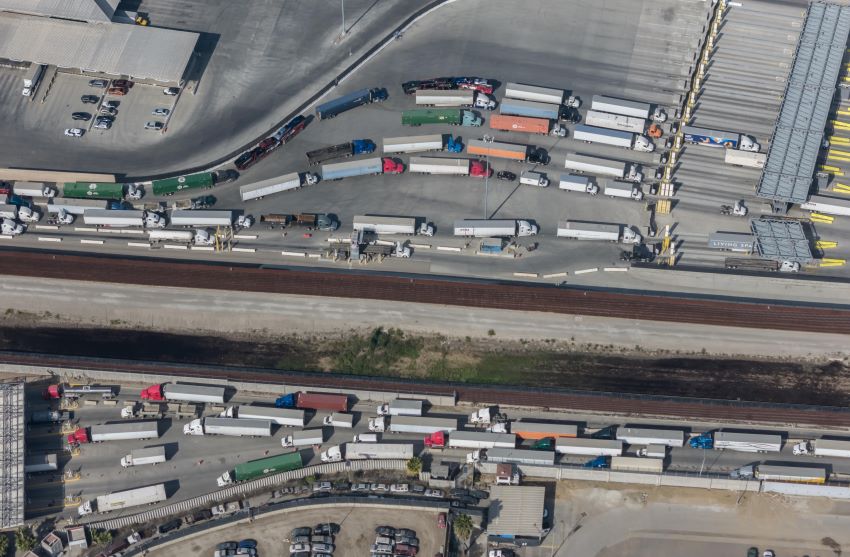
The SHCP said that the implementation of state-of-the-art technology in customs will also improve service and control at points of entry, promoting “more transparent and efficient foreign trade, which will contribute to an increase in tax collection and the economic growth of the country.”
According to Expansión, the proposal to reform Mexico’s Customs Law also seeks to “harmonize the responsibilities” of federal tax agency SAT and ANAM, “completely digitalize” operations in customs and allow technological collaboration agreements between ANAM and the federal government’s Digital Transformation and Telecommunications Agency.
The reform proposal also seeks to allow the imposition of more severe sanctions on people, including customs agents and brokers, who are found to have committed customs violations. Its passage through Congress is virtually assured given the dominance of the ruling Morena party and its allies in both the upper and lower houses.
The New York-based international law firm White & Case said that “the pending 2025 Customs Law reform, presented as part of the 2026 Economic Package, is widely viewed as the most significant” customs update in Mexico since 1995.
Will new technology really stop criminal activity at Mexico’s ports?
Alejo Campos, regional director for Latin America for the organization Crime Stoppers, told Expansión that investment in technology is not enough to stop the entry of contraband to Mexico and the evasion of customs duties.
“El Salvador is an example of how to reduce illegal trade to almost zero, but that is achieved when criminal structures [within customs] are broken up and a system that tolerates corruption doesn’t exist,” Campos said.
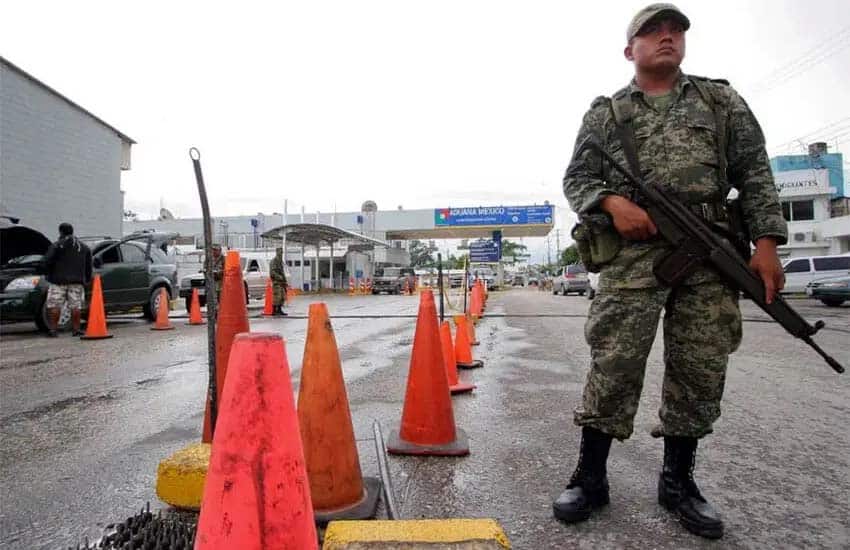
He said that “the human factor” continues to be crucial, even when an investment is made in artificial intelligence, scanners and real-time alert systems.
“The problem is who receives the alert. If the official is colluding [with criminals] or threatened, he won’t act. There are cases in which [customs] employees aren’t corrupt, but are being extorted and they fear for their life or the lives of their family. That paralyzes action,” Campos said.
In 2020, former president Andrés Manuel López Obrador gave the military administrative control of customs and ports as part of efforts to eliminate corruption at ports of entry. But large quantities of contraband have continued to enter the country.
One current case that points to military personnel not being as squeaky-clean as AMLO might have hoped is that involving the seizure of a petroleum tanker at the port of Tampico, Tamaulipas, in May. The tanker was carrying diesel on which a special import tax was due, but the cargo was declared to customs as a petrochemical exempt from the tax.
Earlier this month, authorities announced the arrest of 14 people in connection with the case. Among those detained were customs employees, businessmen and six members of the military, including a vice admiral.
With reports from Expansión and El Economista