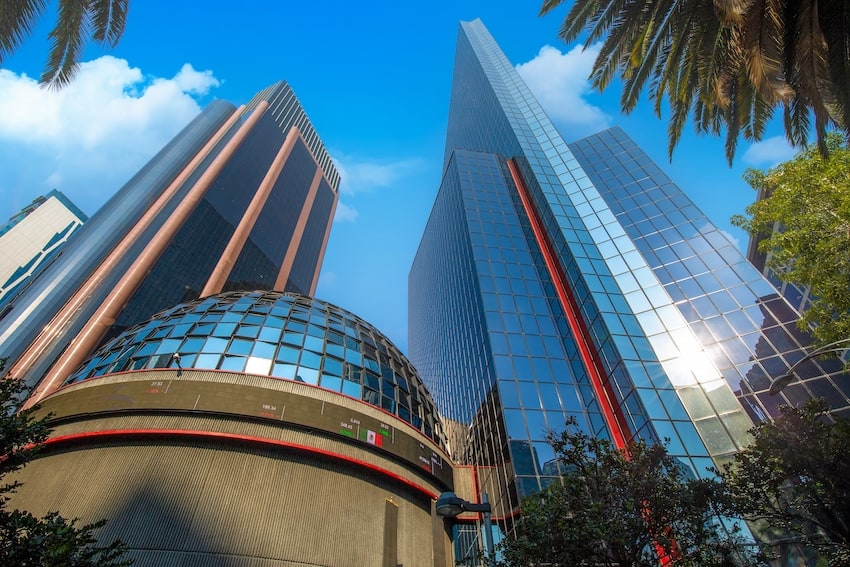
Mexico’s economy has exceeded analysts’ expectations for Q1 2023, accelerating its GDP growth to around 1.1% compared to last quarter, and showing 3.8% annual growth over the same period last year according to preliminary data.
The strong performance in the first quarter of 2023 comes on the back of six consecutive quarters of growth, as the economy recovers from the COVID-19 pandemic.
According to the National Institute of Statistics and Geography (INEGI), Q1 quarter over quarter growth was led by a 1.5% increase in the service economy. This counteracted a 0.7% decrease in the industrial sector, and a 3.2% decrease in the primary sector, which includes agriculture, fishing and mining.
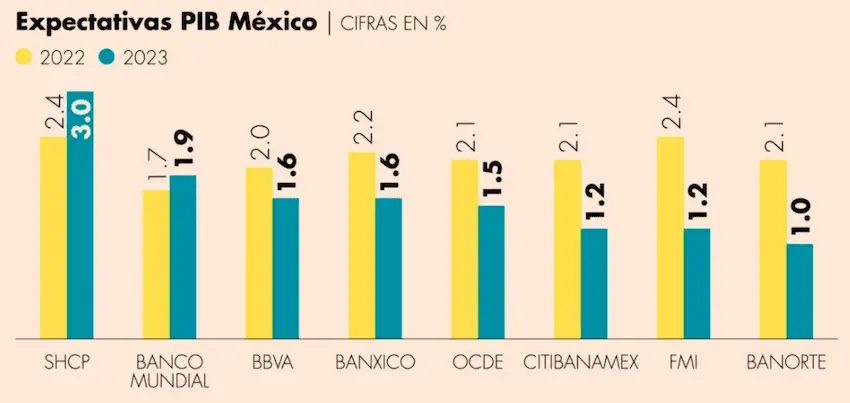
Mexico’s economy has repeatedly exceeded expectations over the last two years. It grew 3.1% in 2022 — less than President López Obrador’s prediction of 5% but well over the 2.2% projected by the Bank of Mexico (Banxico) early in the year.
The growth was even more surprising against a backdrop of record-high interest rates, applied by the central bank in an attempt to control high inflation.
Indeed, the British magazine The Economist ranked Mexico sixth on a list of “2022’s Unlikely Winners”, an accolade boasted of repeatedly by López Obrador.
Even so, many believed the gains were unlikely to continue, as growth stagnated at 0.5% in Q4 2022. Financial analysts such as Fitch Ratings and the UN Economic Commission for Latin America and the Caribbean lowered their 2023 growth predictions for Mexico at the end of last year – to 1.1% and 1.4%, respectively.

Fitch warned that continued high inflation could start to erode consumption, compounding economic problems caused by low capital investment in Mexico, the end of the Covid recovery period and the global economic impact of the war in Ukraine.
Although the figures for Q1 2023 appear more positive than predicted, the director of analysis at Banco Base, Gabriela Siller, again cautioned that Mexico’s current growth pattern is unsustainable in the long term.
Siller argued that the apparent strength of the Mexican economy is due largely to government support and remittances from abroad, which primarily boost consumption.
However, gross fixed investment in machinery or other assets to increase production has fallen since 2019, limiting possibilities for long-term growth.
“The proportion of GDP that represents gross fixed investment has fallen, and what has gained proportion is consumption,” Siller said. “This is not sustainable in the long run because it snowballs public finances, which depend on economic growth.”
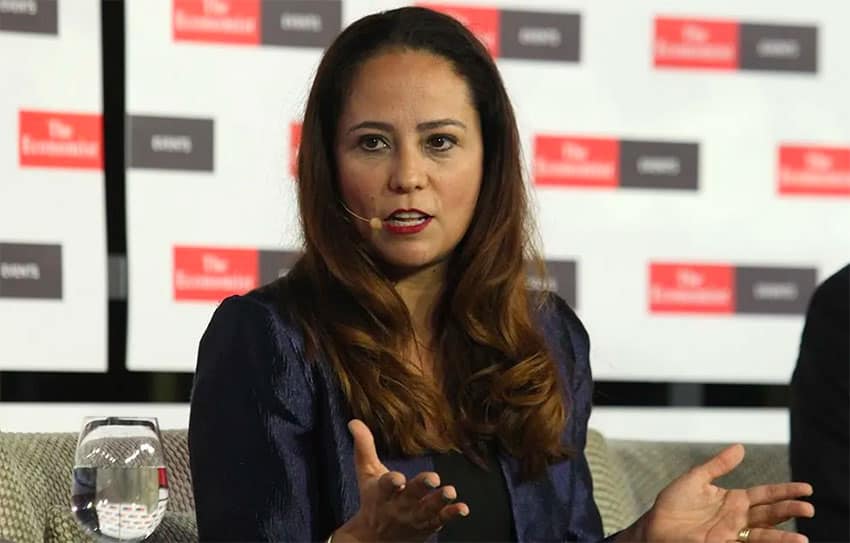
Although Siller said that “nearshoring” —the process by which U.S. companies have relocated Asian operations to Mexico — had been positive for the Mexican economy, she argued that some of López Obrador’s policies have weakened Mexico’s institutional framework and decreased business confidence.
In light of these factors, Banco Base predicted growth of 1.9% for Mexico at the end of 2023 – a considerable slowdown from the 3.1% seen last year.