Mexico’s economy avoided a recession in 2025 as gross domestic product (GDP) rebounded in the final quarter thanks to growth in trade and stronger performances in the industrial and manufacturing sector.
GDP grew by 0.7% in 2025, according to preliminary data released by the national statistics agency INEGI.
Unquestionably, the biggest contributor to Mexico’s limited success was exports.
During the year, shipments of goods abroad exceeded US $664.8 billion, a 7.6% increase compared to 2024. Despite the multitude of tariffs imposed by Trump, more than 83% of these exports went to the U.S. market.
Analysts cited by the newspaper El País agree that the performance of exports and the private sector’s residential construction were the driving forces behind Mexico’s economic growth in 2025, despite a collapse in public investment “due to the significant spending cuts implemented by the Sheinbaum administration to reduce the fiscal deficit.”
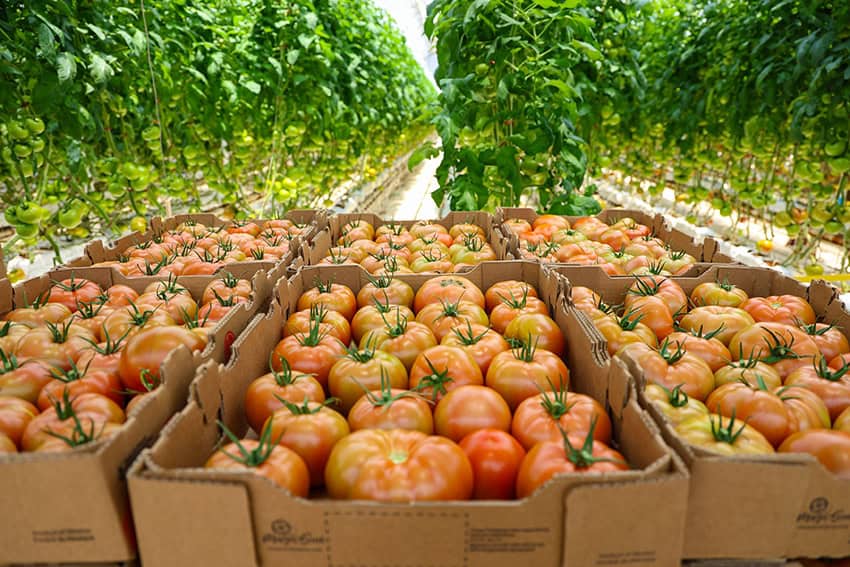
Bloomberg News reported that the growth can also be attributed to the strong performance of the agricultural sector, which rose 0.6% in the fourth quarter compared to the same period of the previous year. Industry and manufacturing grew just 0.3%, while the services sector accelerated to 2% year-on-year.

Defying the Trump tariffs
In a year marked by U.S. trade aggression, the record-breaking performance of exports prevented Mexico’s GDP from dipping into recession. Even so, the preliminary data represents the slowest growth since 2020 when COVID-19 seriously disrupted economies across the globe.
Last year’s GDP growth was lower than in 2024, when the Mexican economy registered a 1.2% increase. It also marked a fourth consecutive decline since a 5% rebound in 2021 as the economy recovered from the pandemic.
Paradoxically, even though U.S. tariffs further clouded the outlook for Mexico as soon as U.S. President Donald Trump took office in January 2025, Latin America’s No. 2 economy enjoyed strong exports.
Additionally, the strong performance of primary and secondary activities overcame a sluggish third quarter, when the economy contracted by 0.3% quarter-on-quarter.
Mexico’s economic growth accelerated in the fourth quarter of 2025. From October to December, the Mexican economy grew by 0.8% compared to the previous quarter. And compared to the same quarter of 2024, the Mexican economy grew by 1.4%.
What went right and what went wrong
Alfredo Coutiño, director for Latin America at Moody’s Analytics, said that in addition to the strong exports, cash transfers from the Sheinbaum administration and the increase in the minimum wage helped keep the Mexican economy afloat.
“Furthermore, the easing of U.S. tariffs and [Mexico’s] efforts to comply with [US-Mexico-Canada trade agreement] rules reduced the impact of tariffs and protected the trade balance, preventing the economy from falling into negative territory,” he said, adding, however, that Mexico’s overall economic performance was “mediocre” in 2025.
2025 🇲🇽
PIB 0.7%
Consumo (hasta Oct) 0.58%
Inversión fija (hasta Oct) -7.1%
Exportaciones 7.6%— Gabriela Siller Pagaza (@GabySillerP) January 30, 2026
Gabriela Siller, director of analysis at Banco Base, told El País that the rise in informality has also pushed Mexico into an economic stagnation trap exacerbated by a decline in fixed investment, the drop in productivity and the weakening of its institutions.
Coutiño also described a “chronic anemia” in productive investment in Mexico, as well as a climate of uncertainty surrounding constitutional reforms, which discouraged private investment.
Marco Oviedo, Latin America strategist for XP Investments, concurred, saying the controversial judicial reform remains an issue of concern.
“Investment stalled after the reform was announced, and this is evident both in the number of employers, which has been declining, and in the informal sector, which continues to grow,” he said.
The outlook for 2026 seems more promising, however.
Oviedo says the first six months of 2026 could see manufacturing and construction as driving forces, reflected in both investment and private consumption in anticipation of the FIFA World Cup for which Mexico will serve as co-host.
With reports from El País, La Jornada and El Economista