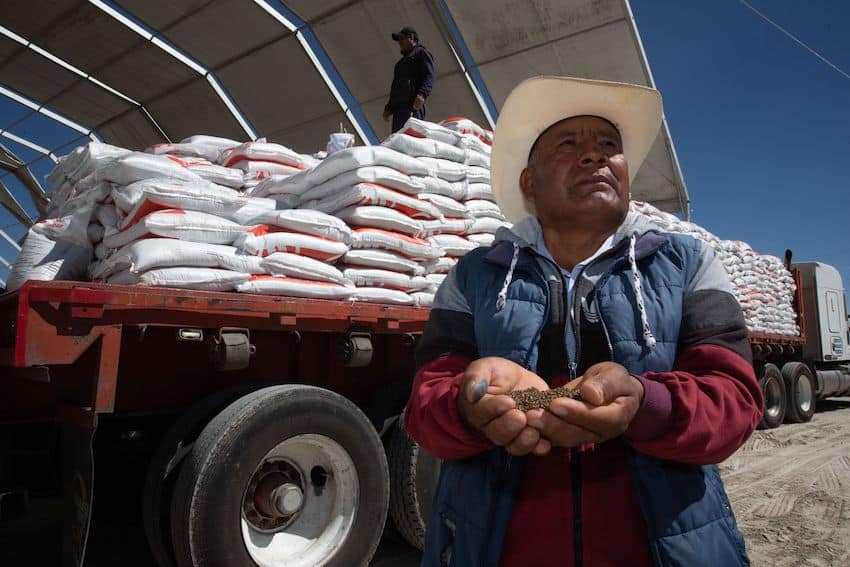
Farmers across Mexico are demanding the government raise the guaranteed minimum price of grain, arguing that falling prices are threatening their livelihoods.
Representatives met on Friday with Interior Minister Adán Augusto López to request a guaranteed price of 7,000 pesos (US $390) per ton of corn, and 8,000 pesos (US $445) per ton of wheat.
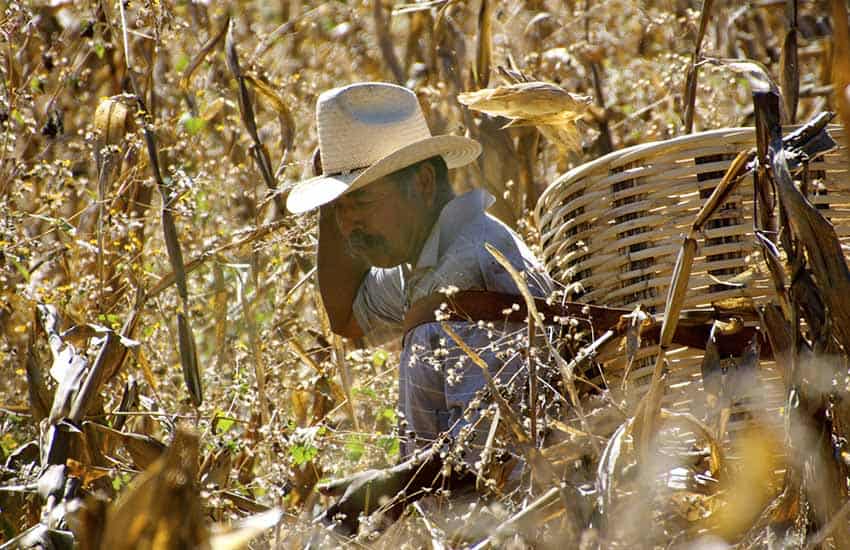
“We’re not expecting big responses because we don’t see the will of the president or officials to address this serious problem,” Heraclio Rodríguez, a farmer from Chihuahua, told the newspaper El Sol de México.
“They think that because we harvest 500 tons of corn, we’re rich, but no, we are very indebted.”
The farmer said that if an agreement was not reached, farmers would return to demonstrations and consider blockading ports, offices and bridges.
Grain producers from the northern states of Sinaloa, Sonora and Baja California have already spent much of May protesting in support of higher prices, including blockading three Pemex plants in Sinaloa, the offices of the Agriculture and Rural Development Ministry in Sonora and the Puente Colorado Bridge in Baja California.
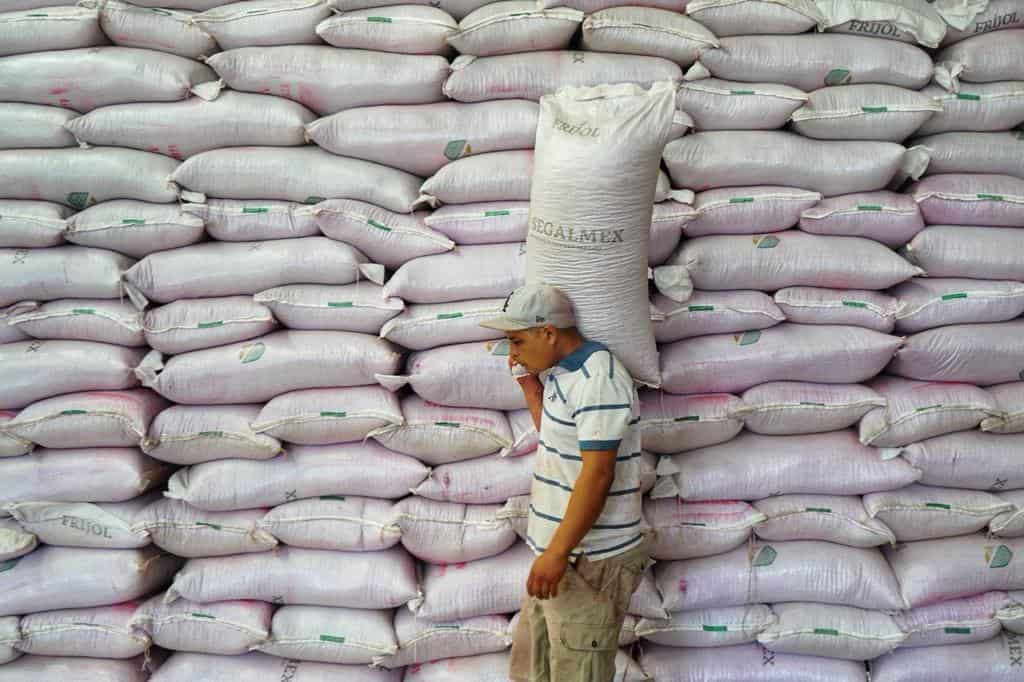
The government food security program Segalmex currently guarantees prices of 6,805 pesos (US $380) per ton of corn and 7,480 pesos (US $415) per ton of wheat but only to small farmers with no more than five hectares of seasonal crops.

In early May, the Rural Development and Conservation Commission recommended the minimum price be raised, in line with farmers’ demands, to protect their investments against the volatility of grain prices.
A new Segalmex program was launched in May to buy a million tons of white corn directly from farmers in Sinaloa at 6,965 pesos (US $390) per ton, but the scheme is open only to those with 10 hectares or less of crops.
Global grain prices have dropped more than 50% over the last 18 months — from an all-time high in March 2022 — largely thanks to a deal allowing grain to be exported from Ukrainian ports on the Black Sea. Although the deal was crucial for global food security, these large fluctuations have undermined farmers’ ability to plan their finances.
Analysts have warned that the current market price for grain in Mexico will leave many farmers unable to recoup their investment in this year’s production. This would have a severe impact on an industry that contributes around 166 billion pesos (US $9.24 billion) a year to the Mexican economy.
It could also potentially threaten next year’s production.

“It’s something we can’t stand for,” Marte Nicolás Vega Román, president of the Confederation of Agricultural Associations of Sinaloa State (CAADES) told El Economista newspaper, warning that many farmers are now relying on credit to bring in their harvest.
“We producers would go totally bankrupt, and a domino effect would be generated.”
The problem is particularly acute in Sinaloa state — Mexico’s largest corn producer, where agriculture makes up 11.9% of the economy. Also hard hit is Sonora, which produces more than 50% of Mexico’s wheat.
But analysts warn the grain crisis could have ripple effects throughout the Mexican economy — undermining food sovereignty, lowering demand for other goods and accelerating food price inflation.
“If the corn producers of this region go bust, next year we’ll see kilos of tortillas at 40 or 45 pesos in Mexico City,” food price analyst Samuel Sarmiento Gámez told El Economista newspaper.
That would be about double the current average national price per kilo for tortillas, currently selling for around 22 pesos, according to the Economy Ministry.
Sarmiento recalled that last year, grain producers responded to a plea from the federal government to raise production to counter inflation.
“The problem is that now, the federal government is stepping aside,” he said.
With reports from El Economista, El Sol de México and La Jornada