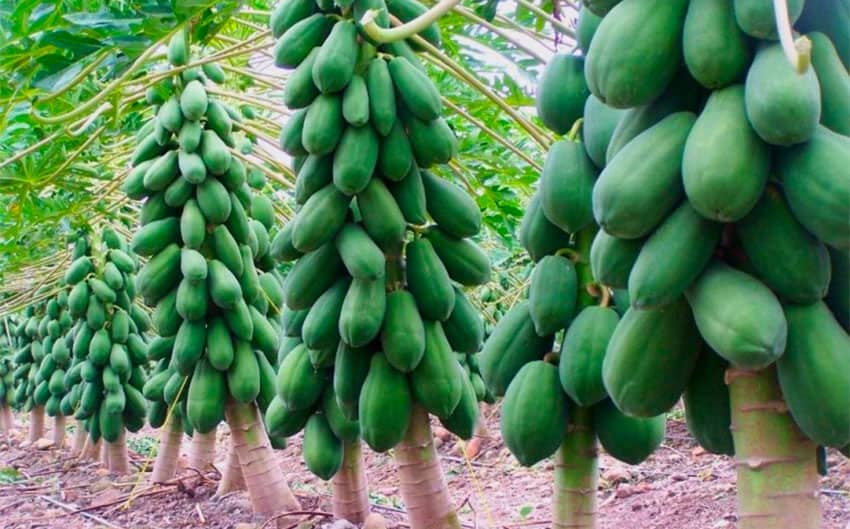
Mexico is now the world’s biggest exporter of papaya and sits in third place in terms of volume produced, which grew 3.2% last year.
The country has 44.7% of the global export market, followed by Guatemala and Brazil, and became the third biggest producer in 2019, and is now growing 7.6% of the world’s total.
Growing international demand has driven the rate of export, which brought in more than US $86 million last year from the United States alone.
Based on figures from the Agriculture Ministry, last year’s yield showed 3.2% growth, to 1,118,000 tonnes. Papaya production averaged 984,000 tonnes between 2015 and 2019, with an average annual growth rate of 5.2%.
The area designated for papaya production in 2019 was 19,865 hectares, which increased 1.2% to 20,100 hectares in 2020.
Preliminary data for 2020 shows Oaxaca to be the main producer with 31.2%, Colima in second place with 17.6%, followed by Chiapas 14.1%.
A member of the Caricaceae family, the papaya is native to Central America and tropical areas of Mexico, and flourishes in warm, humid environments. One of the most popular Mexican variants is the maradol.

The fruit is rich in vitamins A, C and B-complex, and contains minerals such as potassium, magnesium, fiber, folic acid and small amounts of calcium and iron.
It is valued for as a tool for slimming, tanning and to remove skin blemishes. It is also used in the food industry to tenderize meat, in manufacturing to tan leather and in textiles to treat wool and cotton fibers.
In Mexico, the annual consumption of papaya per person is 7.3 kilograms.
Sources: Diario Marca (sp), Al Momento (sp)