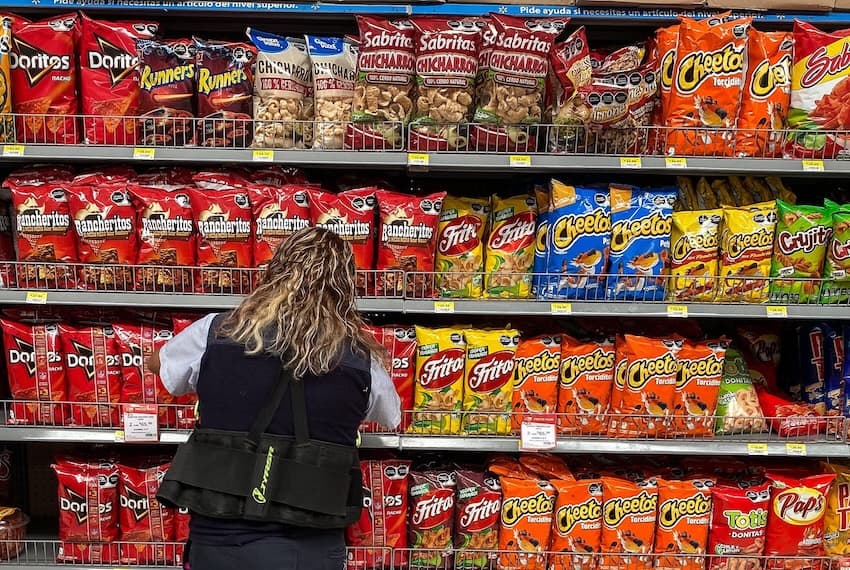
Lawmakers from Mexico’s ruling party Morena, the Workers’ Party (PT) and the Green Party (PVEM) have submitted a congressional proposal to apply a Special Tax on Production and Services (IEPS) to certain processed foods with excessive sodium content, such as cured meats, instant soups, sauces and dressings.
The initiative seeks to expand a tax strategy that has been applied since the 1980s to products considered harmful to health, such as sugary drinks, tobacco and high-calorie foods.
The bill’s proponents estimate that a tax on products with high sodium levels could generate approximately 12 billion pesos (US $116.6 million) in additional federal revenue, while helping reduce the prevalence of diseases associated with excessive salt consumption.
The focus would be on processed products exceeding technical criteria for sodium content, particularly front-of-package warning labels under NOM-051, which indicate “excess sodium.” This means that the potential measure would not penalize the domestic use of salt, nor would it, in principle, indiscriminately cover all salty foods.
The initiative follows growing concerns regarding average sodium intake in Mexico.
According to the NGO El Poder del Consumidor (The Power of the Consumer), the Mexican adult population consumes an average of 3.3 grams of sodium per day, far exceeding the World Health Organization (WHO) recommendation, which advises against exceeding 2 grams daily. Excess sodium consumption is related to cardiovascular diseases — the leading cause of death in Mexico — and hypertension.
Meeting the WHO’s target of a 30% reduction in sodium intake by 2030 could save an estimated 7 million lives globally and annually prevent approximately 5% of deaths in Mexico from cardiovascular disease, chronic kidney disease and stomach cancer.

Dr. Jorge Vargas, a researcher at El Poder del Consumidor, told the news outlet Infobae that “the fact that Mexico is finally considering a sodium tax is positive news,” but cautioned that the technical design would be a decisive factor in determining whether the tax alters consumption habits and drives companies to reduce the salt content of their products. He also urged lawmakers to review the results observed in other countries before voting on the initiative.
The proposal follows a recent IEPS increase targeting domestic sugar consumption, which, according to the government’s 2027 budget proposal, is forecast to bring in over 76.92 billion pesos ($4.5 billion) next year from soft drinks alone.
With reports from El Universal and El Financiero