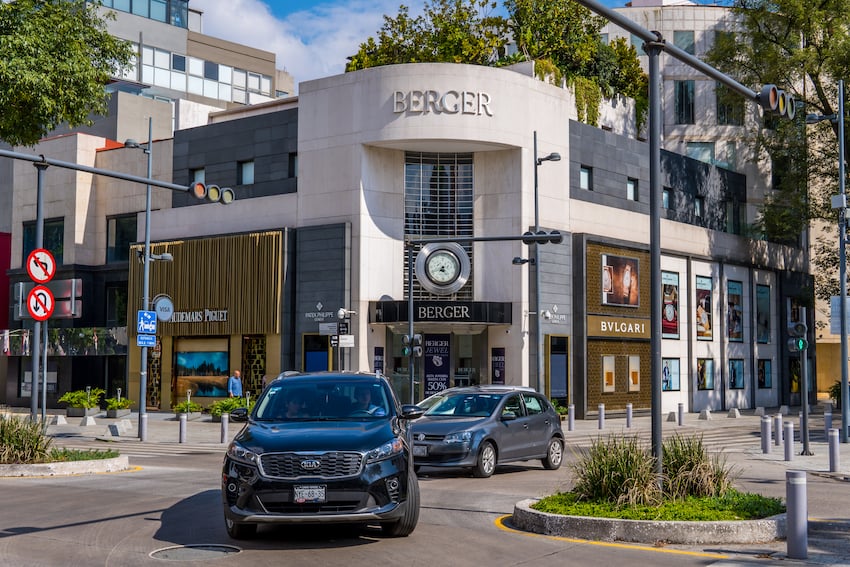
In Mexico City, Avenida Presidente Masaryk is one of the places to be if you have ample disposable income and a penchant for the finer material things in life.
Located in the capital’s Polanco district, the avenue is lined with stores of many of the world’s best-known luxury brands: Gucci, Cartier, Tiffany & Co, Dolce & Gabbana, Rolex, Louis Vuitton… the list goes on.
In the market for a Mercedes or an armored luxury vehicle of your choice? Head to Masaryk, named after Tomáš Masaryk, the first president of Czechoslovakia.
Fancy living in Armani Residences Masaryk? On sale now.
I recently walked the entirety of Avenida Masaryk, which stretches for almost three kilometers from Calzada General Mariano Escobedo to Avenida Ferrocarril de Cuernavaca.
I wasn’t shopping, walking off a meal at a high-end restaurant or visiting the Embassy of Cuba — a kind of communist enclave on a highly capitalist street — but rather pondering this article, the third and final part of a series on class and wages in Mexico.
I began with this story on minimum wage and informal sector workers and continued with this report on what it means to be part of the middle class in Mexico.

Now, in this article, I focus on the upper class, the wealthy elite of Mexico, people who could go on a shopping spree on Masaryk without a second thought.
A (very) brief history of wealth and class in Mexico
The accumulation of wealth is certainly not a new phenomenon in the land now occupied by Mexico.
In pre-Columbian times, rulers in civilizations including the Mexica and Maya became wealthy through the tribute system and long-distance trade in goods such as jade, obsidian, turquoise, quetzal feathers and cacao, “one of the most important means of exchange in Mesoamerican cultures,” according to the Bank of Mexico Museum.
Within the Mexica civilization, there was a nobility called the pipiltin, whose members owned land and enjoyed a range of special privileges. Below the pipiltin in class and status were the pochteca, merchants who brought luxury goods back to Tenochtitlán from distant places.
After Tenochtitlán was conquered by Hernán Cortés, his Spanish forces and a large contingent of Indigenous allies, including the Tlaxcalans, established the colony of New Spain, and Spaniards displaced the Indigenous elite to assume the highest positions in society.
During the colonial period, peninsulares (Spaniards born in Spain) and later criollos (Spaniards born in New Spain) acquired great wealth through silver mining, large agricultural holdings known as haciendas, and the encomienda system, which granted them the right to extract tribute and labor from Indigenous communities.
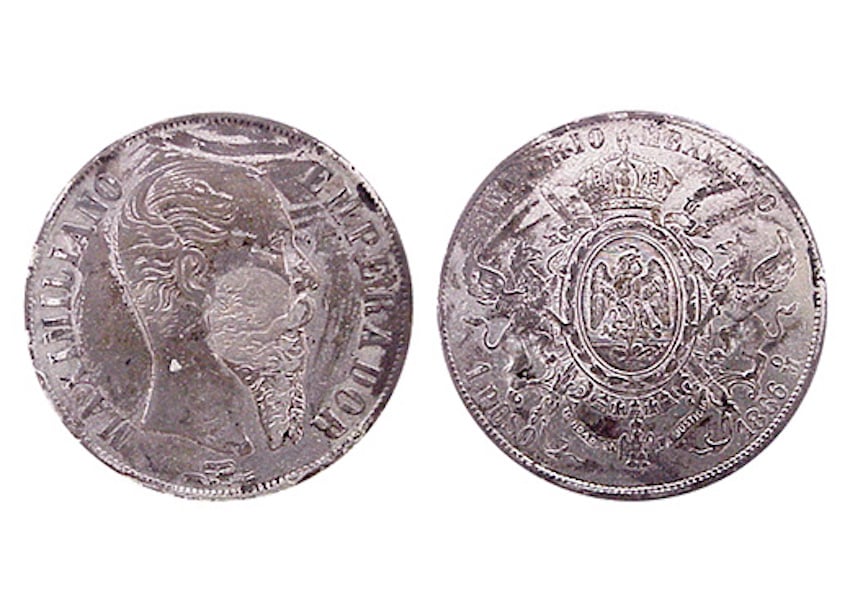
In 1536 — the year after New Spain was established as a viceroyalty — the Mexican Mint began operations and for three centuries made colonial coins, allowing currency wealth to be accumulated.
Wealth remained concentrated in people with Spanish (and other European) ancestry after Mexico gained its independence from Spain in 1821, and two centuries later, the color of a Mexican’s skin remains “an effective shortcut to locate people within the social hierarchy,” the magazine Nexos wrote in a 2019 article.
During the Porfiriato — the period of more than three decades in the late 19th century and early 20th century when Porfirio Díaz was in power — “foreign investment poured in, railroads and industry boomed, and a small elite prospered” in Mexico, notes the website Explaining History.
The Mexican Revolution led to a major redistribution of land in Mexico, but deep economic inequality persisted in the 20th century.
“The extensive literature on economic inequality in Mexico since 1950 suggests that income inequality has been consistently high and increasing,” wrote economic historians Diego Castañeda Garza and Erik Bengtsson in a recent academic paper.
The upper class today
In 2021, INEGI said that the average upper-class household income was 77,975 pesos (US $4,430) per month.
As I wrote in my middle-class story, “with prices having risen considerably in recent years, it would be reasonable to say that such household income in Mexico City and other expensive areas of Mexico would not make a family upper class” today.
So, how much does a Mexican family really need to earn to be considered upper class? In short, considerably more than INEGI’s upper-class average.
According to Gustavo Prado, a social commentator, futurist, author and founder of the consumer trends agency trendo.mx, there is an “upper-middle class” of people in Mexico made up of 5 million people who earn at least 90,000 pesos per month.
He asserts that the real Mexican upper class, people who earn at least 1 million pesos (US $56,600) per month, “share one single trait: they don’t live in Mexico,” but reside mainly in the United States and Europe and come home every now and again to visit. While that assertion is undoubtedly an exaggeration — there are, of course, very rich people who live in Mexico — there is some truth to it, as a lot of affluent Mexicans live outside the country, including close to 40,000 people who obtained legal residency in Spain and Portugal last year. Their move to the Iberian Peninsula was described as a “silent exodus of the Mexican elite” by Forbes.
While the INEGI data is now outdated in terms of the income required to be part of the upper class, it did reveal that only a very small minority of Mexicans reached the threshold in 2020. Six years later, it remains the case that only a very small percentage of the Mexican population can truly be considered upper class.
In its “Quantifying the Middle Class” report, INEGI said that just under 430,000 households (1.2% of the national total), and just over 1 million people (0.8% of the population) were upper class in 2020 based on their monthly income.
The statistics agency also reported that Mexico City had the highest percentage of upper-class households (3.1% of the total in the capital), followed by Nuevo León (2.8%), Colima (2.6%), Querétaro (2.4%) and Yucatán (2.3%).
The states with the lowest percentage of upper-class households were Guerrero (0.2%), Tlaxcala (0.2%), Hidalgo (0.2%), Tabasco (0.3%) and Veracruz (0.3%).
In contrast to lower-class and middle-class Mexicans, upper-class people generally have a “more diversified income structure,” according to the news magazine Proceso.
In an article published last August, Proceso said that income from the rental of properties and investment returns make up a “considerable portion” of the total earnings of upper-class Mexicans. Many rich Mexicans inherited much of their wealth, making work optional in some cases.
So, with ample money and possibly lots of leisure time, how do upper-class Mexicans (or at least upper-middle-class people) in Mexico live?
According to Prado, they frequently travel to the United States, especially affluent Mexicans who live in northern cities such as Monterrey and Tijuana. In addition, rich Mexicans typically live in coveted residential areas (see below), drive expensive cars, send their children to exclusive schools, eat at the country’s most-renowned restaurants, shop in luxury stores — such as those that line Masaryk — and take lavish overseas trips. They may well have memberships to exclusive sports clubs and golf courses.
Among Mexico’s rich are a significant albeit undefined number of so-called “whitexicans,” a subculture consisting of a group of people who are both mocked and envied.
In a Mexico News Daily article published in 2024, Bethany Platanella wrote that “this class of Mexicans have lighter skin (but not always!), nice clothes, branded purses and a team of housekeepers in their exquisite and modern apartments.”
In a separate MND article, Gabriela Solis wrote that the “whitexican” label “reveals what has been apparent in Mexico since the Spanish colonization, but until a few years ago, was very little acknowledged or part of the conversation: that most of Mexico’s high-class population is white.”
Mexico’s wealthiest people and families
There is the upper class — and then there is Mexico’s mega wealthy.
At the top of the heap is a man who is very well known in Mexico and beyond, an octogenarian who was once not only the richest person in Mexico, but also the wealthiest person in the world.
Born in Mexico City in 1940, just under two years after Lázaro Cárdenas nationalized Mexico’s oil industry, Carlos Slim Helú has a net worth of US $125 billion, according to the most recent Forbes “World Billionaires List“, making him the 16th richest person in the world.
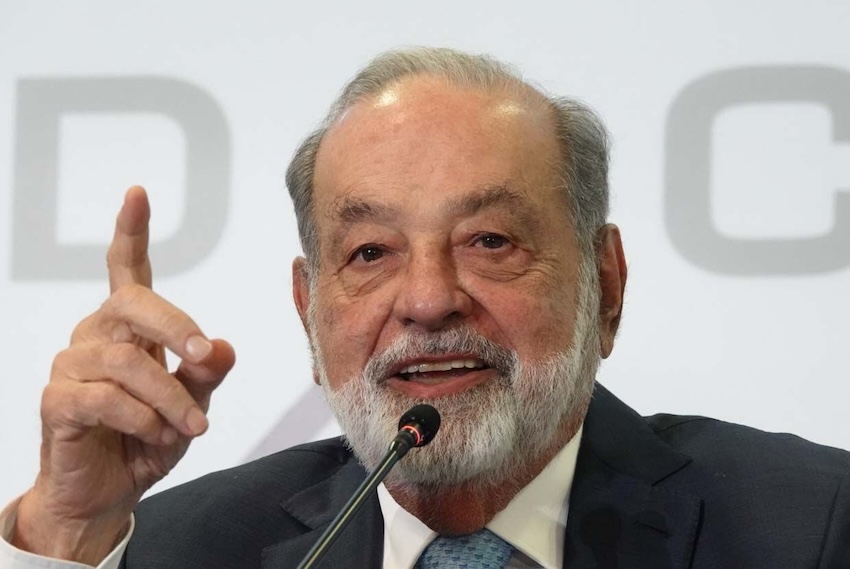
Slim, whose ancestry is Lebanese, gained much of his immense wealth from his 1990 acquisition of the then state-owned telephone company Telmex, but he has a diverse business portfolio across a wide range of industries, including retail (Sanborns, Sears), construction, energy, mining and banking. He lives in Mexico City.
The other Mexicans among the world’s top 200 billionaires, according to the Forbes list published March 10, are:
- Germán Larrea Mota-Velasco (and family): The CEO of Grupo México has a net worth of $67.1 billion, making him the world’s 30th richest person. His wealth is mainly derived from metals and mining.
- Alejandro Baillères Gual (and family): With a net worth of $19.5 billion, Baillères is the world’s 140th richest person. Forbes writes that he “and his five siblings are the heirs to the mining fortune built by their father Alberto Baillères, who died in 2022.”
Pockets of affluence in Mexico City and beyond
One favored place of residence of Mexico’s wealthy elite is Lomas de Chapultepec in Mexico City, which has been identified as the neighborhood with the highest income per capita in the national capital. Anyone seeking to purchase one of the stately homes in the neighborhood better be well-heeled.
On the real estate website Inmmuebles24, the purchase prices of various homes in the neighborhood are listed not in Mexican pesos but in millions of US dollars. One home is on sale for an impressive (or intimidating) US $11.8 million.
Lomas de Chapultepec is located just across Anillo Períferico, Mexico City’s outer beltway, from Polanco, making it a convenient location for captains of industry and other business executives. I walked over there from Avenida Masaryk to wander the streets and get a better feel for the neighborhood. Apart from the luxurious residences on leafy streets, another apparent, albeit perhaps stereotypical, sign of the wealth in the area was a glass cabinet filled with cigars in a small Chedraui Selecto supermarket.
Wealth in the form of residential properties is not just on display in Mexico City, but all over the country.
Every large city in Mexico has exclusive neighborhoods with rich residents. Among them are Del Valle in the Monterrey metropolitan area and Puerto de Hierro in greater Guadalajara.
Inequality in Mexico
A key takeaway from this MND series on social classes is that wealth distribution is deeply unequal in Mexico, as it is in many Latin American countries, and, indeed, in nations around the world.
According to a February 2026 report by Oxfam México, Oligarchy or Democracy, the richest 1% of the population — around 1.3 million people — receives 35% of total income and holds 40% of the country’s private wealth, while 18.8 million Mexicans lack access to adequate nutrition.
While more than 13 million Mexicans exited poverty between 2018 and 2024, according to official data, “extreme wealth concentration has become entrenched in Mexico” over the past three decades, according to the Oxfam report.
“Ultra-rich Mexicans have never been so numerous or so wealthy as they are today,” the report states.
Still, the vast majority of Mexicans — more than 99% of people, according to the 2020 INEGI data — are not part of the upper class. More than 60% of Mexicans are considered lower class, many of whom are workers who largely live paycheck to paycheck, such as various people I spoke to along Insurgentes Avenue in Mexico City last year.
Mexico is one of the 15 largest economies in the world, and some of its very rich citizens — including sports stars, actors, film directors, musicians and businesspeople — represent Mexico admirably on the world stage.
But at home, tens of millions of lower-class and middle-class Mexicans — including street vendors, taco cooks, cleaners, teachers and journalists — are highly laudable representatives of Mexico as well — hardworking people who strive to support themselves and their families, and do their bit to make Mexico a better place every single day.
By Mexico News Daily chief staff writer Peter Davies (peter.davies@mexiconewsdaily.com)