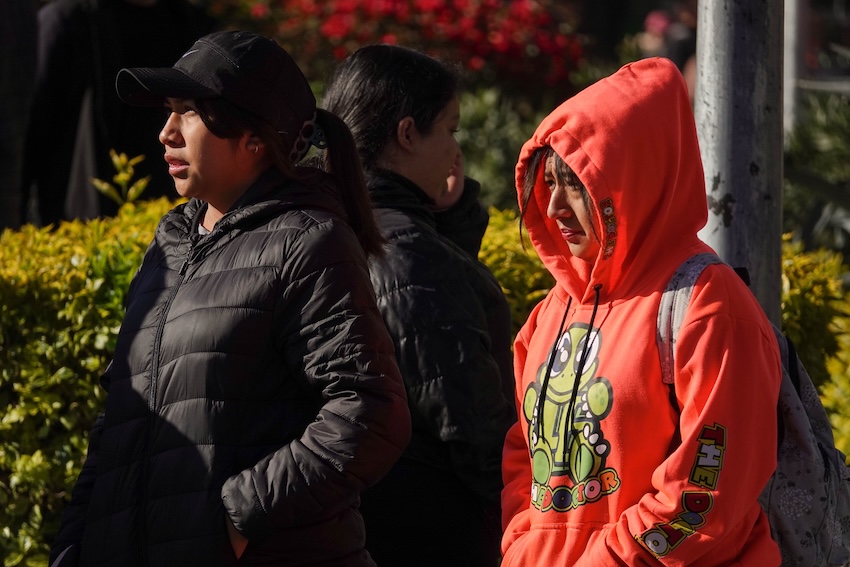
Mexico is gearing up for a warmer and drier winter than normal, according to official forecasts from the National Water Commission (Conagua) and the National Meteorological Service (SMN).
Conagua is forecasting that in October and November, most of the country will experience temperatures one to three degrees Celsius above the climatic average recorded over the past 35 years – an anomaly caused by the weather phenomenon known as La Niña.
In the Sierra Madre Occidental region (Chihuahua, Durango and parts of Sinaloa and Zacatecas), the SMN expects below-average minimum temperatures.
La Niña is the second phase and counterpart of El Niño, which both make up the El Niño-Southern Oscillation (ENSO), a weather pattern that significantly changes the global climate.
El Niño is the warm phase of the ENSO cycle and is characterized by the unusual warming of surface waters in the central and eastern equatorial Pacific Ocean. This phenomenon causes heavy rains and rising temperatures in several ocean regions, primarily in waters off the west coast of South America.
Meanwhile, La Niña is the cool phase of the ENSO cycle and results in effects that are generally the opposite of those of El Niño.
Although La Niña is associated with the cooling of the Pacific Ocean, it can increase temperatures in Mexico during the winter, primarily because it reduces the arrival of cold fronts and favors dry conditions.

According to the SMN, this year’s cold season — which technically runs from September 2025 to May 2026 — will see 48 frontal systems compared to the 46 recorded between September 2024 and May 2025. The SMN has reported that five cold fronts are expected to occur in September, five in October, six in November, seven in December, six in January, five in February, six in March, five in April and three in May.
“This forecast considers the influence of the El Niño-Southern Oscillation (ENSO) phenomenon, which, although currently in the Neutral phase, has a 60 percent chance of developing a weak, short-lived La Niña event in the fall,” the SMN report says. “For Mexico, this typically translates into warmer and drier winters than usual, particularly in the north [of the country].”
La Niña’s effects are further exacerbated by climate change. Statistically, data from Conagua indicates that Mexico loses one day of frost every 15 years, a trend that began in 1950 and continues to this day.
With reports from El País