The Mexican government said it will take legal measures to stop an auction of pre-Hispanic artifacts by Sotheby’s New York auction house. The National Institute of Anthropology and History (INAH) said the artifacts are part of Mexico’s cultural history and should not be sold.
The online auction “Art of Africa, Oceania, and the Americas” began on May 11 and lists 26 Mesoamerican items available for bidding. The auction closes on Tuesday.
The most valuable of the Mesoamerican pieces is a Mayan stone carving from A.D. 550 to 950 with a starting price of US $38,000. The piece belongs to the Albright-Knox Gallery and is expected to sell for as much as $70,000.
Sotheby’s describes it as an artifact that probably represents a ritual effigy of equipment used in the Mesoamerican ballgame, in this case an axe.
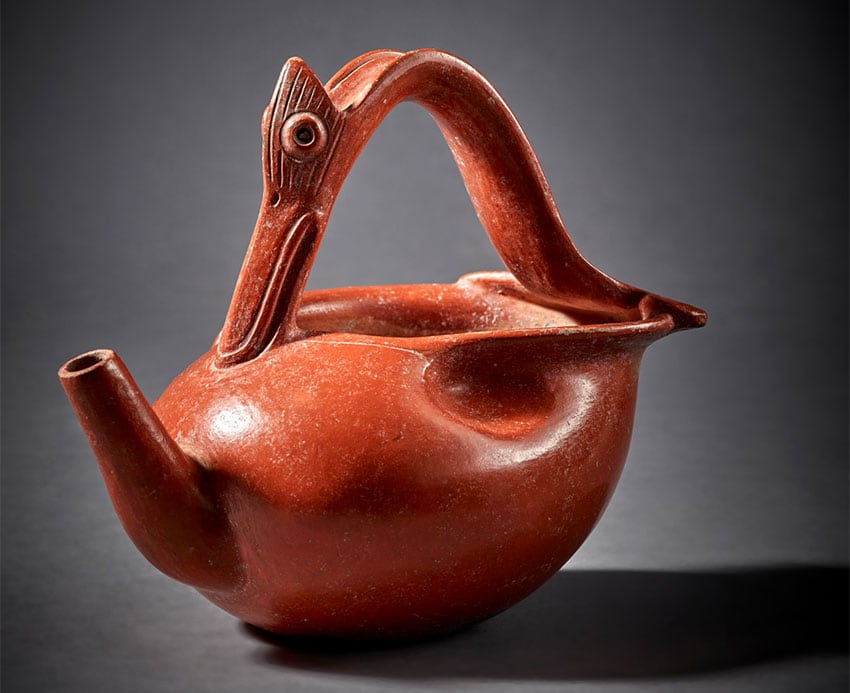
A Maya orangeware pottery vessel depicting a cormorant, dated between A.D. 250 and 450, has a starting bid of $30,000 and is predicted to be worth as much as $60,000.
An Olmec serpentine head from 900 to 300 B.C. is expected to fetch between $5,000 and $7,000.
In the Sotheby’s catalogue, most pieces include a brief description of their origin but it is not clear when or under what conditions they were removed from Mexico.

INAH reported the auction to Mexico’s Attorney General’s Office and requested diplomatic and legal assistance from the Ministry of Foreign Affairs and Interpol.
In February, a similar auction took place at Christie’s auction house in Paris. It included 33 artifacts that Mexico said were part of its cultural history. Despite actions by the INAH and the Mexican government, the auction went ahead and 27 of the pieces were sold.
Sources: AP (en), El Universal (sp), Aristegui Noticias (sp)