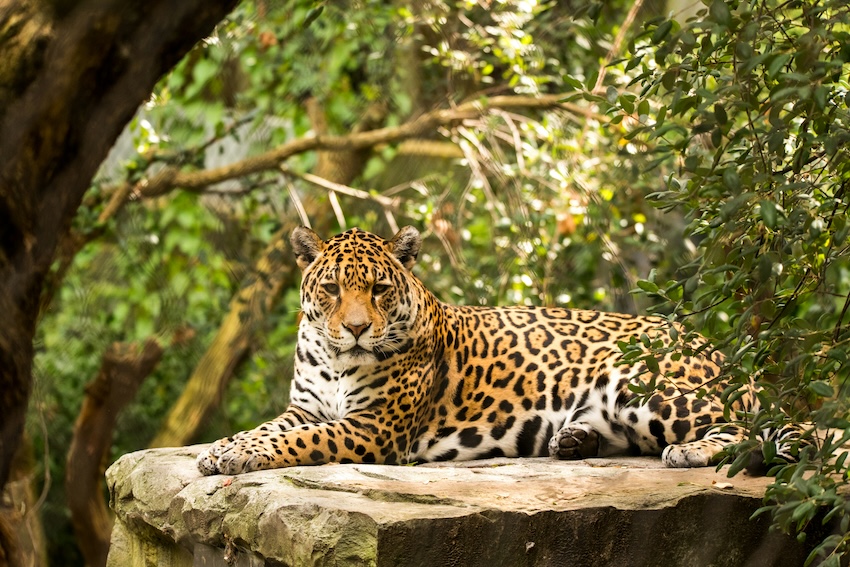
Mexico’s jaguar population is climbing, but the country’s biggest cat isn’t out of the woods yet.
A four-month census conducted last year by the National Alliance for Jaguar Conservation (ANCJ) has concluded there are 5,326 wild jaguars throughout the country — a 33% jump from 2010, when the species was labeled endangered (as it still is).
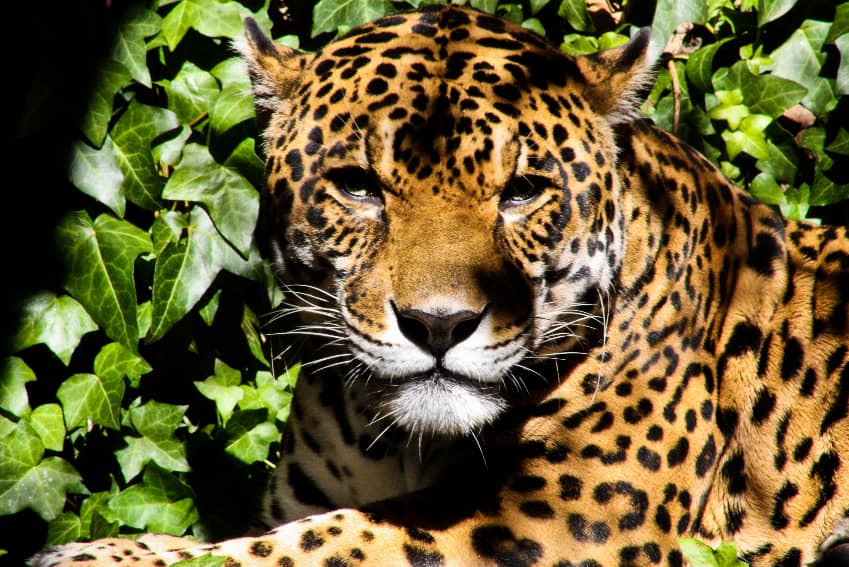
Moreover, the 2024 figure is an 11% jump since the last such census was completed in 2018.
Results from the third national jaguar census were initially supposed to be released a year ago, and were then delayed until February 2025 before being released last week.
Those delays are not altogether surprising, considering the first census in 2008 — studying jaguar populations across 15 conservation sites — took three years to complete. The work put into that study established Mexico as a leader in conservation strategies for preserving wild jaguar populations.
According to that first census, an estimated 4,000 jaguars lived in the country, mostly in the Yucatán peninsula. The second census in 2018 found that the figure had increased to approximately 4,800.
Though the newest jaguar count is about 525 more, advocates warn the species (Panthera onca) is far from secure.

To escape extinction risk, Mexico needs at least 8,000 jaguars, a goal scientists say may take more than 30 years at the current pace.
Currently, the Yucatán Peninsula leads the nation with an estimated 1,699 jaguars. The Pacific South region has 1,541, followed by Northeast/Central Mexico with 813, Pacific North with 733 and Pacific Central with 540.
The study was conducted in 23 jaguar habitat sites in 16 states: Sonora, Sinaloa, Nayarit, Jalisco, Michoacán, Guerrero, Chiapas, Quintana Roo, Yucatán, Campeche, Morelos, Hidalgo, San Luis Potosí, Nuevo León and Tamaulipas.
Researchers used 920 motion-detecting cameras over 414,000 hectares, which recorded 134 specimens: 67 females, 47 males, 12 unidentified and eight offspring. Those numbers formed the basis for the total population estimate.
Gerardo Ceballos, president of the ANCJ, an NGO, called the numbers “surprising and encouraging.”
He emphasized that threats limiting recovery remain, citing habitat loss, illegal hunting, animal trafficking, livestock-borne diseases and conflicts with people.
He credited the growing numbers partly to Mexico’s expanding protected areas, which allow the elusive predators more room to roam and breed. However, he added, 70% of the sites where jaguars live in Mexico are outside of protected natural areas.
Conservation groups are urging federal authorities and social media companies to do more to stop the illegal trade in jaguar parts.
“We want to make everyone aware that … jaguar protection is a shared responsibility,” said Humberto Pena, state strategy coordinator at ANCJ.
Ceballos said the reserves with the largest number of jaguars are Calakmul, Gran Calakmul, Balam Kú and Balam Kin (Yucatán Peninsula); Montes Azules (Chiapas); Sierra del Abra Tanchipa (San Luis Potosí); Chamela-Cuixmala (Jalisco); and Sierra de Vallejo-Río Ameca (Nayarit).
Some states, like Hidalgo, barely registered a presence for the big cats; just one sighting was recorded in the central Mexican state.
With reports from Excélsior, Contra Réplica, Reuters and Milenio