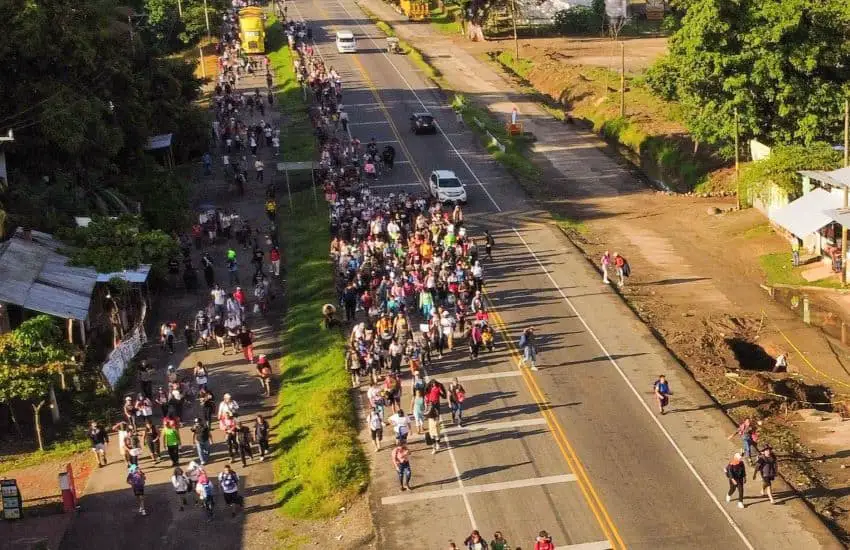
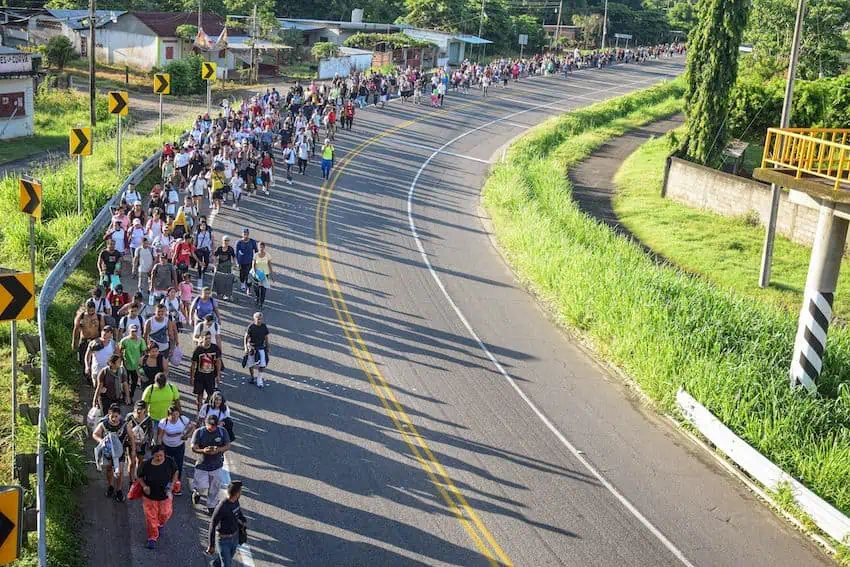
More than 1,000 migrants began walking toward the United States from Mexico’s southern border on Sunday.
The caravan traveled nearly 40 kilometers to reach Tapachula, Chiapas, where hundreds of other migrants are encamped.
“We walked 12 hours, though it wasn’t so much walking as it was dragging our feet because we are not accustomed to this,” América Hernández, a 56-year-old from Honduras, told the newspaper La Jornada.
Hugo Gómez said he left home due to drug-related criminal activity in the area where he lives. The 29-year-old Guatemalan hopes to find a better-paying job in the United States to help provide for his parents and an older sister recently diagnosed with breast cancer.
The migrants arriving in Tapachula on Sunday were primarily from Central America, Cuba and Venezuela.
According to a report in the newspaper El Universal, the youngest member of the caravan is a nine-month-old baby whose family hails from Venezuela. In addition to the infant, the family group is made up of three adults, four minors aged 15, 12, 7 and 5 and Rocko, a pit bull. Between them, this group was carrying little more than a plastic bag, two backpacks and one blanket.
Many migrants in the caravan said they hoped to reach the United States before November because they fear a Donald Trump victory in the U.S. presidential election could bring tighter border restrictions for asylum seekers.

Miguel Salazar, a migrant from El Salvador, told The Associated Press that many feared a new Trump administration would stop granting appointments to migrants through CBP One, an app used by asylum seekers to attempt to enter the U.S. legally. In June, President Joe Biden issued an executive order barring migrants from making asylum claims at the U.S.-Mexico border when crossings between legal ports of entry surge.
The difficulties don’t begin at the U.S. border though. The Mexican government has made it more difficult for migrants to traverse the country on buses and trains, especially if they have entered the country illegally. In the first five months of the year, nearly 1.4 million undocumented foreigners were detected traveling in Mexico without entry authorization.
Migrants travel in large groups in hopes of reducing the risk of being attacked by gangs or stopped by Mexican immigration officials.
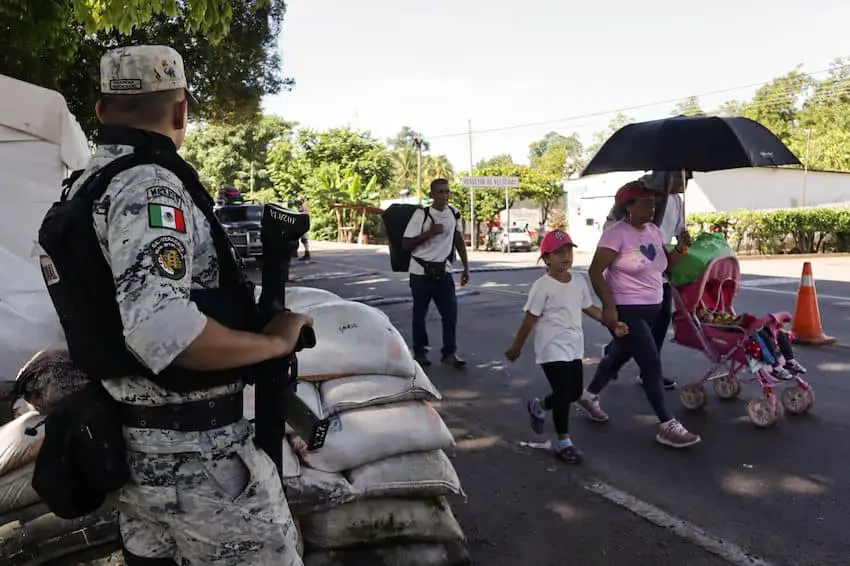
This caravan is being escorted by a small contingent of National Guard troops and highway patrolmen.
With reports from Excelsior, El Universal, The Associated Press and La Jornada