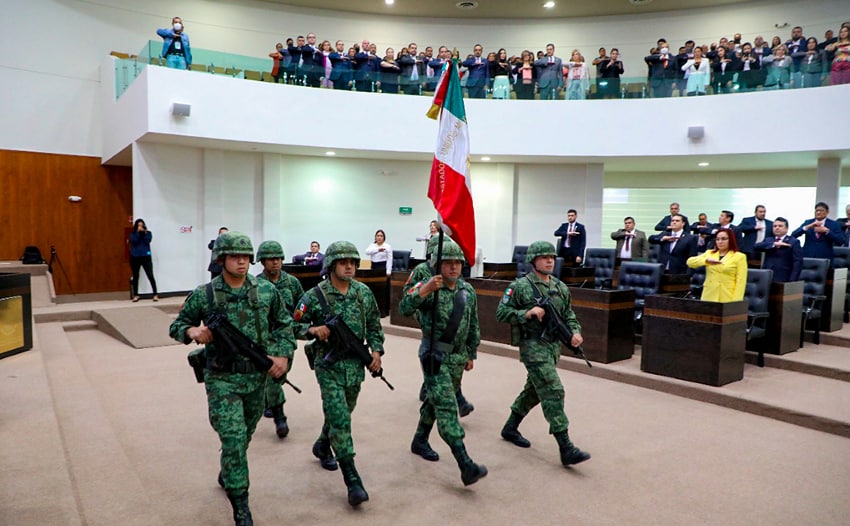
A reform authorizing the use of the military for public security tasks until 2028 has been approved by 17 of 32 state congresses, ensuring that it will be enshrined in the constitution.
The constitutional bill, which allows the federal government to keep the armed forces on the streets for an additional four years, was approved by the Senate and the Chamber of Deputies earlier this month.
The legislatures of México state, Hidalgo, Nayarit and Sonora approved the bill on Thursday, joining 13 other states that had already endorsed it. With a majority of state congresses having now ratified the reform, it will be enshrined in the constitution once it has been published in the government’s official gazette.
Interior Minister Adán Augusto López visited some states to urge lawmakers to approve the reform. President López Obrador said last month that the ongoing presence of the armed forces on the nation’s streets is essential to guarantee peace, while a recent poll found that almost three-quarters of Mexicans agree with the plan to continue using the military for public security tasks until 2028.
López Obrador on Friday directed his interior minister to continue visiting state congresses and monitor the way in which lawmakers vote on the reform, which was originally presented by an Institutional Revolutionary Party deputy.
The government needs to know “who is who,” the president said. “Let’s see if [state lawmakers] vote as representatives of the people or representatives of parties, if they’re going to act on orders or [while] thinking about people’s safety,” he said.
Most opposition lawmakers, human rights organizations and others argue that the ongoing use of the armed forces for public security tasks only perpetuates a failed security strategy and comes with the risk of more human rights violations being committed by the military.

With reports from El Economista and Animal Político