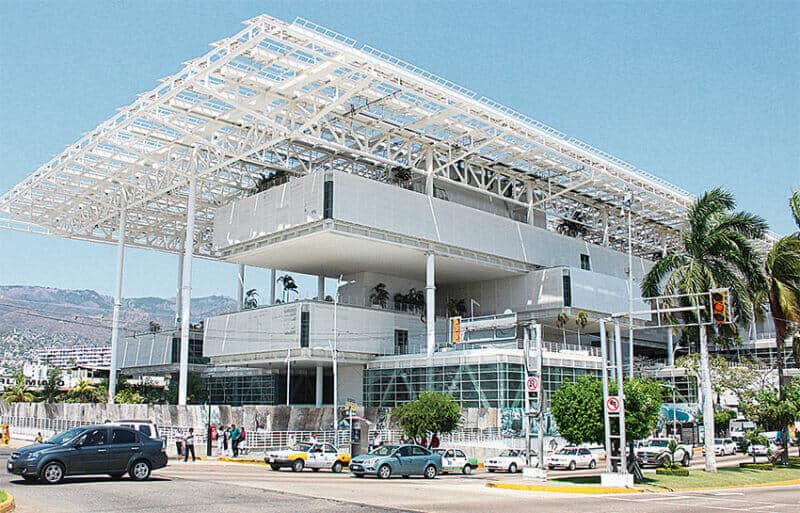
The federal Health Ministry is relocating from Mexico City to Acapulco but the viability of the move is uncertain as only 20% of surveyed employees indicated they are prepared to move to the Pacific coast resort city.
Health Minister Jorge Alcocer said Tuesday that the ministry began the process of moving into new headquarters on Acapulco’s seafront boulevard, Avenida Costera, earlier this month.
He told President López Obrador’s regular news conference that high-ranking officials from several Health Ministry departments, including Prevention and Health Promotion and the National Institute of Health for Well-Being, or Insabi, have already made the move to the Guerrero coast.
“The relocation of personnel from other areas will be voluntary and progressive,” Alcocer said.
“… In this initial stage, [department] heads, general directors, area directors, trusted people of middle and senior managers and core staff who requested to voluntarily join this stage were transferred,” he said.
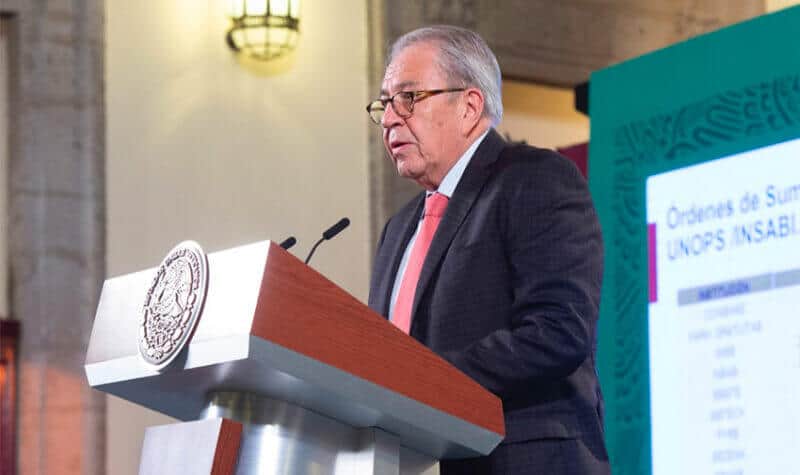
All told, 100 people have made the move to Acapulco, Alcocer said, adding that 320 more, including employees of the health regulator Cofepris, will transfer to the city by January.
“By the end of the second half of 2022 about 1,200 workers will have been transferred,” he said, adding that they will receive assistance from the government to find housing, access health care and enroll children in schools.

“According to the voluntary survey we conducted, … 944 of 4,600 participants, 20.5% in other words, responded in the affirmative to the change of residence. Workers who don’t want to or can’t move … will have the opportunity to request a change of assignment,” Alcocer said.
He said that some workers may opt for voluntary redundancy or early retirement rather than make the move. The minister also said the Health Ministry is working on a plan with the Culture Ministry to convert its Mexico City headquarters, located in the inner city neighborhood of Juárez, into a health museum.
The newspaper Reforma reported that some Health Ministry workers declined the offer to move to Acapulco because they have mortgages in Mexico City or are applying for home loans in the capital. One employee said the majority of unionized workers wouldn’t be transferring.
“They can’t dismiss us,” said another employee, who explained that workers who don’t want to go to Acapulco expect to be transferred to a hospital or Health Ministry offices in another location.
“We know that we have to enter a different area in a few months. They tell us that the building [the ministry’s Mexico City headquarters] has to be vacated in December because it’s going to become … a museum,” the worker said.
“There are people who are paying off houses [in Mexico City],” the employee said, explaining why a shift to the coast was not an attractive option for some workers. “Your life and family are here, everything happened suddenly.”
Before he took office in late 2018, López Obrador announced a plan to decentralize the federal government by moving numerous departments to different cities across the country. However, the plan has faced opposition from both employees and the business sector, and little progress has been made.
The Mexican Employers Federation warned in September 2018 that decentralization would be one of the costliest projects ever undertaken in the history of public administration in Mexico, while employees of departments such as the Culture Ministry and the Environment Ministry have made it clear they don’t want to leave the capital.
The Health Ministry is just the second ministry to relocate after the Energy Ministry, which is now based in Villahermosa, Tabasco.
Among the other ministries the government intends to relocate are Wellbeing to Oaxaca, Culture to Tlaxcala, Education to Puebla, Economy to Monterrey and Public Administration to Querétaro.
With reports from Reforma and El Financiero