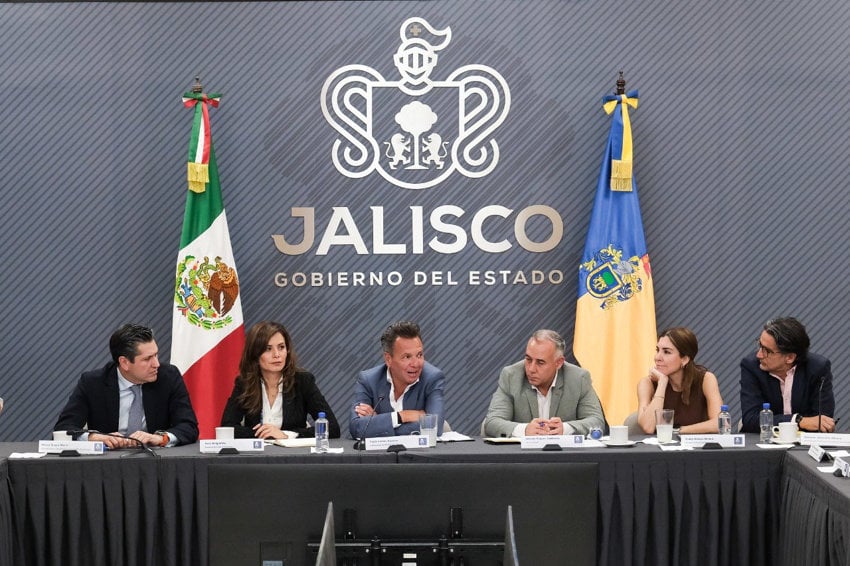
While work around the Guadalajara metro area continues at a feverish pace ahead of the 2026 FIFA World Cup — opening in the city on June 11 — Guadalajara’s water crisis has continued to deepen, with appeals to the federal government and Jalisco Governor Pablo Lemus firing the state’s water director.
Gov. Lemus requests GDL water infrastructure funds
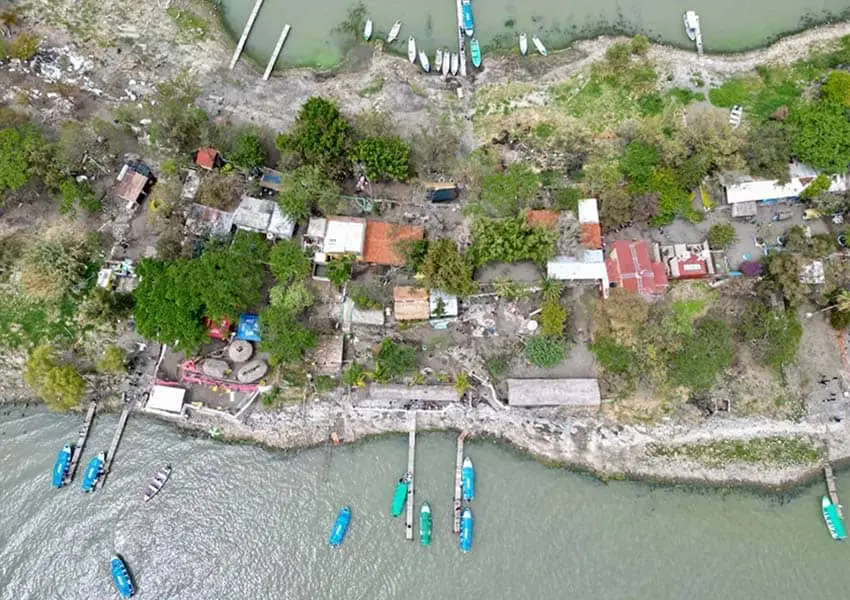
The water situation across the Guadalajara Metropolitan Area (GMA) continues to deteriorate. Problems with water scarcity, dirty and foul-smelling water and low water pressure have become more widespread this past month, with approximately 400 neighborhoods now reporting issues.
On Friday, Jalisco’s Governor Pablo Lemus Navarro announced that he had requested $15 billion pesos (US $828.2 million) from President Sheinbaum to address urgent water infrastructure needs across the Guadalajara metro area.
If granted, these funds would be used to construct a replacement Chapala-Guadalajara aqueduct (estimated cost $10 billion pesos) and expand Water Treatment Plant No. 1 (estimated cost $4.8 billion pesos).
While the federal government has not yet approved the ask, President Sheinbaum confirmed that technical validation of the projects has begun with Conagua, Mexico’s National Water Commission.
Soon after taking office in October 2024, Sheinbaum promised to prioritize water infrastructure remediation projects nationwide, as part of her National Water Plan initiative.
Acute water challenges could not have surfaced at a worse time. The city is already hosting World Cup qualifying matches, with FIFA President Gianni Infantino in attendance.


Last week, Gov. Lemus fired Antonio Juárez Trueba, the Director of SIAPA (as the state’s water agency is called). The agency will now be headed by Ismael Jáuregui Castañeda, who was previously the director of public works and infrastructure for the Guadalajara suburb of Zapopan.
Local water experts universally applauded the governor’s decision to remove Juárez, but they seemed less convinced that Castañeda was the best candidate for the job.
Arturo Gleason, a professor and water management expert at the University of Guadalajara, had urged leaders to conduct a nationwide search for a candidate with a proven track record in water management projects, given the gravity of the water challenges SIAPA is facing right now. Castañeda notably lacks such credentials.
“The problem is serious, and we need the greatest expertise and the most advanced technical and scientific knowledge to solve it,” Gleason said.
Sergio Garibi, a member of the Comunidad Americana council representing the Colonia America neighborhood, popular with expats and tourists, estimates that 824,000 residents in some of the most densely populated urban areas of Guadalajara have been affected by bad water in recent months.
“We have many reports from neighbors with stomach illnesses… rashes, with skin irritation, and we have indications that suggest a connection with the water quality,” Garibi said.
The worsening situation has prompted one local advocacy group, as well as academics at the University of Guadalajara, to urge SIAPA to issue a health alert designating tap water unsafe in areas with known problems, so that residents can take precautions. Thus far, the state agency has declined to do so.
Rideshare apps granted legal status at GDL Airport
After much uncertainty, Jalisco’s Governor Pablo Lemus confirmed earlier this month that ride-hailing apps like DiDi and Uber will be permitted to pick up passengers at the Guadalajara International Airport during the World Cup.
But there is a catch.
Ride-hailing apps will continue to be prohibited from pulling up to the terminal to collect their passengers. The reason is that these digital services lack the legal authority to operate at the airport terminals, as federal authorities grant this permission exclusively to authorized taxis and tourist services under the Federal Roads, Bridges and Motor Transport Law.
Instead, a dedicated site for DiDi and Uber drivers will be developed somewhere along the entry/exit road prior to ramps leading to the Chapala highway.
Given the distance from the terminal and the lack of safe sidewalks to reach the pickup and drop-off spot on foot, the airport will launch a new on-site shuttle to ferry riders from the terminal to the rideshare parking lot.
While this isn’t the most convenient solution, it will thankfully eliminate the ambiguity that plagued rideshare services in the past. This included rider uncertainty over the correct meeting location, and rideshare drivers being harassed at the terminal by Mexico’s National Guard patrols when attempting to connect with their riders there.
This new solution enabling rideshare services to operate at Guadalajara Airport has a price tag of 20 million pesos (US $1.1 million), with the work set to be completed before the 2026 World Cup matches in Guadalajara begin on June 11. As of now, no launch date has been shared by public officials.
Jalisco, Google partner on real-time public transit tracking
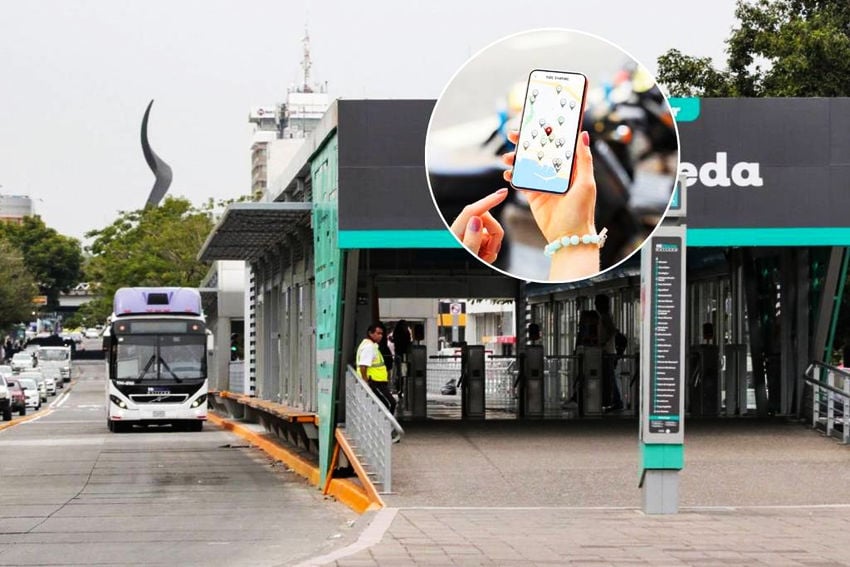
It’s about to get a little easier to navigate the Guadalajara metro area on public transport, thanks to a little help from big tech.
With the goal of modernizing the public transportation system and keeping local riders better informed, the city government recently inked a new partnership with Google that will enable mobile apps like Google Maps and Waze to display bus and train locations in real time. The initiative will be executed in multiple phases.
During the first phase, expected to last nearly three months, roughly 100 vehicles will be tracked. Over time, coverage will be expanded to include all 220 routes in the mass transit system provided by light rail and Mi Macro (bus rapid transit).
By year’s end, the program’s goal is to expand coverage to 4,500 vehicles.
In the coming weeks, additional details on the new program are expected to be released via the social media accounts of the Jalisco Department of Transportation and Governor Pablo Lemus.
After discovering that life in Mexico was a lot more fun than working in corporate America, Dawn Stoner moved to Guadalajara in 2022, where she lives with her husband, two cats and Tapatío rescue dog. Her blog livewellmexico.com helps expats live their best life south of the border.