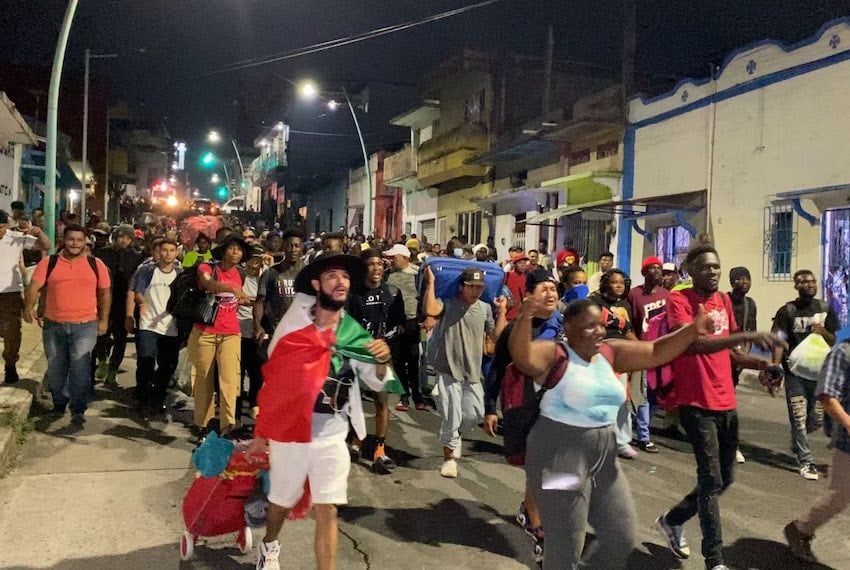
A new migrant caravan started heading toward Mexico City last week, criticizing a lack of attention from federal officials as they departed Tapachula, Chiapas.
The participants are primarily foreigners from Haiti, Venezuela, Cuba and Central America who were assembled in Mexico’s southernmost state, where they felt trapped with no prospects for work.
Comprising approximately 800 people, the caravan had reached Pijijiapan — a distance of 133 kilometers (82 miles) — by Tuesday morning, traveling mostly at night to avoid the prevailing heat and humidity.
A group spokesman told Uno TV that the caravan’s goal remained that of reaching the capital to submit visa regularization applications, after which they would continue on to northern states in search of job opportunities.
The group insists it will not engage in intermediate negotiations en route, saying they prefer to talk to federal authorities in Mexico City.
Activists attending to the migrants have documented health problems among members of the caravan, including dehydration, foot injuries and stomach infections.
Uno TV reported that personnel from the National Migration Institute have intervened in a number of cases after travelers experienced health complications during the journey.

On Monday, hundreds of migrants who did not leave with the main caravan and remained in Tapachula were joined by activists and religious leaders, while highlighting the migratory phenomenon by re-enacting the Passion of Christ.
Luis Rey García, director of the Center for Human Dignity, criticized the Mexican Commission for Refugee Assistance (Comar) for failing to fulfill its responsibilities.
“No migrant wants to stay in Tapachula,” he said, adding that there are “tens of thousands of foreigners stranded” because of Comar’s indifference.
There was also vocal criticism of Donald Trump’s deportation policies. Participants who stayed in Tapachula, which included deportees from the U.S., burned an effigy of the U.S. president.
Conexión Indigo | Migrantes deportados junto con activistas religiosos, realizaron en Chiapas el llamado “Viacrucis migrante”. Toda la información con @JMRivaPalacio. pic.twitter.com/8bVWSkm3xL
— Reporte Índigo (@Reporte_Indigo) March 31, 2026
Among those in Tapachula was Cuban Orlando Guillen Moro, who said he was separated from his family by Trump’s policies and sent to a third country where he and others “face adverse situations such as hatred and discrimination.”
“We are experiencing what Our Lord Jesus Christ went through,” he said, “and we need a light that will lead us to feel like human beings.”
Raúl, another Cuban migrant, said he hoped the Mexican authorities would become aware that many of the foreigners simply want a chance to stay in the country and find a job.
With reports from N+, El Informador, Uno TV and CNN en Español