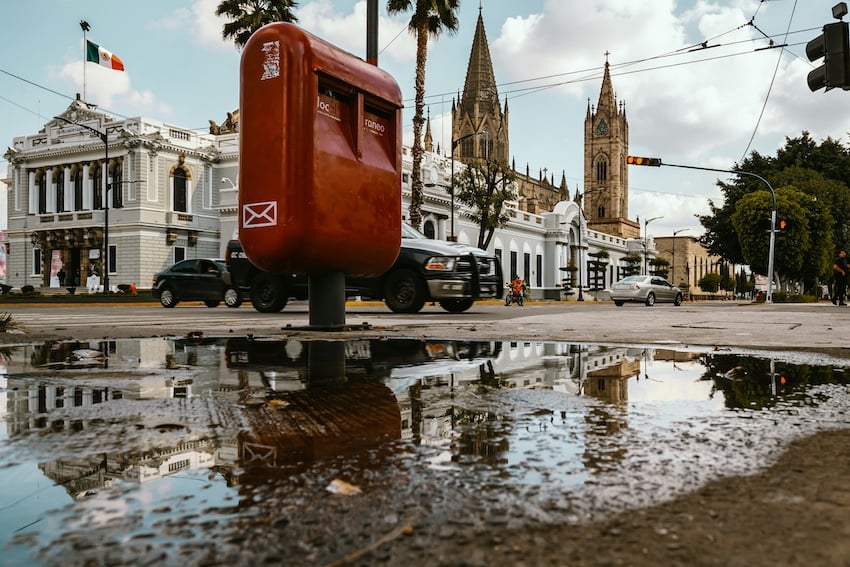
With all the attention a few years back to the prospect of ‘Day Zero’ in CDMX, when the water taps run dry due to drought, decaying infrastructure, and overconsumption, little scrutiny has been paid to a similar crisis brewing in Guadalajara.
In 2026, the Guadalajara Metropolitan Area (GMA) is facing serious water problems stemming from its own aging infrastructure, population growth, chronic underinvestment in new capacity, and poor decision-making. And now, these issues are impacting both the supply and quality of water reaching the city’s residents and businesses.
Aging infrastructure
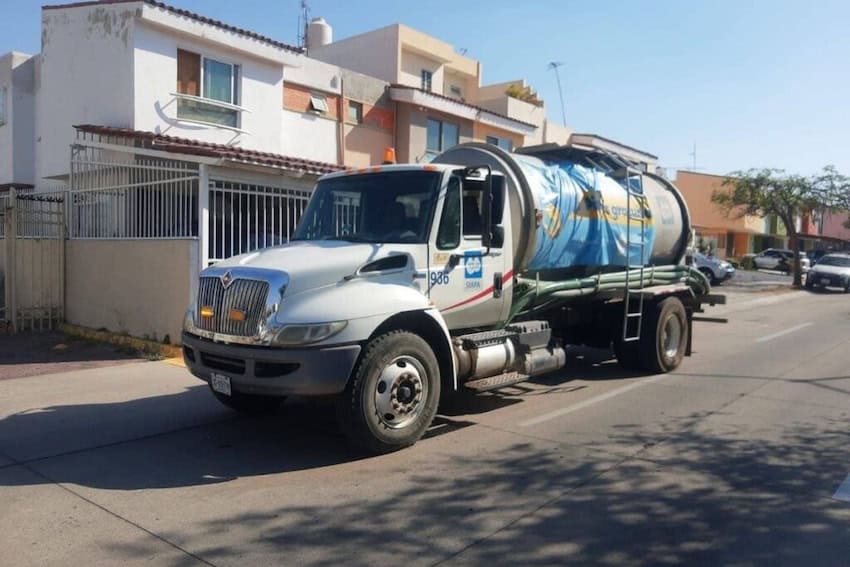
According to Josué Daniel Sánchez Tapetillo, a consultant and specialist in hydrology and hydraulics, Guadalajara faces a “vicious spiral” in which long-term neglect of its water infrastructure, limited financial capacity, and corruption conspire to worsen the city’s water services year after year.
The water system in the Guadalajara Metropolitan Area (AMG) is at a critical point. According to recent private audits, Guadalajara is losing an estimated 50% of its total water supply each year due to leaks, theft, or metering errors.
How leaky are the city’s pipes? Very.
The reason is that many sections of the hydraulic network are far beyond their estimated lifespan of 20-35 years, especially in the city’s downtown area. Data from the Metropolitan Territorial Planning Plan revealed that one in four meters of pipe the city relies on to deliver water is over half a century old, and some sections are a hundred years old.
And since these issues are underground and out of sight, they are typically ignored until they become visible in the form of deep pavement cracks, sinkholes, or surface water leaks.

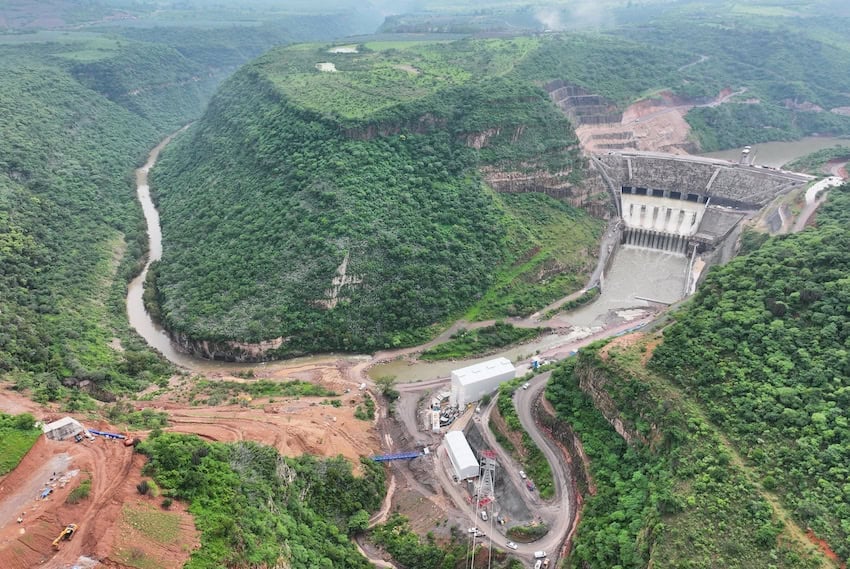
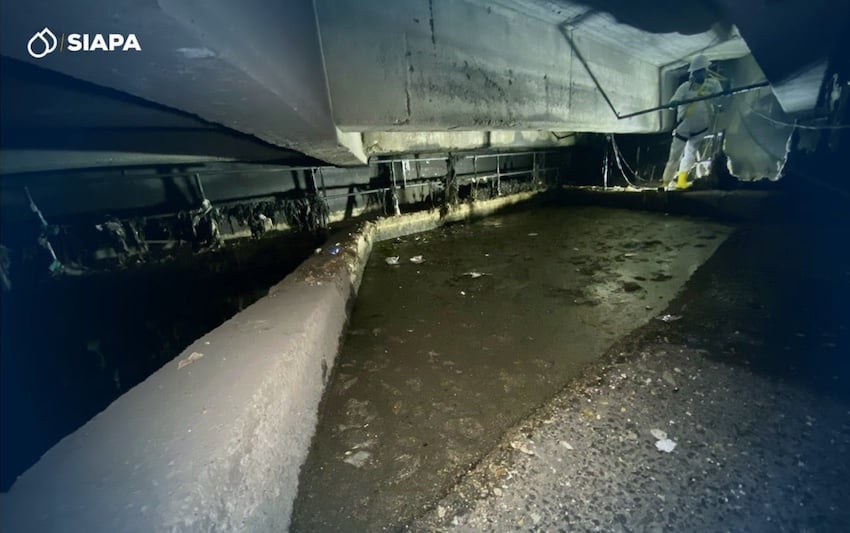
SIAPA, the public agency responsible for water supply, sanitation, sewage, and wastewater treatment in the Guadalajara Metro Area (GMA), is estimated to receive an average of 75,000 service reports annually, including complaints about a lack of water from taps, dirty water, pipe leaks, sewage leaks, and missing manhole covers.
But due to staffing and budget shortfalls, SIAPA lacks the capacity to address many of these issues. In 2025, according to its own records, the agency responded to just 6 out of every 10 requests. Moreover, when problems are addressed, city residents often note that repairs are temporary or incomplete, leading to recurrences.
On top of these structural issues, drought due to climate change, alongside increasing demand due to population growth across the GMA, are compounding the city’s water challenges.
Deteriorating quality
Although Mexican regulations stipulate that water from household taps must be potable, in practice, this is rarely the case. SIAPA acknowledges that the water it dispenses falls short of this goal, citing its aging infrastructure.
But there is more to it than that.
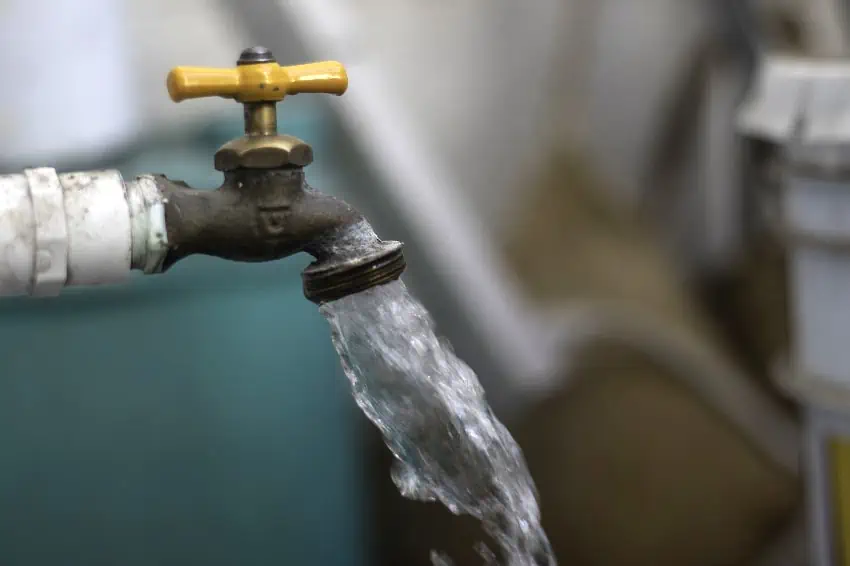
Guadalajara’s water quality issues can also be tied back to shortcomings in SIAPA’s water treatment processes. With roughly three-quarters of the water coming from surface-level sources such as Lake Chapala, experts say more rigorous treatment is needed to ensure the water is safe to drink, but it isn’t being done.
How dirty is the city’s water?
Water quality testing in the Guadalajara metropolitan area (GMA) has detected the presence of human and/or animal waste, some metals, and chlorine exceeding safety thresholds. Moreover, this past week, local media have run stories documenting dirty and smelly water coming from taps in at least 19 different Guadalajara neighborhoods, including the Centro, Americana, Moderna, and Chapalita.
According to the Guadalajara Neighborhood Association (COCO), water quality has been a problem for nearly two months, with no remedy from SIAPA. Residents have expressed concerns about the health impacts.
“When you bathe, the water stings your skin… It has caused us many skin problems, but also, strangely, many people are suffering from sore throats,” said Preciado Pérez, president of the residents’ association in downtown Guadalajara.
SIAPA is limited in what it can do
SIAPA’s current debt level is nearly 17 billion pesos (USD $982 million), hampering its ability to address critical infrastructure improvements.
How did the agency’s debt get so massive? Lots of unpaid consumption.
It’s sort of an open secret among Guadalajara locals that there are no consequences for not paying your water bill. The reason is that SIAPA has no means to stop the flow of water to individual addresses, the way CFE does with electricity.
Unsurprisingly, many customers (residential and business customers alike) don’t make payments or even have an account with SIAPA. In a pilot program conducted last year in the northern part of Zapopan, the agency reviewed 560 residential properties and found that one-third were unregistered, but were still consuming water.
Mismanagement at SIAPA
SIAPA’s budget woes aren’t solely a function of its revenue collection difficulties. Multiple experts note that mismanagement by SIAPA’s leadership over the years has also contributed to the agency’s weak financial position.
Water expert Sánchez Tapetillo noted that past multimillion-dollar investments to upgrade SIAPA’s infrastructure have suffered from secrecy, uncompetitive bidding, and favoritism. There have also been cases of egregious corruption and theft, including payments to contractors for system maintenance that was never done.
More recently, an audit performed by Vázquez Nava Consultores found that SIAPA’s flawed procurement practices have led to significant waste of public funds. Their investigators uncovered 47 SIAPA contracts awarded with no bidding at all, including projects valued at more than $112 million in 2024 alone.
Solving these operational issues will require both transparency and citizen oversight, noted Sánchez Tapetillo.
Upcoming SIAPA projects
To address the huge gap between what’s being dispensed and what’s being billed, SIAPA must find new ways to improve its revenue collection capabilities.
One action the agency is committed to making near-term is an overhaul to its user registry so that it more accurately reflects who’s consuming water. The registry currently has 1.25 million accounts but hasn’t been updated in the past decade, so it’s rife with errors, as the pilot study illustrated.
Even when residents do try to update their SIAPA accounts, many fail to do so when confronted with the agency’s myriad bureaucratic obstacles to completing even basic tasks.
SIAPA estimates that its upcoming user registry overhaul could net an additional $800 million pesos (USD $46.2 million) in revenue annually, by uncovering businesses and residences that currently aren’t paying for the water they consume. The project, which the agency plans to award via competitive bidding, is expected to take four months to finish.
In response to broader criticisms leveled by water experts, SIAPA states it is continually doing maintenance and repairs on the system, including major work in early January. That said, the agency’s extensive backlog of work highlights the urgent need for a comprehensive new strategy for the city’s water system, before it becomes a full-blown crisis.
Without sustained investment and better oversight, local experts believe Guadalajara’s water infrastructure and service levels will continue to deteriorate. Meanwhile, thousands of residents of the Guadalajara Metropolitan Area continue to report water outages, leaks, and dirty water coming from their taps — all of which impact the health, economy, and quality of life in the city.
With reporting from Milenio, El Informador, El Mural, El Diario NTR, and UdGTV.