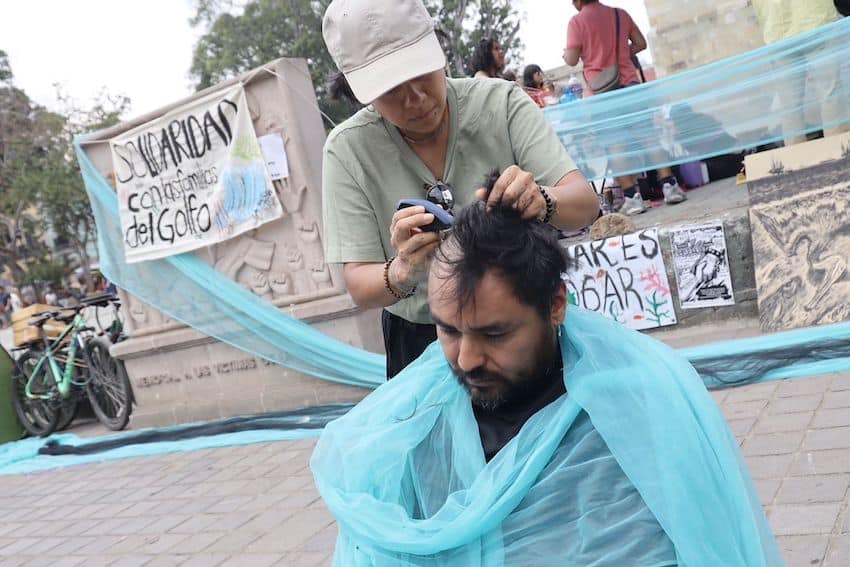
Citizens and environmental activists from Veracruz to Oaxaca are turning to an unusual tool to confront a massive oil spill in the Gulf of Mexico: donated human and animal hair.
The grassroots response comes amid mounting anger over what’s perceived as slow official action, disputes about a cover-up, and growing ecological and economic damage along more than 630 kilometers of coastline.
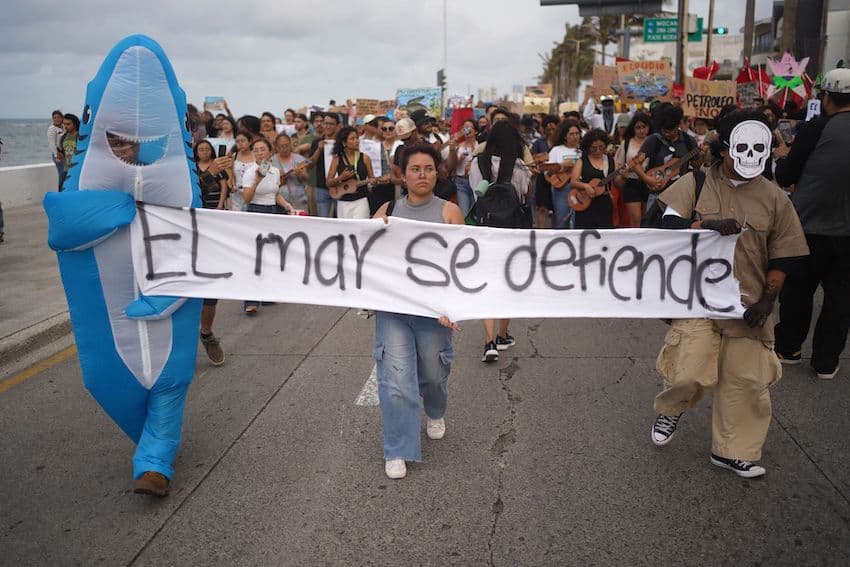
In Coatzacoalcos, Veracruz, local groups opened two hair collection centers, asking people to bring clean, dry hair that can later be processed into absorbent barriers.
Organizers say a kilogram (2.2 pounds) of hair can help clean up to 8 liters of oil; the hair becomes a tool to trap hydrocarbons while repelling water.
Meanwhile, on Sunday next to the cathedral in Oaxaca City, activists and environmental groups held their own drive, cutting and collecting human and animal hair to weave into nets destined for contaminated beaches, especially in southern Veracruz.
Eugenia Islas of the Poposteando Ando Collective told the newspaper La Jornada that the effort stems from concern about the situation “not only in Veracruz, but also in Campeche, Tabasco and Tamaulipas.”
She said the damage has come from a spill that was first reported in early March, but purportedly had occurred a month earlier, and that “authorities have not addressed [it] as the emergency it is.”

Residents in the southern Veracruz Indigenous municipalities of Pajapan, Tatahuicapan and Mecayapan protested over the weekend, demanding compensation, medical care, ecosystem restoration and punishment for those responsible.
Although Mexico’s Environment Ministry (Semarnat) claimed that containment and cleanup were roughly 88% complete as of March 19, locals said that tar has continued to wash ashore in April, killing turtles and fish and threatening fishermen, seafood vendors and small tourism businesses.
President Claudia Sheinbaum, however, said the spill is under control and insisted there was “not really a big impact” on tourism.
She announced she will meet on Tuesday with an interdisciplinary group to launch a permanent observatory of the Gulf of Mexico to detect and track oil spills and other hydrocarbon pollution.
She also said there will be a “detailed report” issued on the possible causes of the current spill and the ongoing cleanup efforts.
For now, authorities and environmental groups sharply disagree on what caused the spill.
Navy officials and Sheinbaum have said preliminary findings point to multiple sources, including illegal discharges from a still-unidentified petroleum tanker and at least two “natural seeps” on the seabed in the Bay of Campeche, long known for leaking hydrocarbons.
In the meantime, a coalition of at least 17 environmental organizations has stated — based on satellite data and other information — that the primary leak began on Feb. 6 from a 36-inch Pemex subsea pipeline that carries crude oil from a nearby platform to the Dos Bocas maritime terminal.
The groups say images show two things: a large slick growing around the pipeline and a repair vessel stationed over that area for eight days. Pemex has denied those allegations as inaccurate.
With reports from López Dóriga Digital, La Silla Rota, El Universal and La Jornada