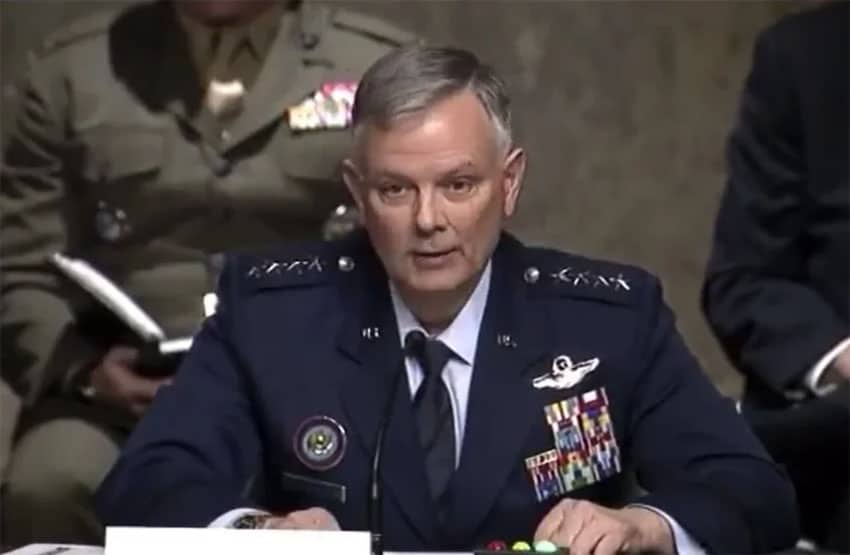
Russia has more intelligence agents in Mexico than any other country, a high-ranking United States military official said Thursday.
Air Force General Glen VanHerck, commander of the United States Northern Command, told the U.S. Senate Committee on Armed Services that “the largest portion of GRU members in the world is in Mexico right now.”
The GRU is Russia’s military intelligence agency. VanHerck didn’t say how many Russians spies are believed to be in Mexico but asserted that those here “keep an eye very closely on their opportunities to have influence on U.S. opportunities and access.”
The GRU has been accused of interfering in elections in the United States, attempting a coup in Montenegro in 2016, carrying out a cyber-attack on the World Anti-Doping Agency and poisoning former Russian intelligence officer Sergei Skripal and his daughter in the United Kingdom in 2018.
VanHerck also spoke about his concern that countries such as Russia and China could take advantage of the instability in Mexico created by drug cartels.
“Transnational criminal organizations … create an environment that is not conducive to raising a family [or] for economic success and we see that happening right on our border, in Mexico,” he said.
“My concern with that is the instability it creates, the opportunity it creates, for actors such as China, Russia and others who might have nefarious activities on their mind to seek access and influence in … [the United States] from a national security perspective,” the general said.

“There are actors who are very aggressive and active all across the North Command area of responsibility … [including] the Bahamas and Mexico,” he added.
Despite the apparent presence of Russian spies here, VanHerck spoke highly of security collaboration between the United States and Mexico. The two countries reached a new security agreement late last year.
VanHerck’s assertion about Russian agents in Mexico came the same day as United States Ambassador Ken Salazar rebuked Mexican lawmakers for showing support for Russia despite that country’s invasion of Ukraine.
A group of deputies from the ruling Morena party, the Labor Party and the Institutional Revolutionary Party formally established a Mexico-Russia friendship group on Wednesday.
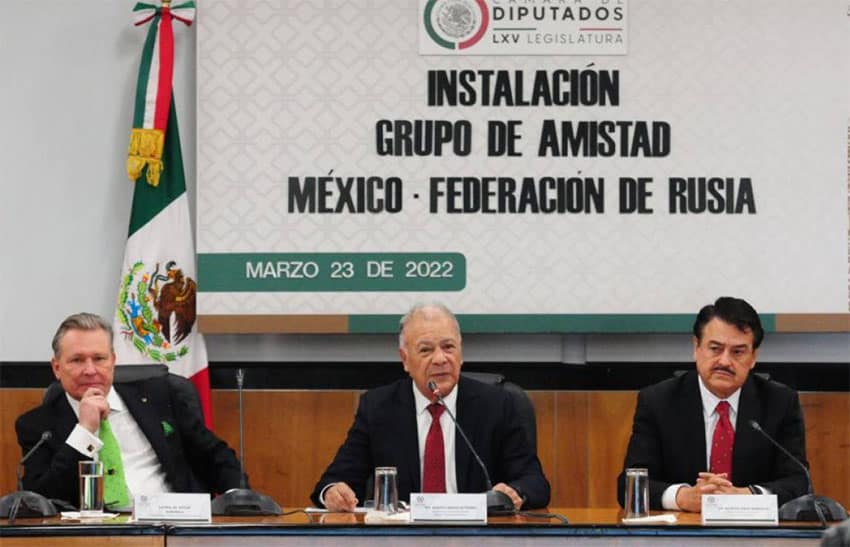
At his morning press conference on Friday, President López Obrador was asked whether there are Russian spies in Mexico.
“I don’t know. We don’t have information about that,” he replied, before adding that “any foreigner who wants to carry out legal activities in the country can do so.”
“Those who are criminals and commit crimes are detained; neither Mexicans or foreigners are permitted to commit crimes in our country,” López Obrador said.
AMLO also said that Mexico doesn’t send spies abroad. “We don’t go to Moscow to spy on anyone nor to Beijing to spy on what’s happing in China. Nor do we go to Washington, not even Los Angeles, we don’t get involved in that,” he said.
With reports from Reforma