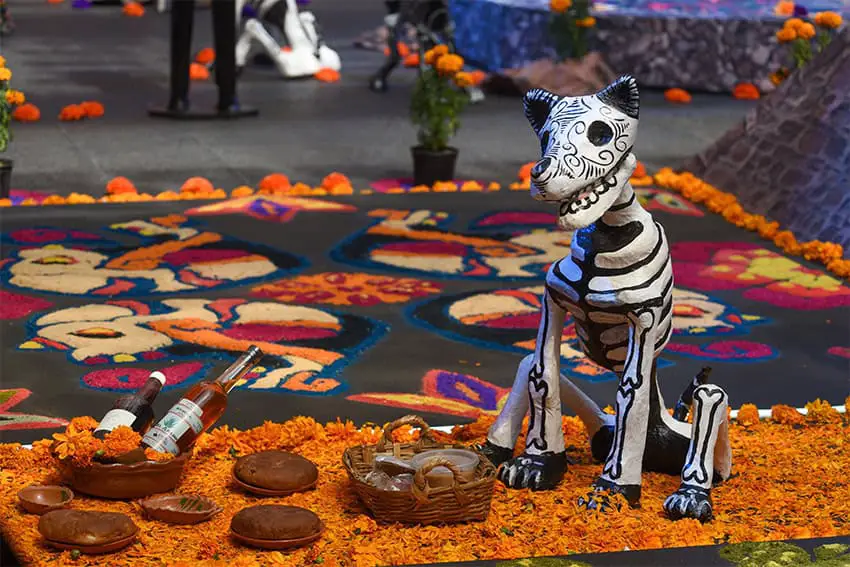
As Day of the Dead nears, altars around the country bear photos of beloved former pets next to mementos of dearly departed family members. And while including animals in Día de Muertos celebrations is not new, more and more people in Mexico now also appear to be using mortuary services like cremation for dead pets.
Manuel Ramírez, head of the J. García López funeral group and its pet division Bye Bye Friends, told newspaper El Financiero that sales of prepaid mortuary plans for pets increased by 48% compared to 2023.
For his part, Juan Rodríguez, CEO of funeral group Gayosso, and vice president of the Confederation of Chambers of Commerce, Services and Tourism of Mexico (Concanaco), predicted that the pet funeral sector will grow by double digits in the next 15 years, driven by greater awareness of the role of pets in Mexican families.
According to a study by the University of the Valley of Mexico, around 43% of Mexicans have a positive view on the idea of treating pets like children. Furthermore, roughly 70% of Mexican homes have at least one pet, the National Institute of Statistics and Geography (INEGI) found in its latest survey. INEGI estimates there are around 80 million pets in Mexico, including 43.8 million dogs, 16.2 million cats and 20 million other animals.
“We firmly believe that this sector will have a very positive evolution,” Rodríguez emphasized.
There are not enough funeral centers to meet the expected demand according to Rodríguez, and many of the existing ones operate in the informal market. At least in Mexico City, 85% operate informally, Ivan Pérez, operations manager of Funeral Pet, told El Universal.
According to Pérez, these companies offer affordable prices ranging between 400 (US $20) and 450 pesos (US $22) — a figure that Pérez deems suspicious.
“At Funeral Pet, we use between 30 and 60 liters of LP gas per cremation procedure. Adding up all the supplies and salaries, it’s impossible to carry out a cremation process at such prices.”
Pérez said Funeral Pet charges between 3,500 pesos (US $175) and 4,000 pesos (US $200) depending on the size of the animal.
Using a mortuary service like cremation can also help prevent health risks. In the past, pet remains were often discarded in the trash or buried in family gardens. However, this may lead to bad smells and health risks for animals and humans.
If an animal dies from a disease like parvovirus, toxoplasmosis or salmonellosis, it could spread to other animals and even humans. Furthermore, pentobarbital, a drug used in euthanasia, can remain in the body of the deceased pet for up to a year. This poses a danger to other animals that might dig in the burial site, as they could be poisoned.
Commemorating deceased pets
Just as pet mortuary services are increasing in popularity, so are special Day of the Dead altars dedicated to pets.
These altars are not part of Mexico’s original tradition around Day of the Dead. However, they became popular in 2019 after Funeral Pet proposed commemorating Mexico’s deceased pets on Oct. 27, according to El Universal.
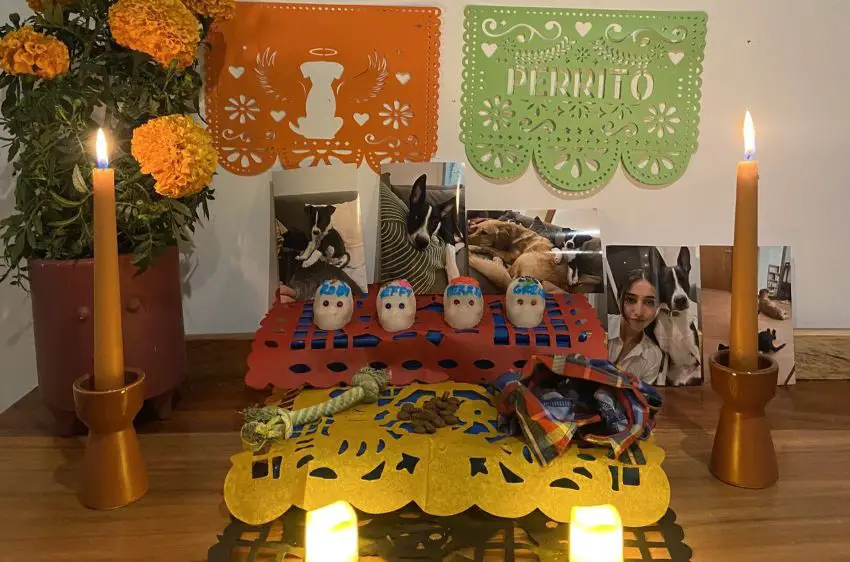
The altar for a deceased pet includes the same elements of a traditional altar, including a picture of the pet and its favorite treats and foods.
With reports from El Sol de Orizaba, Publimetro, El Financiero and El Universal