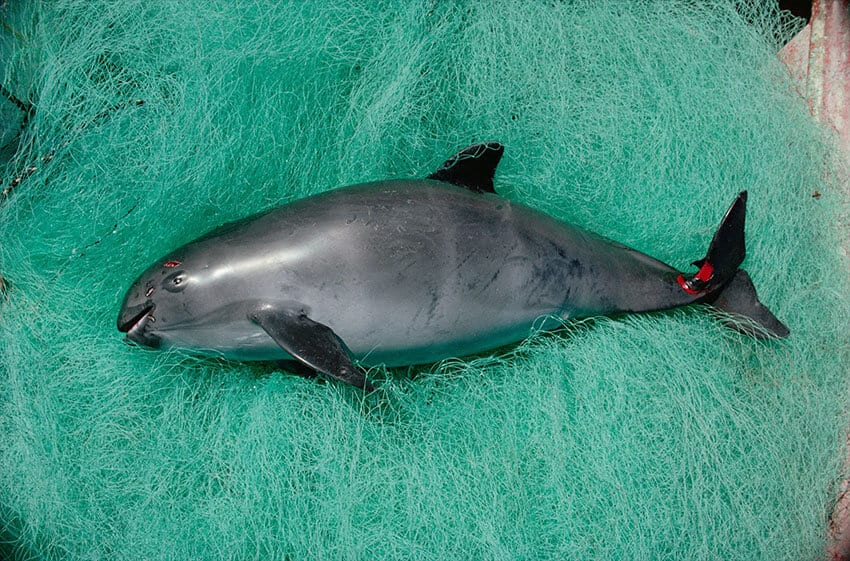
The U.S. Department of the Interior (DOI) will debate whether to sanction Mexico for failing to protect the endangered vaquita marina, potentially leading to a ban on Mexican seafood.
The U.S. market accounts for 50% of Mexico’s seafood sales, worth around $745 million in 2022.
In a court settlement on Friday, the DOI pledged to decide by May 19 whether to certify Mexico under the “Pelly Amendment” to the Fishermen’s Protective Act. This requires the DOI to embargo products from nations that “diminish the effectiveness” of international wildlife agreements.
The DOI was responding to a lawsuit filed in December 2022 by the Animal Welfare Institute (AWI), the Center for Biological Diversity (CBD) and the NRDC (Natural Resources Defense Council).
These U.S. conservation groups argue that Mexico’s failure to stop illegal fishing in the Gulf of California violates the Convention on International Trade in Endangered Species of Wild Fauna and Flora (CITES) and has driven the endemic vaquita porpoise to the brink of extinction.
The move comes soon after the Secretariat to CITES announced its own sanctions against Mexico on March 27, after declaring Mexico’s proposed action plan to protect the vaquita “inadequate.” These sanctions prevent CITES member countries from trading with Mexico in more than 3,000 species of animals and plants, potentially costing Mexico US $1.5 billion in lost trade.
“We’re relieved the U.S. government is finally going to make this call,” said Sarah Uhlemann, international program director at the CBD, in a press release. “Strong U.S. sanctions will force Mexico to pull this little porpoise back from the brink.”

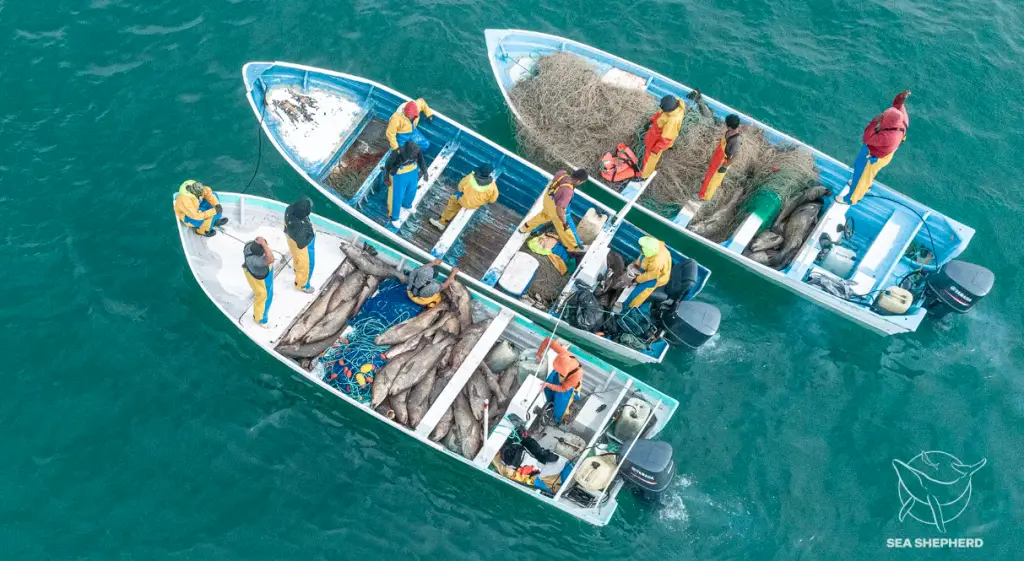
Vaquita often die after becoming entangled in nets used to catch totoaba fish, which are highly coveted on the Chinese black market for their supposed medicinal properties. Although Mexico formally prohibits totoaba fishing, the ban has never been effectively enforced.
The conservation groups first petitioned to ban imports from Mexico under the Pelly Amendment in 2014. After the DOI failed to respond for more than eight years, they sued to force a decision. During this time, the vaquita population declined by 90%.
“While DOI dithered, the vaquita population plunged from approximately 100 animals to fewer than 10,” said DJ Schubert, wildlife biologist at the AWI.
President López Obrador immediately sent eight officials to Geneva to attempt to appeal the sanctions. The Environment Ministry announced that it was reviewing fishery protection measures and had worked with the Navy to remove more than 4,700 meters of illegal fishing nets.
Mexican officials also protested that sanctioning Mexico for illegal totoaba fishing fails to recognize the responsibility of transit and destination countries, such as the U.S. and China.
“Mexico is not solely responsible and is not the only one that should have to spend on this,” said Blanca Alicia Mendoza Vera, Federal Attorney for Environmental Protection.
With reports from Diario El Independiente