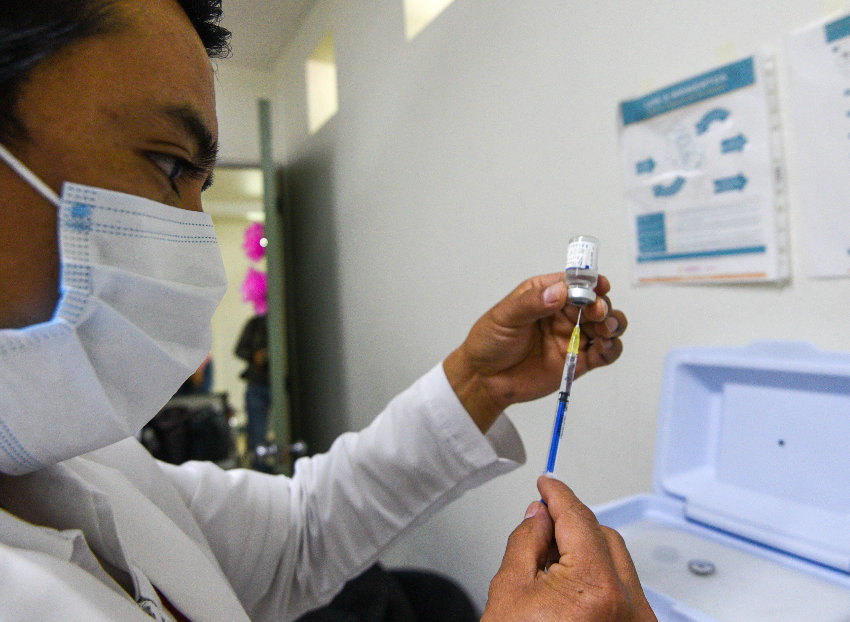
Vaccinations against COVID-19 and seasonal influenza began on Monday at medical facilities throughout Mexico, the nation’s Health Ministry announced.
The Health Ministry said the goal for the campaign is to supply 54.6 million doses — 35.2 million are against influenza and 19.4 million against the SARS-CoV-2 virus. Mexico’s population is 128.5 million.

Who is eligible for vaccination?
The campaign will run through March 31, 2024, but at the start the shots will be only for people over 60, pregnant women in any trimester, medical workers, and those aged between 5 and 59 who have conditions that put them at risk of serious complications.
Children under 5 years will be eligible only for the flu vaccine, not the COVID-19 shot.
Foreign residents with a CURP identity number who fall within the above categories should be eligible for vaccination, but it is advisable to consult local health authorities to confirm.
Which vaccines will be administered?
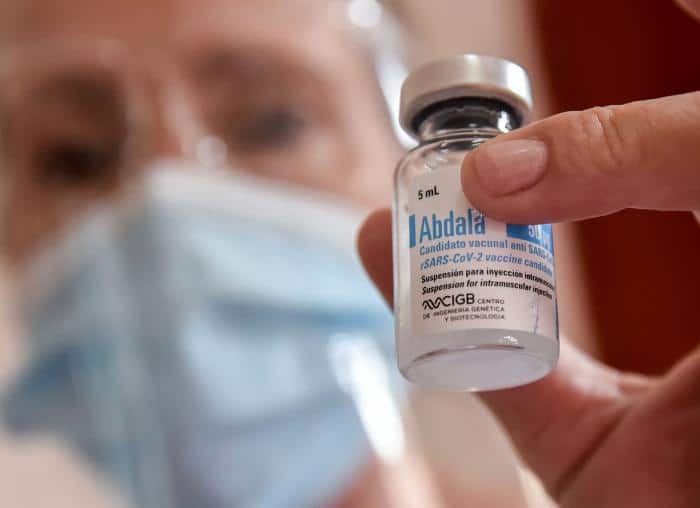
The COVID-19 vaccine administered will be either Abdala from Cuba or Sputnik V from Russia.
“Both vaccines have optimal safety and efficacy profiles for the protection of the Mexican population and have approval from the Federal Commission for the Protection against Health Risks (Cofepris),” the Health Ministry noted.

The flu vaccine protects against the four subtypes of the virus that circulate — two of type A and two of type B — the Health Ministry indicated.
A press release from the ministry made no mention of the Patria COVID-19 that Mexico developed in 2021 and then touted for use as a booster a few months ago.
Where will vaccines be available?
Locations where vaccines will be available include the Mexican Social Security Institute (IMSS), IMSS-Bienestar, Security Institute and Social Services of State Workers (ISSSTE), state health facilities and Pemex units, according to the Health Ministry.
How did the COVID-19 pandemic affect Mexico’s population?
According to the World Health Organization, Mexico suffered the fifth-highest COVID-19 death toll in the world with 334,669, following the United States (1,127,152), Brazil (704,659), India (532,034) and Russia (400,077). However, Mexican officials have previously said that the nation’s tally was likely undercounted.

According to The New York Times vaccination tracker, more than 65% of Mexico’s population has been fully vaccinated against COVID-19, with vaccines such as Pfizer-BioNTech, AstraZeneca, Moderna and CanSino.
When the government declared an end to the COVID-19 pandemic health emergency in May, Deputy Health Minister Hugo López-Gatell reported that nearly 95% of the Mexican population has antibodies to the SARS-CoV-2 virus, either via infection or vaccination.
With reports from El Financiero and El Universal