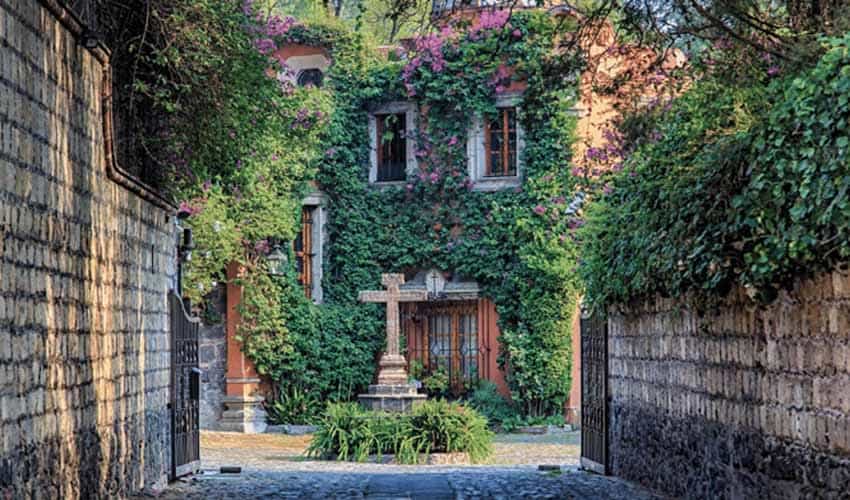
Officials from Mexico’s Tourism Ministry (SECTUR) have announced the creation of a program called Barrios Magicos, or Magical Neighborhoods, a new program they believe will draw visitors to major cities across the country.
Mexico’s Pueblos Mágicos (Magical Towns) program, which began in 2001, was an attempt to highlight small towns across the nation with historical and cultural value. The program provided funding for renovations as well as promotion of the unique features of these locations. The Pueblos Mágicos program has been a resounding success in terms of tourist numbers, having brought influxes of visitors and money to its 132 member towns.
SECTUR now wants to more fully integrate big cities that don’t meet the requirement for the Pueblo Mágico distinction into the country’s tourism sector through the new program. The idea is to highlight certain neighborhoods within large urban spaces that have some of the same qualities as Pueblos Mágicos, i.e., special historical, cultural or artistic highlights.
“A barrio mágico is a space that combines diverse elements,” said SECTUR’s Miguel Torruco Marqués. “[These are] things that make it unique and one of a kind: history, culture, cuisine, products and services, as well the coexistence between the local population and visitors. They are places where you can discover the spirit and essence of a city.”
Thirty-two neighborhoods have already been selected nationwide to form the first phase of the program, each a smaller part within a borough or metropolitan zone.
Torruco remarked that the challenge is finding neighborhoods that facilitate the integration of products, neighborhoods that have a service infrastructure, are representative of the cities themselves, are logistically well-connected, and can be linked with other destinations through thematic routes. Mexico City already has 21 designated Barrios Magicos that include places like San Ángel and Mixcoac, but this program will now amplify that list as well as expand the program to major cities across the nation. Torruco Marqués assures that the program will not only be a boon to tourism in big cities.
“The Barrios Magicos, in tandem with the Pueblos Magicos, will promote, strengthen, and encourage highway travel. Travel towards open spaces, towards more intimate contact with nature and other destination communities, a trend that we have seen in post-pandemic travel.”

With reports by Sectur, Radio Formula, Mexico Travel Channel, and La Prensa Latina.