
As the economic effects of Covid-19 have brought his business to a grinding halt, a Sonora nopal farmer has turned to social media in hopes of connecting with the customers he once found on the streets and in the market.
Alfredo Rivera has cultivated prickly pear cactus for its spongy, slimy pads and sugary fruits for 40 years on his farm in Hermosillo, and although the cactus is a staple in many Mexican households, his sales have dropped to almost nothing in the last few weeks.
“It’s very difficult to sell because the streets are empty,” said his wife Judith. “For us it’s hard because we live day to day and we don’t have other resources, so we struggle a lot.”
She said it has been extremely difficult for her and her family to lose not only the business but the trust of their regular customers who now don’t want to leave home or have any contact with others.
Judith assured their customers that her husband follows strict protocols when handling and delivering the product.
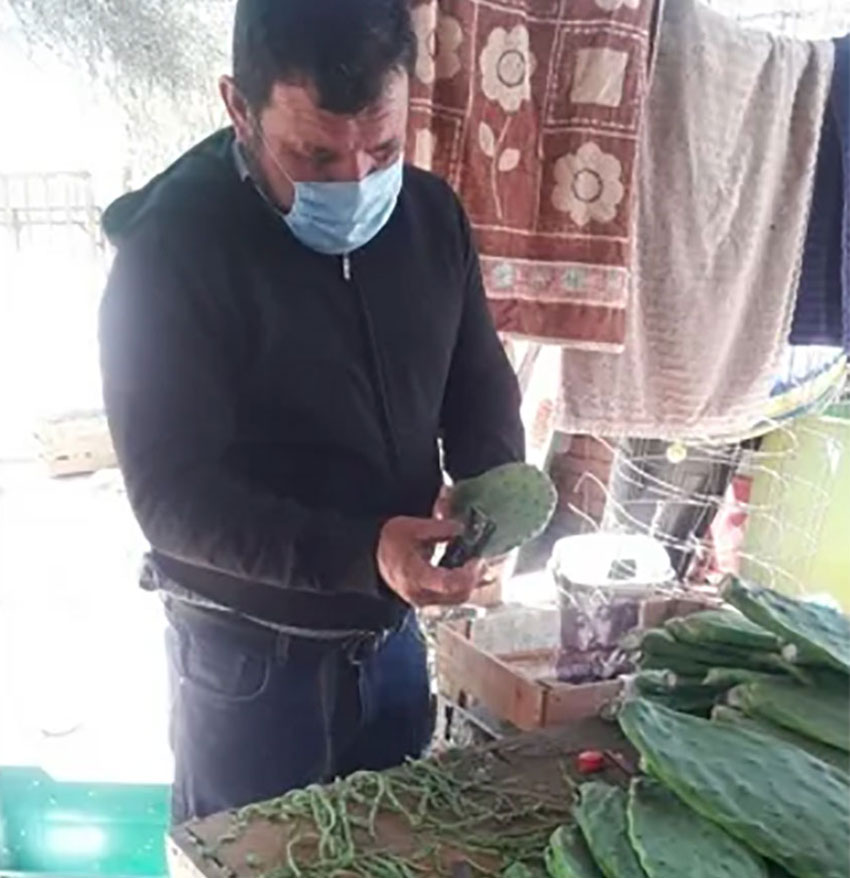
“My husband is in charge of making the deliveries on his motorcycle and he takes with him face masks, hand soap, water for handwashing and antibacterial hand gel, which will serve to avoid contagion and should make people feel safe enough to receive their deliveries.”
But physical distancing isn’t the only thing keeping customers away, as the lack of work is a problem for many in the community. “Also, as some people from town aren’t working, they don’t have the funds to buy from us,” she said.

The lack of demand led Alfredo Rivera to start a Facebook page under the name Productos Rivera in hopes of reaching more customers, but the response has been tepid so far.
“Unfortunately there has been little response,” Judith said. Opened on April 5, the group had 83 followers as of Tuesday afternoon.
Although the mitigation measures have put their home finances in jeopardy, she said they are following them rigidly due to a number of underlying conditions that make them more vulnerable to Covid-19.
Her 21-year-old son Joel has a condition known as Sanfilippo syndrome, a degenerative disease affecting the brain and spinal cord that can cause facial dysmorphism, seizures, movement disorders and dementia later in life.
“That’s why we take care to avoid that he has any complications. Also, I’m diabetic, hypertensive and asthmatic, so we’re very vulnerable and run a high risk of contracting the virus,” she said.
The situation may be difficult, but the family still has hope.
“We’re going through a difficult moment, [but] we hope that soon everything will bounce back for the good of humanity … We’re going to endure it as best we can and [listen to] what God says.”
Source: El Universal (sp)