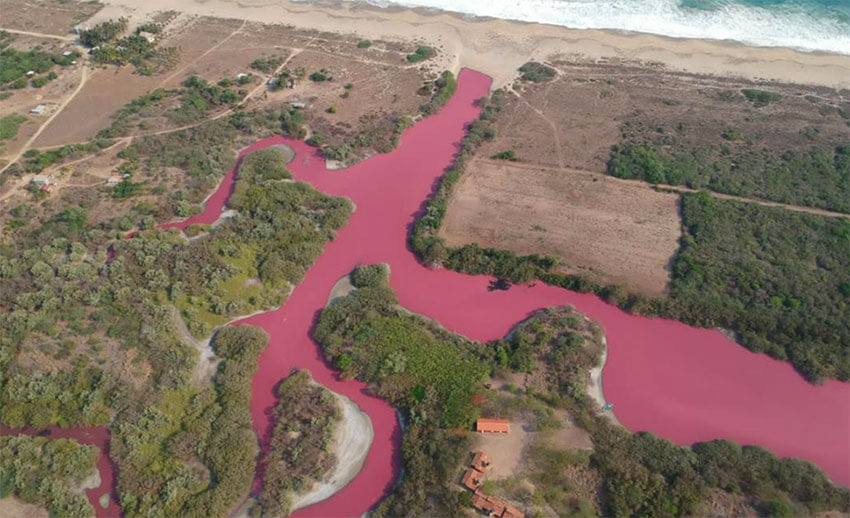
A lagoon on the Oaxaca coast has turned bright pink, a phenomenon locals believe is related to a lack of oxygen in the water.
The water in the La Salina lagoon in the community of Escobilla, Santa María Tonameca, turned pink about a week ago, according to locals cited by the newspaper El Universal.
The low oxygen levels are believed to be caused by the closure of an outlet to the sea as well as a lack of rain.
Salt was previously extracted from the lagoon, located between the resort destinations of Puerto Escondido and Huatulco, for commercial purposes – hence its name – and it still has that mineral on its bed. The presence of salt in the water is also believed to be a factor in the lagoon’s sudden color change, for which authorities haven’t given an official explanation.
The newspaper El Imparcial reported that the pink color is due to the presence of bacteria that releases a pink pigment. The bacteria only occurs in water with a high concentration of salt, it said.
Citing an unnamed local, journalist Esau Zavaleta said on Facebook said that the color change is “a phenomenon of which there is no record.”
“… It seems to be due to many situations that we can’t determine with accuracy,” he wrote. “But without a doubt it is part of climate change and humans are the main culprits.”

The poor condition of the water in the lagoon has led to a reduction in the number of species that inhabit it. Locals say that fish and crocodile numbers have been on the wane for three years.
Sea turtles could also be affected by the deteriorating health of the lagoon as they nest in the area, which is a designated turtle sanctuary.
The change in the color of the water comes almost three years after the Manialtepec lagoon near Puerto Escondido also turned pink. The color change in that case was believed to be related to a change in the microorganism population in the water.
With reports from El Universal and El Imparcial