An indigenous student from a poor region of Oaxaca has been awarded a doctorate in theoretical chemistry by the Massachusetts Institute of Technology.
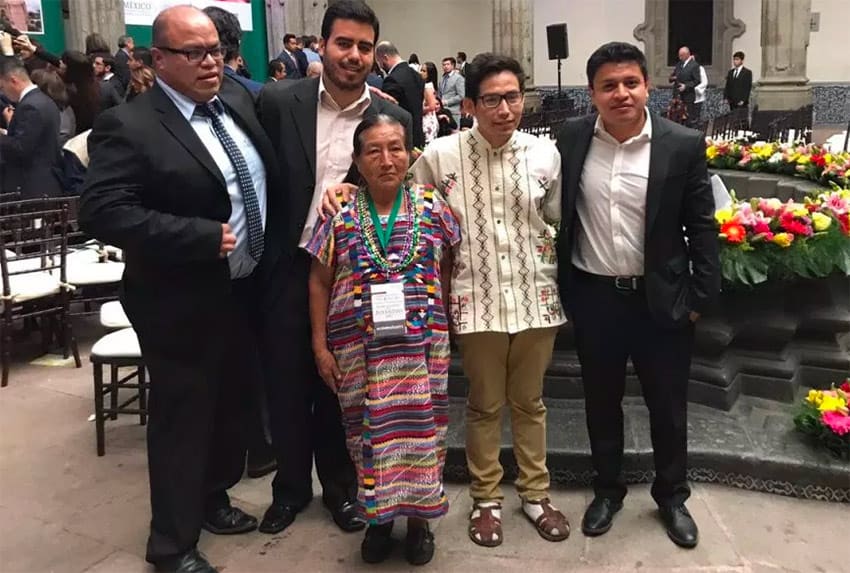
Ricardo Pablo Pedro, 27, was born to an indigenous Chinantec family in the small town of La Mina, Tuxtepec, where his early years were marked by poverty and discrimination. But those obstacles were never enough to stop from achieving his goal: obtaining a doctorate from a foreign school.
After obtaining a full scholarship and studying for six years at MIT, that dream has come true.
“My mother always told me that education was the only thing that would get me going forward, and I understood there was a reward if you made the effort,” Pablo told the news agency Conacyt Prensa last year.
His mother traveled to the United States for her son’s graduation ceremony in May, where Concepción Pedro proudly wore the traditional huipil, a common garment among the women of the Cuenca region of Oaxaca.
And her son wore his sandals, which had in the past earned him the discriminatory label, “indio huarachudo,” or sandal-wearing Indian.
Pablo plans to dedicate the summer months to finish several research projects, after which he wants to enroll in a post-doctorate course and later, perhaps, teach at MIT.

In 2017 he was awarded the National Youth Prize by the Mexican government.
Source: El Universal (sp)