There are no plans to suspend oil auctions scheduled for February, the president of the National Hydrocarbons Commission (CNH) said yesterday, providing a sign that president-elect Andrés Manuel López Obrador is retreating from plans to wind back the 2014 energy reform.
Sergio Pimentel said that rounds 3.2 and 3.3 of oil auctions are set to go ahead on February 14, 2019, stating that “there is no official, formal sign that these processes will be suspended.”
López Obrador has said that that future oil auctions could be cancelled or suspended and that his government will review oil and gas contracts that have been awarded to foreign and private companies in auctions already held.
However, Carlos Urzúa, nominee for finance secretary in the incoming government, said in July that if no irregularities are detected in the contracts they will be honored.
In round 3.2, rights to explore and exploit 37 onshore oil and gas fields will be up for grabs and are expected to generate investment of around US $3.3 billion, according to the Secretariat of Economy.
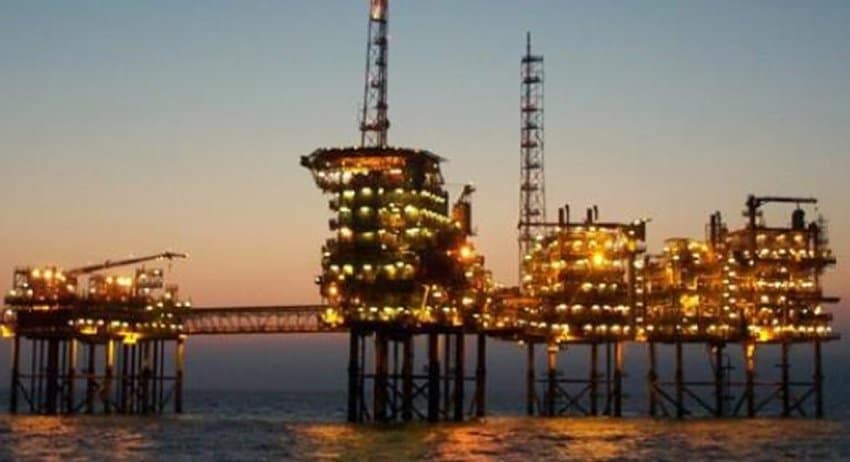
In round 3.3, nine offshore blocks containing an estimated 53 billion barrels of crude will be auctioned. The blocks, the first ones containing shale gas to be sold, are forecast to attract investment of around US $2.3 billion.
In a more concrete sign that the next government will remain open to foreign and private investment in the energy sector, López Obrador said yesterday that his administration would launch new tenders for drilling oil wells as soon as it is sworn in as part of a plan to increase Mexico’s crude output.

Mexico’s crude production has fallen to 1.8 million barrels per day, the lowest level in decades.
“We are already preparing tenders for the drilling of wells, and we are getting ready because we are going to launch those tenders from the first days of December. We’re going to allocate 75 billion pesos [US $3.9 billion] to this emerging program,” López Obrador told reporters in Mexico City.
The president-elect, who will be sworn in on December 1, said he will meet with employees of state oil company Pemex and other oil sector representatives in Villahermosa, Tabasco, tomorrow to discuss plans to initiate the process.
“We are preparing the rescue plan for the oil industry that will consist of producing more crude oil soon, and we will need companies that have experience, most of them national companies,” López Obrador said.
The president-elect explained that in addition to offering the exploration tenders, his government will also hold a tendering process for the reconfiguration of Pemex’s six existing oil refineries to increase production capacity and the construction of a new one at Dos Bocas, Tabasco.
“With the new refinery, we are seeking to stop buying foreign gasoline in the medium term,” López Obrador said.
“We have to lift petroleum production and in a short time because it stopped, oil exploitation slowed down in recent times and that’s why there is a decline in oil production.”
The president-elect added that the support of all petroleum workers would be required to achieve the goal of lifting production.
The energy reformed implemented by the current federal government opened up the energy sector to foreign and private companies for the first time in 75 years.
Source: Milenio (sp), El Financiero (sp)