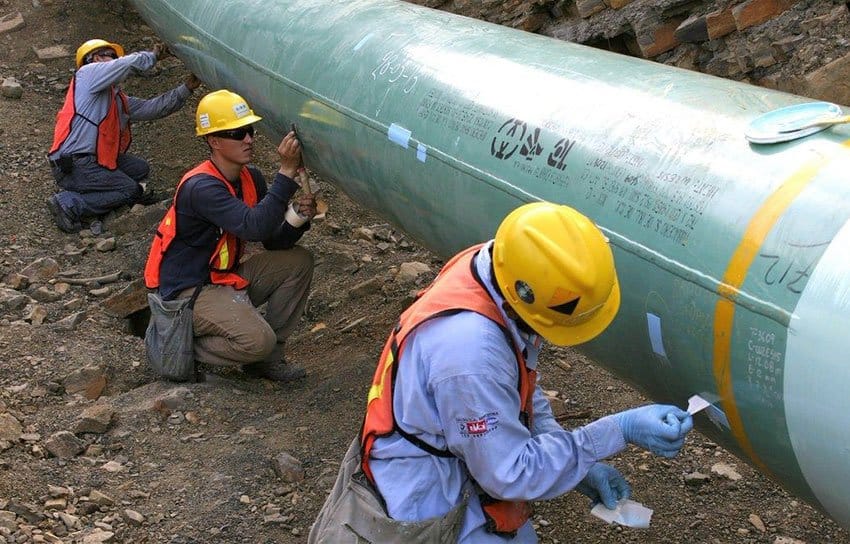
A Canadian energy company has suspended construction of the Tuxpan-Tula pipeline in Hidalgo due to continued problems with opposition along the route.
Announced in 2015, the pipeline is intended to transport Texas natural gas from Veracruz to Hidalgo and supply the Federal Electricity Commission (CFE) and industrial customers in central and western Mexico.
But opposition to the project, which is being built by TransCanada Corp., has come from indigenous communities.
The project came to a halt early this year when the Puebla municipalities of Pahuatlán and Tlacuilotepec obtained an amparo, or injunction, against it.
That section of the pipeline is on standby while the federal Energy Secretariat conducts consultations with the indigenous communities.
TransCanada said that work on the Hidalgo section of the pipeline has now been suspended because the demands by local social organizations were “irrational” and bordered on “extortion.”
A lawyer for the CFE blamed the halt on local conflicts and opportunistic lawyers.

“I don’t feel good saying it, but lawyers play a very bad role here,” said Eugenio Herrera-Terrazas last week in San Antonio, Texas, at a natural gas forum. He likened them to “ambulance chasers,” explaining that they had been seen going to the towns through which the pipeline passes looking for “a slice of the pie.”
He said three other pipeline projects are facing the same problems.
One of those is another TransCanada project — the Tula-Villa de Reyes pipeline.
Issues cited by TransCanada with regard to the Hidalgo pipeline also included undefined jurisdictional limits between municipalities, and their modifications to laws that increased the costs of obtaining authorizations.
“These situations paralyze the issuance of permits in accordance to law, and threaten the project’s viability due to the financial burden they represent,” the company said.
It estimates that the Tuxpan-Tula pipeline — with the exception of the segment in Hidalgo — will be completed in the second half of 2020. The entire project was supposed to be completed by then.
Source: El Financiero (sp), Natural Gas Intel (en)