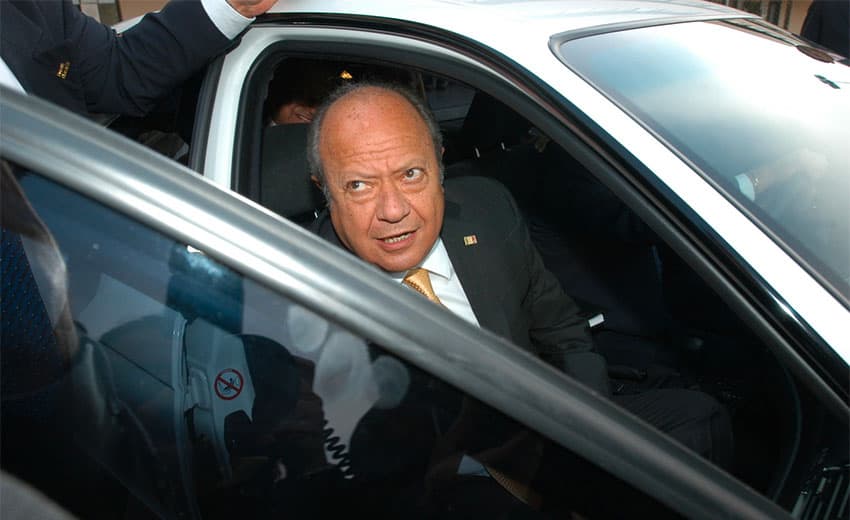
Former Pemex workers’ union boss Carlos Romero Deschamps, an ex-lawmaker once named one of Mexico’s most corrupt politicians, has retired after 62 years service at the state oil company.
President López Obrador announced Tuesday that the 77-year-old former Institutional Revolutionary Party (PRI) deputy and senator had left the company.
“I want to inform the people of Mexico that … Mr. Romero Deschamps has already presented his resignation; in other words he ceases to be an active worker at Pemex. He did this of his own volition and also because of a request we made,” López Obrador said, adding that while the former union chief’s ongoing employment at Pemex was legal, the government considered it “immoral.”
It was revealed in February that Romero, who resigned as secretary general of the workers’ union in late 2019 amid accusations of corruption, was still on the Pemex payroll because he was employed as a department head at the company’s refinery in Tula, Hidalgo.
According to a declaration of assets publicly available on the federal government’s payroll transparency website, Romero earned more than 1.2 million pesos (about US $58,000) last year in salaries and benefits, although whether he was really working for Pemex is unclear.
The newspaper Milenio reported that the former union chief, who started working for Pemex in 1959 at the age of 15, would retire on his full salary of 100,736 pesos (US $4,860) per month.
According to a collective labor agreement that took effect in 2019, Romero will also receive a range of generous benefits during his retirement. They include free medical care and medicines for him and his family, an allowance to cover gas expenses at his home and gasoline expenses for his vehicles, an annual bonus payment known as an aguinaldo, an allowance to cover the cost of purchasing basic food items and a funeral package.

Federal authorities have opened 12 investigations into the former union boss for crimes including fraud, embezzlement, illicit enrichment, influence peddling and money laundering. However, only three investigations remained open as of February. No warrants have ever been issued for Romero’s arrest.
Víctor Manuel Jacobo Domínguez, a Pemex employee who is part of a dissident workers’ group that has long accused Romero of corruption, claimed last month that the government had reached deals with the longtime union boss that ensure he will never be brought to justice.
Romero, who coordinated political campaigns for the PRI in his native Tamaulipas in addition to serving in the Congress and running the Pemex workers’ union for 26 years, has long been suspected of corruption.
He was implicated in various scandals including the so-called Pemexgate case in which the union was found to have diverted 500 million pesos to the 2000 presidential campaign of PRI candidate Francisco Labastida.
Romero has also been criticized for his ostentatious lifestyle, including giving a limited-edition Ferrari to his son and picking up the tab for the lavish wedding of his daughter in 2017. He was named by Forbes magazine in 2013 as one of the 10 most corrupt politicians in Mexico.
Source: Milenio (sp), El Financiero (sp)