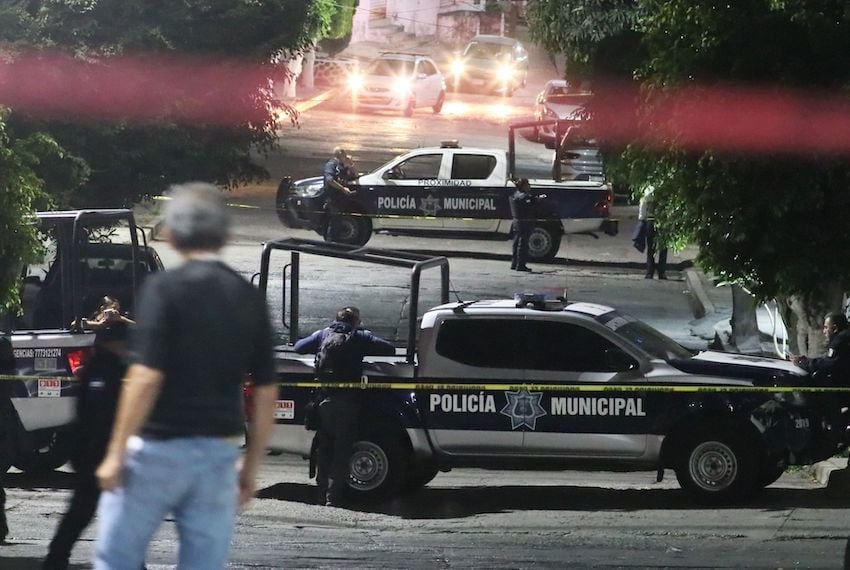
Almost 90% of people who live in Uruapan — the city in Michoacán where the mayor was assassinated last November — believe that the city is an unsafe place to live.
That was among the findings of the latest National Survey of Urban Public Security (ENSU), carried out by the national statistics agency INEGI in the final quarter of 2025.
Published on Friday, the survey results show that 63.8% of respondents across 91 Mexican cities (including the 16 boroughs of Mexico City) consider their place of residence unsafe.
The percentage rose 0.8 points compared to the third quarter ENSU and 2.1 points compared to a year earlier, reflecting an increase in people’s perceptions of insecurity during Claudia Sheinbaum’s presidency, even though official statistics show declines in the incidence of many crimes, including homicide.
Almost seven in 10 women who responded to the survey (69.4%) said that their city is unsafe, while nearly six in ten men (57.1%) said the same.
INEGI conducted the ENSU at 27,130 homes between late November and mid-December.
Which cities have the highest percentages of residents with personal security concerns?
INEGI reported that 88.7% of ENSU respondents in Uruapan said that the city is an unsafe place to live. The percentage rose 6.1 points compared to the previous survey, but declined 3.8% points compared to a year earlier.

The latest ENSU was conducted just weeks after Mayor Carlos Manzo was gunned down in Uruapan’s central square during a Day of the Dead festival on Nov. 1.
Eight days later, the federal government presented “Plan Michoacán for Peace and Justice,” a 57-billion-peso (US $3.3 billion) initiative devised in response to the assassination and general insecurity in Michoacán, one of Mexico’s most violent states.
After Uruapan, the cities with the next highest percentages of residents with personal security concerns in the final quarter of 2025 were:
- Culiacán, the capital of Sinaloa. Almost nine in ten surveyed residents (88.1%) consider the city unsafe. In recent times, Culiacán has been plagued by violence related to Sinaloa Cartel infighting.
- Ciudad Obregón, the second largest city in Sonora, is considered unsafe by 88% of surveyed residents.
- Ecatepec, a densely-populated México state municipality that adjoins Mexico City, is also considered unsafe by 88% of surveyed residents.
- Irapuato, the second largest city in Guanajuato, is considered unsafe by 87.3% of surveyed residents.
Rounding out the top 10 cities where the highest percentage of residents feel unsafe were Chilpancingo, Guerrero (86.4%); Chimalhuacán, México state (85.7%); Puebla city (84.5%); Tlalnepantla, México state (83.8%); and Villahermosa, Tabasco (83.8%).
Which cities have the lowest percentages of residents with personal security concerns?
The cities with the lowest percentages of residents with personal security concerns in the final quarter of 2024 were:
- San Pedro Garza García, a municipality in the metropolitan area of Nuevo León capital Monterrey. Just 8.7% of surveyed residents said that San Pedro is an unsafe place to live.
- Benito Juárez, a Mexico City borough that includes neighborhoods such as Del Valle, Narvarte and Nápoles. Only 14.8% of surveyed respondents consider Benito Juárez an unsafe place to live.
- Piedras Negras, a border city in Coahuila opposite Eagle Pass, Texas. Around one in six surveyed respondents (17.3%) consider the city unsafe.
- Los Mochis, a city in Sinaloa, is considered unsafe by 25.6% of surveyed residents.
- San Nicolás de los Garza, a Nuevo León municipality in the Monterrey metro area, is considered unsafe by 27.5% of surveyed residents.
Perception of insecurity down significantly in 7 cities, up significantly in 7
Compared to the third quarter of 2025, there were statistically significant changes in perceptions of insecurity in 14 Mexican cities, INEGI said.
In seven of those cities, the percentage of residents with security concerns declined significantly, while the percentage increased significantly in seven.
The cities where there were significant decreases were:
- Miguel Hidalgo, Mexico City: 51.1% in Q3 to 35.7% in Q4 (↓15.4 points)
- Torreón, Coahuila: 43.4% in Q3 to 29.5% in Q4 (↓13.9 points)
- La Laguna, Coahuila: 48.4% in Q3 to 36.9% in Q4 (↓11.9 points)
- Nayarit, Jalisco: 49.7% in Q3 to 37.9% in Q4 (↓11.8 points)
- Tonalá, Jalisco: 65.4% in Q3 to 56.5% in Q4 (↓8.9 points)
- Tlalpan, Mexico City: 64.4% in Q3 to 55.7% in Q4 (↓8.7 points)
- Gustavo A. Madero, Mexico City: 73.2% in Q3 to 65.3% in Q4 (↓7.9 points)
The cities where there were significant increases were:
- Mazatlán, Sinaloa: 52.8% in Q3 to 80.4% in Q4 (↑27.6 points)
- Hermosillo, Sonora: 47.5% in Q3 to 61% in Q4 (↑13.5 points)
- Milpa Alta, Mexico City: 52.3% in Q3 to 65.4% in Q4 (↑13.1 points)
- Pachuca, Hidalgo: 46.9% in Q3 to 59.9% in Q4 (↑13 points)
- Tampico, Tamaulipas: 22.8% in Q3 to 34.8% in Q4 (↑12 points)
- La Magdalena Contreras, Mexico City: 55.9% in Q3 to 65.2% in Q4 (↑9.3 points)
- Azcapotzalco, Mexico City: 59.6% in Q3 to 68.5% in Q4 (↑8.9 points)
The places where Mexicans most commonly feel unsafe
Just over 72% of ENSU respondents reported feeling unsafe while using ATMs on the street, while almost 65% expressed security concerns about walking on the streets they regularly use and traveling on public transport.
More than 50% of respondents said they felt unsafe on highways and at the bank.
The percentages were higher among women than among men in all those places — and several others, including the home and the workplace.
Crime and anti-social behavior
Among the respondents who reported having seen or heard criminal activity or anti-social behavior near their homes in the fourth quarter of 2025, almost six in 10 said they had observed people drinking in the street.
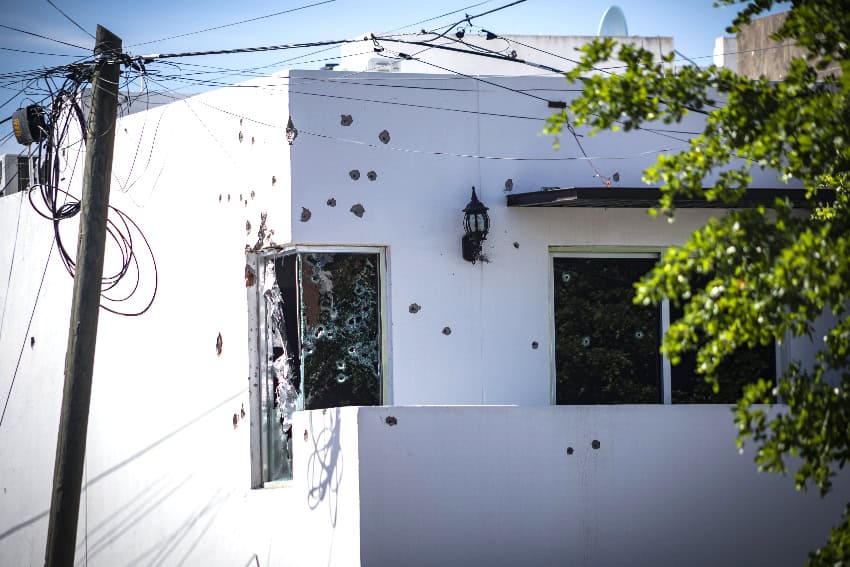
More than 48% of respondents reported having witnessed a robbery or mugging, and around four in 10 told INEGI they had seen people buying or using drugs.
Just under 39% of those surveyed said they had witnessed homes or businesses being vandalized, and 36.7% reported having heard frequent gunshots.
Just under one-quarter of respondents said they had witnessed some kind of gang activity near their home.
Opinions on Mexico’s security forces
The Mexican Navy is the country’s most effective security force, according to the results of the latest ENSU. Exactly 83% of respondents said they believe the Navy is very or somewhat effective in preventing and combating crime.
Just under 81% of those polled said the same about the Air Force, while the figures for the Army and the National Guard were 79.7% and 70%, respectively.
Almost 52% of respondents said that state police forces are very or somewhat effective in preventing and combating crime, while 46% said the same about municipal police.
Citizens’ security expectations
Around one-third of survey respondents (33.7%) said they expected the security situation in their city to remain “just as bad” during the next 12 months, while 25.6% predicted a deterioration.
Almost a quarter of respondents (23.2%) said they expected security to improve in their place of residence during the next 12 months, while 16.4% anticipated that the situation would remain “just as good” as it currently is.
Mexico News Daily