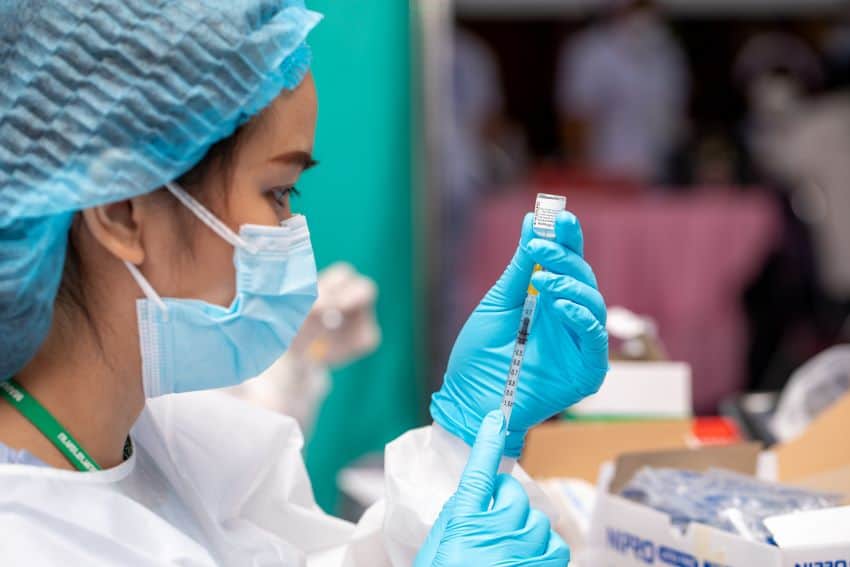
Global pharmaceutical giant Pfizer plans to use its facility in Toluca, México state, to revive vaccine awareness in Mexico and become a key vaccine supplier in the Latin American region, according to the manufacturing site leader of the Pfizer Toluca Manufacturing Plant, Diana Cruz Salazar.
Pfizer cited Mexico’s decline in its vaccination coverage in recent years as motivation for its awareness campaign, which includes the promotion of its soon-to-be-introduced 20-valent pneumococcal vaccine — a formula protecting against seven more pneumococcal infections than the previous 13-valent version.

“We are very interested in promoting vaccination, not only in Mexico but worldwide,” Cruz Salazar said in an interview with the newspaper El Economista. “Interest in getting vaccinated has decreased, and we are very interested in reaching every person … and prevent[ing] diseases that constantly threaten us.”
The decline in vaccinations can be traced to a global shortage of vaccines, but misinformation also plays a large part.
Vaccination of young children in Mexico has dipped to around 78 or 80%, compared to 95% a few years ago, Dr. César Martínez Longoria, a specialist in pediatrics and pediatric infectious disease, said during a recent Pfizer panel entitled “From Birth to Aging: Vaccines for Life.”
Martínez blamed that decline partially on parents not understanding the importance of vaccinating their children, including for illnesses that no longer exist in Mexico, such as diphtheria and polio.

“They ask why they should vaccinate their child against something that isn’t in Mexico,” Dr. Martínez said. “It doesn’t exist here because we’ve continued to vaccinate against it.”
Life expectancy in Mexico increased from 51 years in 1960 to 73 in 2023, which Dr. Martínez stressed is largely owing to the wide coverage of vaccines.

Pfizer’s pneumococcus vaccine will be manufactured in Ireland before being shipped to its Toluca plant to be labelled and packaged for distribution.
Pfizer labels, stores and distributes products to 10 Latin American countries and regions: Argentina, Bolivia, Brazil, Chile, Colombia, Ecuador, Mexico, Peru, Uruguay and Central America, from its Toluca facility.
The New York-based pharmaceutical company invests between US $12 million and $15 million in its Toluca plant each year, where it employs 420 people and has an annual manufacturing capacity of 194 million units.
In January, Pfizer Mexico announced plans to increase its investment in Mexico, particularly in clinical research. Pfizer’s Medical Affairs Director Yéssika Moreno said that President Claudia Sheinbaum’s administration’s plans to improve the regulatory environment for clinical research in the country make it more attractive for Pfizer to invest.
With reports from El Economista