Business groups have rejected the federal government’s decision to eliminate the country’s seven Special Economic Zones (SEZs), expressing disappointment that they were not consulted.
President López Obrador confirmed yesterday that the zones will disappear, declaring that they were of “no benefit” to the economy.
Francisco Cervantes, president of the Confederation of Industrial Chambers (Concamin), said the private sector will analyze the impact of the decision on investment and the economy as a whole.
Businesses have already committed an estimated US $8.2 billion to projects in the seven SEZs, investments which are now in doubt, although Cervantes said Concamin had been informed that the government “will seek to respect” agreements already made.
But companies that decide to continue with their plans will not enjoy the zero corporate tax rate for 10 years as promised by the previous federal government, which created the SEZs in late 2017 and early 2018.
The seven zones are located in Puerto Chiapas, Chiapas; Salina Cruz, Oaxaca; Lázaro Cárdenas-La Union, Michoacán and Guerrero; Coatzacoalcos, Veracruz; Seybaplaya, Campeche; Dos Bocas, Tabasco; and Progreso, Yucatán.
Cervantes said that Concamin and the Business Coordinating Council (CCE) were disappointed that the government didn’t advise them of its intention to eliminate the SEZs before yesterday’s announcement was made.

“. . . It’s a new government, a new vision, and this shouldn’t surprise us. What surprises us is that we weren’t consulted, we would have liked to have been informed [by the government] first, not by the press. That’s the sentiment of Concamin and the CCE,” Cervantes said.
Cervantes and CCE president Carlos Salazar Lomelín both said they are waiting to see what projects the government proposes to stimulate economic development in the regions of the country that will no longer have SEZs.
The Maya Train and the Isthmus of Tehuantepec trade corridor are two major projects that the López Obrador administration has already announced and according to a report today in the newspaper El Sol de México, they will replace the SEZs.
The government argues that the two projects will bring significant economic and social benefits to the south and southeast of the country.
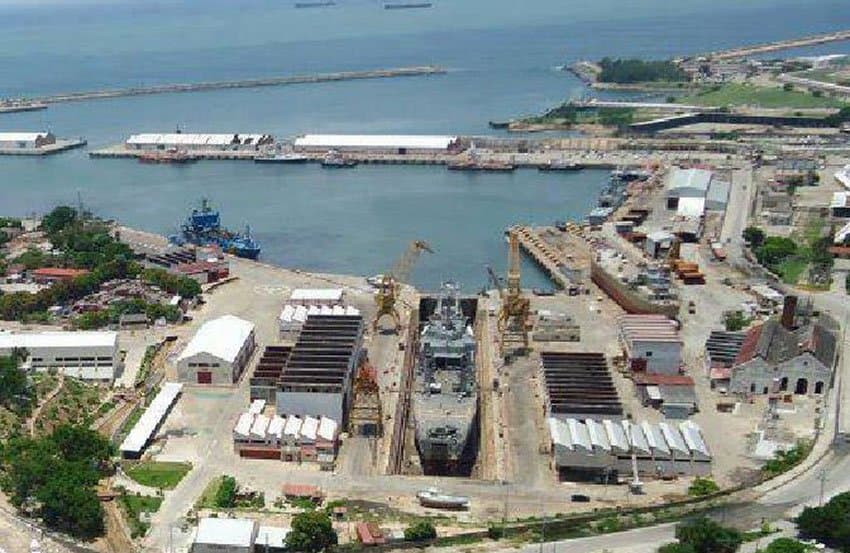
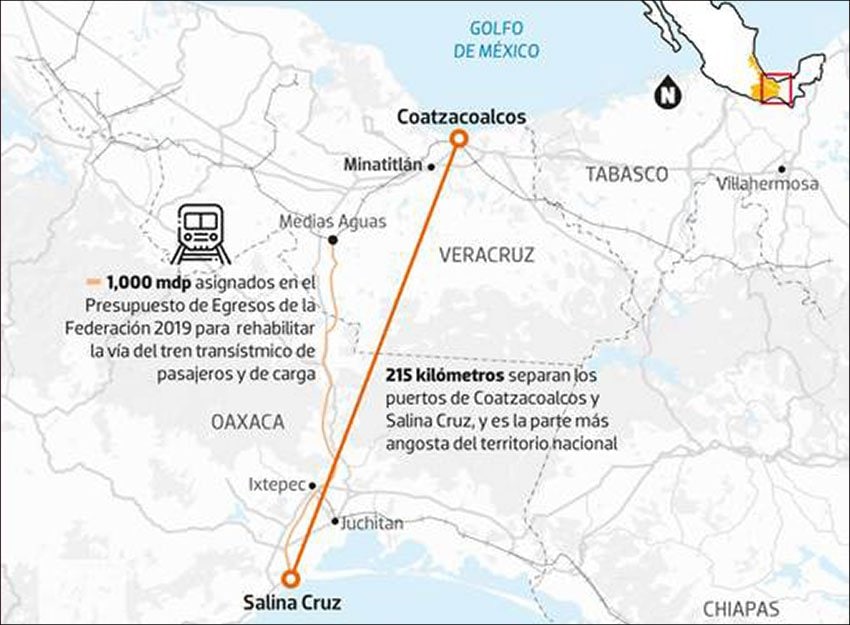
To manage the isthmus project, which includes modernization of a rail line between Salina Cruz, Oaxaca and Coatzacoalcos, Veracruz, a new state-owned company in which the private sector will also invest is on the verge of being created, El Sol de México said.
While both public and private investment are slated to fund the Maya Train and isthmus projects, the president of the National Chamber for Industrial Transformation (Canacintra) contended that López Obrador decision to cancel the SEZs is evidence that he has a clear preference for the former.
“I believe that he’s sending a bad signal, that he doesn’t want private investment but rather [he wants] everything to be public, but private [investment in Mexico] is seven times greater than what the government contributes,” Enoch Castellano Férez told the newspaper El Financiero.
José Manuel López Campos, president of the Confederation of Chambers of Commerce, Services and Tourism (Concanaco), was also critical of the president’s decision to eliminate the SEZs because they were designed to attract investment and create employment in underprivileged parts of the country.
Agustín Arriaga Diez, president of the Michoacán branch of the CCE, said that “with the cancelation of the [special] economic zones in the country, the confidence of investors will be lost and [Mexico’s] international competitiveness will be reduced.”
Source: El Financiero (sp), El Sol de México (sp)