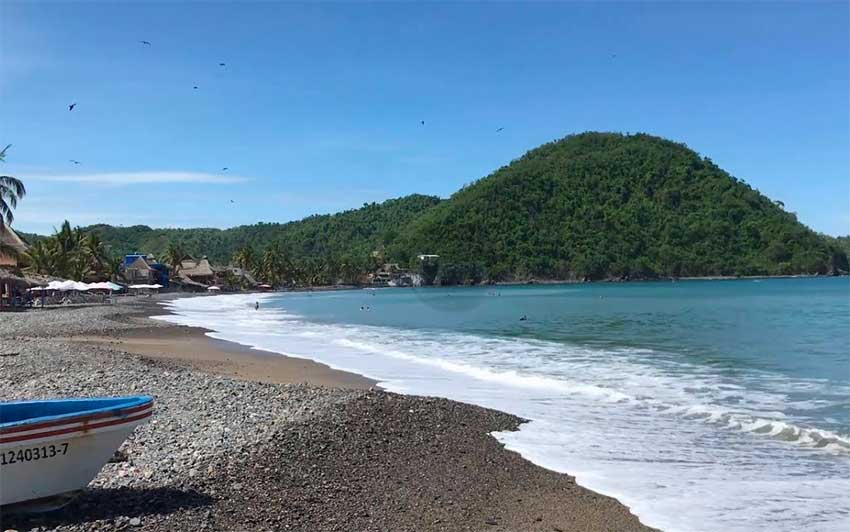
Tourism official says privatization of beaches ‘a serious problem’

The privatization of beaches is a “serious problem,” according to a high-ranking official at the Secretariat of Tourism (Sectur) who said that authorities are already working to open up access to Mexico’s coast.

Simón Levy, a tourism planning and policy undersecretary, told the newspaper Milenio that Bahía de Banderas in Nayarit, La Paz in Baja California Sur and the Quintana Roo resort cities of Cancún, Playa del Carmen and Tulum are the destinations that have been most affected by coastline privatization.

“It’s a serious problem [because] beaches are the natural heritage of all Mexicans,” he said.

Levy said that the purpose of a Sectur initiative that is collecting data about public access to beaches via an online survey is to inform the development of strategies to ensure that all beaches are open to everyone.

Federal authorities are already taking action in conjunction with state governments to open access to beaches that have effectively been privatized and to prevent future privatization, he added.

The official said that since the online survey was opened in February, Sectur has received 277 reports about access or lack thereof to Mexican beaches.

The survey gives citizens the opportunity to “denounce all types of infringements of public accesses to beaches and the privatization of windows to the sea,” Levy said.

The Secretariat of the Environment (Semarnat) and the federal Environmental Protection Agency (Profepa) are also contributing to the efforts.

Other privatized beaches identified by the online survey as of the end of February were in Ensenada and Loreto, Baja California; Los Cabos in Baja California Sur; Puerto Vallarta, La Huerta and Cihuatlán, Jalisco; and Tuxpan, Veracruz.

Source: Milenio (sp) 

Have something to say? Paid Subscribers get all access to make & read comments.
Brush fires from afar in Puerto Vallarta/Bahía de Banderas

Brush fires mostly contained in Bahía de Banderas

0
Brush fires that broke out Sunday in Lago Real and Bucerías have been extinguished; however, emergency crews are still working to control hot spots in La Cruz de Huanacaxtle.
Manzanillo, Colima, México, 13 de marzo de 2026. La doctora Claudia Sheinbaum Pardo, presidenta Constitucional de los Estados Unidos Mexicanos en conferencia de prensa matutina, “Conferencia del Pueblo” desde Colima. La acompañan Indira Vizcaíno Silva, gobernadora Constitucional del Estado de Colima; Omar García Harfuch, secretario de Seguridad y Protección Ciudadana (SSPC); Raymundo Pedro Morales Ángeles, secretario de Marina (Semar); Bulmaro Juárez Pérez, divulgador de lenguas originarias, presentador de la sección “Suave Patria”; Ricardo Trevilla Trejo, secretario de la Defensa Nacional (Sedena); Jesús Antonio Esteva Medina, secretario de Infraestructura, Comunicaciones y Transportes; Bryant Alejandro García Ramírez, fiscal general del Estado de Colima; Fabián Ricardo Gómez Calcáneo; Rocío Bárcena Molina, subsecretaria de Desarrollo Democrático, Participación Social y Asuntos Religiosos de la Secretaría de Gobernación; Efraín Morales López, director general de la Comisión Nacional del Agua (Conagua); Marcela Figueroa Franco, secretaria ejecutiva del Sistema Nacional de Seguridad Pública (SESNSP) y Guillermo Briseño Lobera, comandante de la Guardia Nacional (GN). Foto: Saúl López / Presidencia

Mexico’s week in review: Congress deals Sheinbaum her first legislative defeat

1
The week of March 9 in Mexico was marked by standoffs between allies in Congress and adversaries at the airport. Here's what you missed.
A soldier displays seized handguns

The US and Mexico, growing together and growing apart: A perspective from our CEO

1
From a historic drop in homicides to opposite bets on electric vehicles, Mexico News Daily's CEO breaks down where the U.S. and Mexico are converging — and where they're not.
BETA Version - Powered by Perplexity