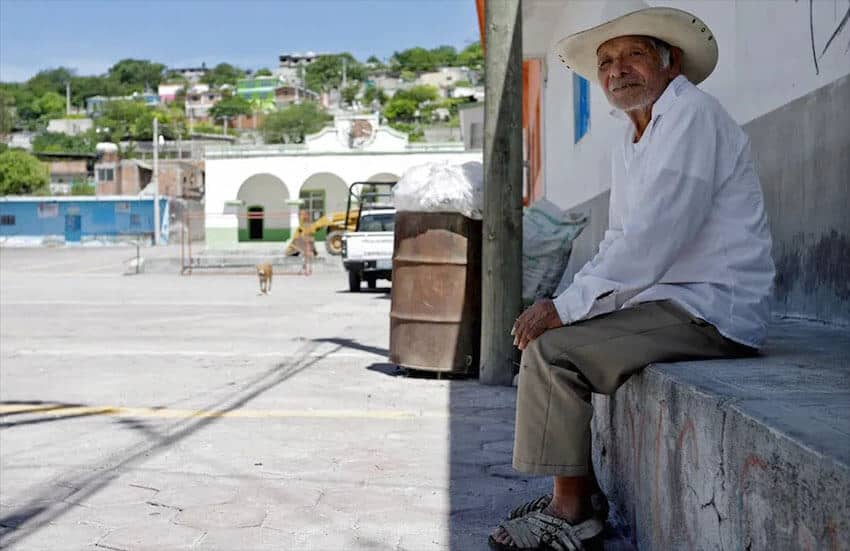
Reina Nolasco’s father and four of her brothers migrated to the United States to work and send money home to family members who remained in her small town in Puebla. But she is far from the only Xoyatla resident with relatives in the States: heading north to work is a long-established tradition in the community located about 60 kilometers southwest of Puebla city.
Nolasco, a teacher in Xoyatla — a town of some 2,000 people where Náhuatl is still spoken — told the newspaper El Sol de Puebla that her father left for the U.S. in 1980 and worked there for over two decades to support his family at home.
“He made a commitment to his family to give us [children] the best [life he could],” she said. “Since then we understood that giving your all for your children is the greatest [source of] pride. ”
Nolasco, one of nine siblings, said that four of her brothers followed in their father’s footsteps and migrated to the U.S. to work. The money they sent home put her and her sisters through university, she said.
Nolasco’s father returned to Xoyatla in 2006 but her brothers remain in the U.S. and send remittances home to their parents, returning the favor to their hard-working dad. Together they send between US $200 and $300 home per month, or more if there is a religious festival or other special event coming up, Nolasco said.
“That’s the way it is in our town,” she said, referring to the longstanding practice of emigrating to the U.S. to work.
“It’s hard because we don’t see our brothers, uncles and fathers for maybe 20 or even 30 years, but that’s the tradition and we have to respect it,” Nolasco said.

With so many erstwhile Xoyatla residents in the United States, it’s no surprise that remittances are the main source of income in the town, where working-age inhabitants mainly work on farms, make mezcal or weave baskets and other craftwork with palm leaves.
With dollars flowing into the town — including cash — local businesses began accepting payments in greenbacks in 2000, El Sol de Puebla said, adding that purchases are still occasionally made with the United States currency. The newspaper reported that migrants return to Xoyatla when they reach a certain age, with some marrying once they’re back in their home town.
Families commonly build homes with money earned in the United States, where poblanos — as natives of Puebla state are known — are well represented among the Mexican migrant community, especially in states such as New York and California.
With reports from El Sol de Puebla