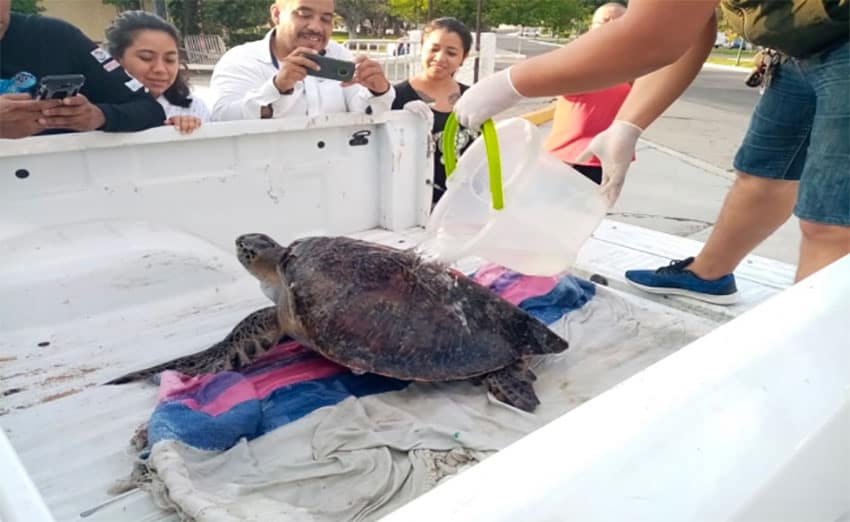
Parasites flourishing in the phenomenon known as red tide caused a massive die-off of green and olive ridley sea turtles on the Oaxaca coast in December.
The federal environmental protection agency Profepa said the naturally occurring algae bloom was observed on the Pacific coast on December 25.
Autopsies performed the following day on two green sea turtles found on beaches in Huatulco revealed that the cause of death was a parasite called salp, which paralyzes the turtles and impedes them from raising their heads above the water to breathe.
According to Profepa, 292 green sea turtles died and 27 were rescued and rehabilitated at the Mexican Turtle Center in Mazunte. They will later be released back into the wild.
The Profepa report also said that one olive ridley turtle was buried at Huatulco’s Chahue beach.
The agency held a meeting with various turtle-related institutions in Santa Cruz Huatulco on December 30 to deal with the situation.
Security patrols both on land and at sea examined a number of beaches on which dead turtles were found.

The phenomenon is not new to Oaxaca’s beaches, which are some of the most important sea turtle nesting locations in the world. A similar situation caused many turtle deaths in February 2016.
Source: El Universal (sp)