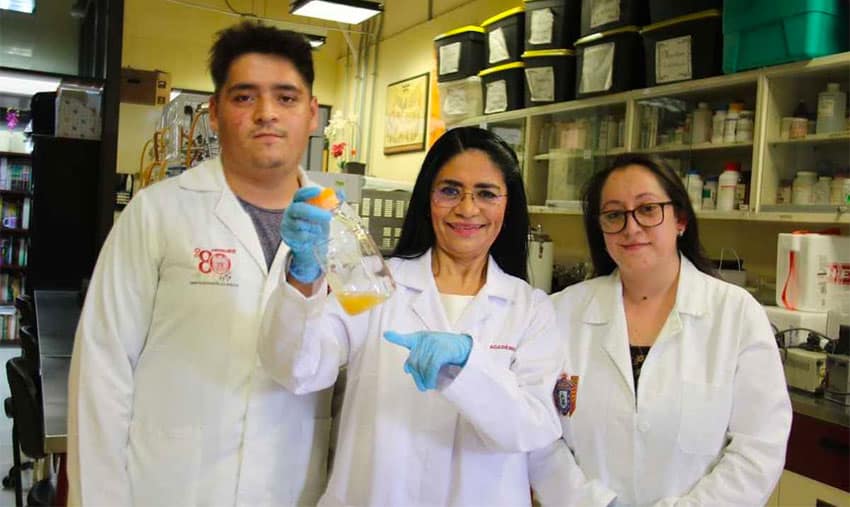
Pulque, an alcoholic drink from fermented agave, contains a cancer-inhibiting probiotic, researchers have found.
The finding indicates that a lactic acid bacteria found in the drink called Lactobacillus brevis prevents the proliferation of colon cancer cells by up to 40%.
Mexican and French scientists made the discovery in a joint study of Mexican fermented beverages by the National Polytechnic Institute (IPN) and France’s National Institute for Agricultural Research (INRAE).
Researchers isolated 20 strains of Lactobacillus brevis from pulque sediment to test their ability to block the proliferation of tumorous cells, and found that the strain which is endemic to Nanacamilpa, Tlaxcala, to be most effective.
The two research institutions have obtained a patent for the discovery, and detailed information has been shared with experts in the United States, Canada and the European Union.
Dr. María Elena Sánchez Pardo, an IPN researcher, attested to the value of the acid to fight cancer. “Lactobacillus brevis has an effect similar to that of the drug 5-fluorouracil, without causing any adverse effects on healthy cells … This is a very important scientific achievement that opens the possibility of having an innocuous treatment against colon cancer,” she said.
Tests were also carried out on an animal model of colon cancer, which provided further evidence of the anti-cancerous effect.

Dr. Pardo added that the discovery motivated the research team, and that their work would continue to search for other beneficial properties of fermented Mexican drinks.
Pulque is known as the drink of the gods as it was considered sacred in pre-hispanic Mexico. It is a milk-colored drink with a yeast like taste.
Source: Milenio (sp)