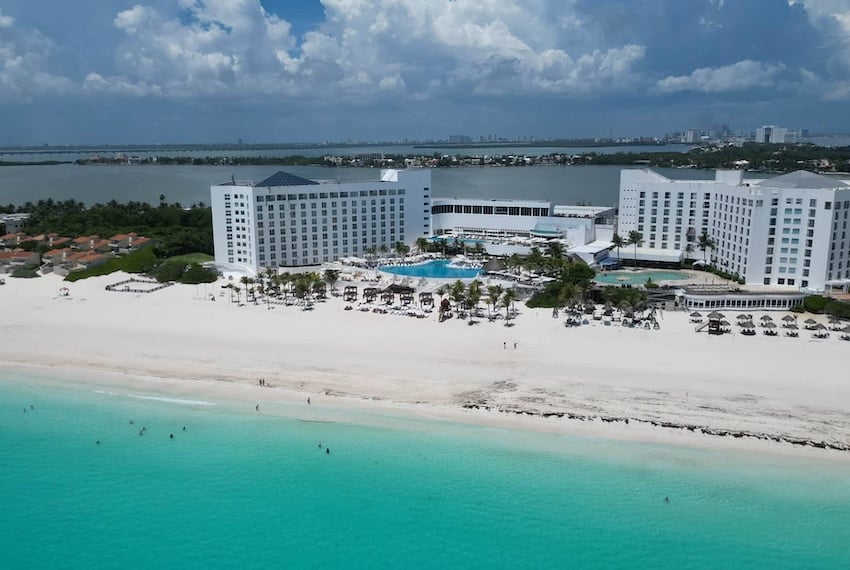
Slowly but surely, the Riviera Maya has begun to regain the clear turquoise waters that underpin much of its tourist appeal, following several months of massive sargassum arrivals along the Quintana Roo coast.
In an interview with the news outlet Reportur, head of the Federal Maritime-Terrestrial Zone in Tulum David Buchanan García said that local beaches are returning to their natural colors following the removal of 5,600 tonnes of seaweed in recent months. Though influxes are down, Buchanan García insisted that his brigades will continue cleanup efforts in anticipation of potential new deposits of the macroalgae.
🌊 ¿Plan de sábado? El Caribe mexicano luce con playas limpias y poca presencia de sargazo en Playa del Carmen.
☀️ Con clima ideal para disfrutar el mar, solo recuerda estar atento a las condiciones.#NEXO #PlayaDelCarmen #QuintanaRoo #CaribeMexicano pic.twitter.com/Yv0uVU9FYd
— Nexo Quintana Roo (@nexoquintanaroo) September 12, 2026
Arturo Quintero Díaz, head of the Municipal Public Services Department for the municipality of Benito Juárez in Cancún, told the news outlet Novedades Quintana Roo that this slowdown is typical of the sargassum cycle, which sees fluctuations and a gradual decline between the months of August and October.
2026 has been the worst sargassum year ever recorded in the Riviera Maya. Between April and August, Quintana Roo removed 124,852 tonnes of sargassum from its coasts — 29,069 tonnes more than during the same period in 2025 — according to figures from the state’s Environment Ministry.

Meanwhile, in Cancún alone, 29,482 tonnes of sargassum have been collected so far this year — a figure far exceeding the 16,000 tonnes recorded throughout 2025. Playa Delfines was among the locations requiring the most attention.
Playa del Carmen also reported large volumes of macroalgae removed, followed by Cancún, Puerto Morelos, Tulum and Mahahual.
Quintana Roo’s pristine beaches may be resurfacing once again, however, challenges lie ahead in 2027.
Esteban Amaro Mauricio, head of the Quintana Roo Sargassum Monitoring Network, told the newspaper La Jornada that although seaweed wash-ups are expected to be minimal during November and December, they could increase shortly after.
According to Amaro, influxes may begin as early as January rather than April or May, when the season typically ramps up. This pattern was observed at the beginning of 2026, which marked the earliest arrival of the seaweed since the seasonal phenomenon began affecting the Mexican Caribbean some 12 years ago.
With reports from Reportur