Groups searching for missing persons in Mexico say they will take advantage of the presence of international press during the World Cup to expose the problem of disappearances in the country.
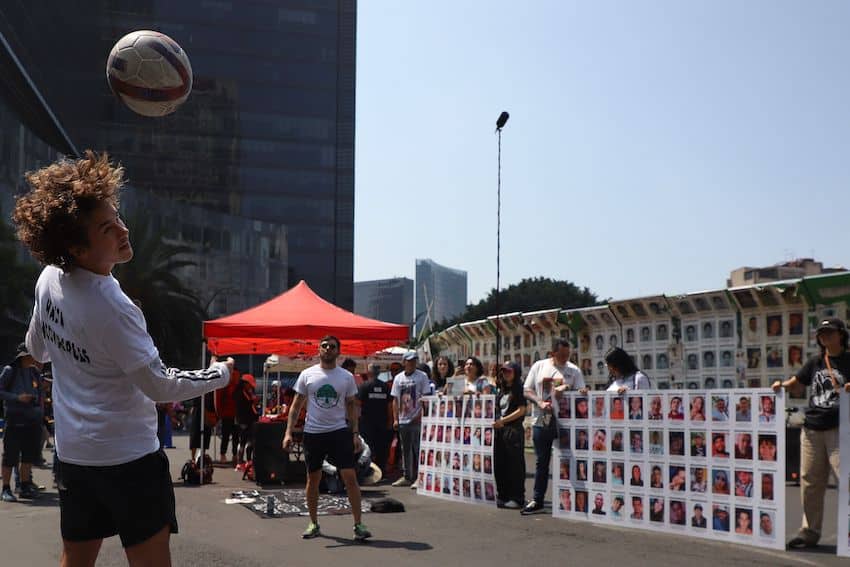
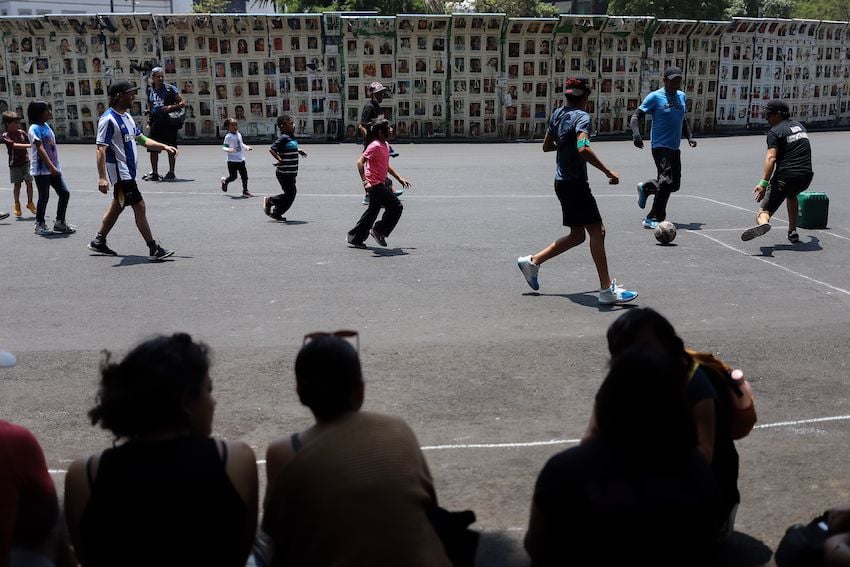
As a first step to build awareness of the situation, members of several search groups on Sunday organized pick-up soccer matches at the Glorieta of the Disappeared on the iconic Paseo de la Reforma avenue in Mexico City.
At a press conference, Jorge Verástegui, who has been searching for his brother and nephew since 2009, described the groups’ “Let’s make it happen. Until we find them” initiative as an effort to break the information blackout they allege the government’s discourse is creating.
“The government intends to use [the World Cup] as a showcase of normality,” he said. “We, the families of the missing, will take to the streets to remind them that Mexico ought not to be a sports venue while it remains a clandestine grave.”
The groups said they will stage a demonstration on June 11 in the vicinity of Mexico City’s Banorte Stadium — site of the inaugural World Cup match. In the meantime, they will stage informal soccer games on Sundays in the streets of Mexico City, Guadalajara and Monterrey, Mexico’s three World Cup host cities.
A spokesman denounced “institutional abandonment” and “the systematic attempts by each administration to downplay the figures and manage the suffering. We will no longer accept these charades.”
Those in attendance also expressed support for the recent U.N. report on Mexico’s “disappeared,” which President Claudia Sheinbaum and the National Human Rights Commission rejected.

Liliana Meza, founder of the Luz de Esperanza search collective in Jalisco, said the families searching for their missing loved ones “find it very difficult to hear the president … say these forced disappearances don’t exist … [acting like] her goal is to lower the numbers, not by finding people, but by fudging all the state and federal data.”
Héctor Flores, whose son disappeared in 2021, said he was eager for the crisis to be brought before the U.N. General Assembly, told the newspaper El Financiero that he believes this “would show the world the reality that the Mexican government has refused to see.”
“In Mexico, people disappear every day … torture, murder and crimes against humanity occur every day,” he said.
The Glorieta of the Disappeared was renamed as such in 2022 when the city government was forced to replace the palm tree that had given the roundabout its previous name.
With reports from El Financiero, La Jornada and Proceso