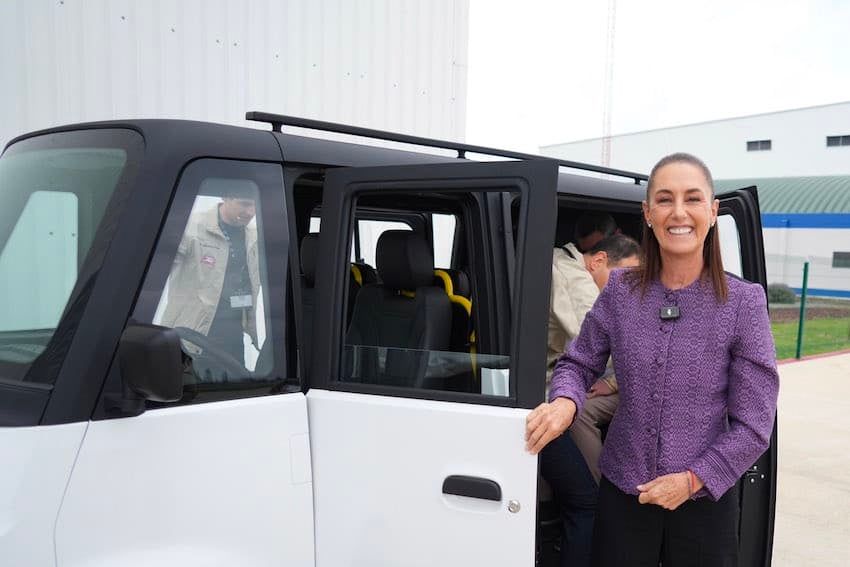
A prototype of Olinia 1, Mexico’s first proprietary electric vehicle, made its debut on Sunday.
“Today we are showcasing innovation in electromobility and related fields,” Sheinbaum said after driving an Olinia herself onto a stage in the Mexican Air Force hangar north of Mexico City. The Mexican government plans to begin producing and selling the EV in 2027.
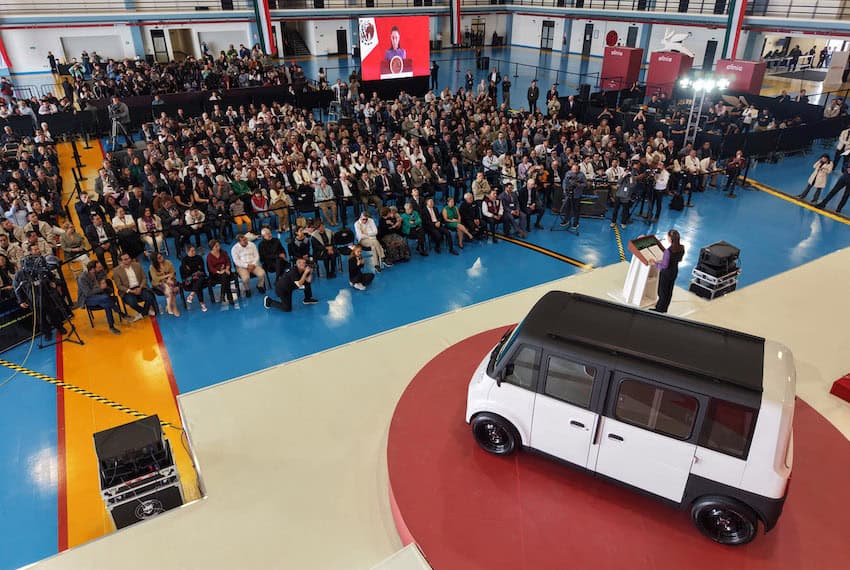
With a starting price of 150,000 pesos (US $8,590), the Olinia was designed for short distances and intensive daily use (8 to 12 hours of driving), with an estimated range of approximately 50 kilometers per hour.
The project has been presented as a cheaper alternative to a conventional car, and a safer choice than motor taxis.
“We wanted to find a solution that works for the people,” Olinia Project Manager Roberto Capuano said when a first glimpse of Olinia was revealed last month.
Named after the Nahuatl word olinia, which means “mobility,” the EV has been highlighted for its efficiency. According to the engineers behind the project, Olinia 1 achieves an operating cost of 4.9 cents per kilometer and can save up to 50,000 pesos (US $2,869) a year just on fuel.
“This vehicle will eventually be paid for with the savings it generates,” Imelda Vega, a researcher for the project, said, adding that it costs five times less than a traditional petrol vehicle and less than half that of a motorcycle.

According to Capuano, the Mexican government expects to install 2,000 charging stations across Mexico City, México state and Puebla between 2026 and 2027, with “tens of thousands of more stations across Mexico” in the pipeline. Olinia 1’s charging mechanism is compatible with the NACS (North American Charging Standard), the same charger used by Teslas.
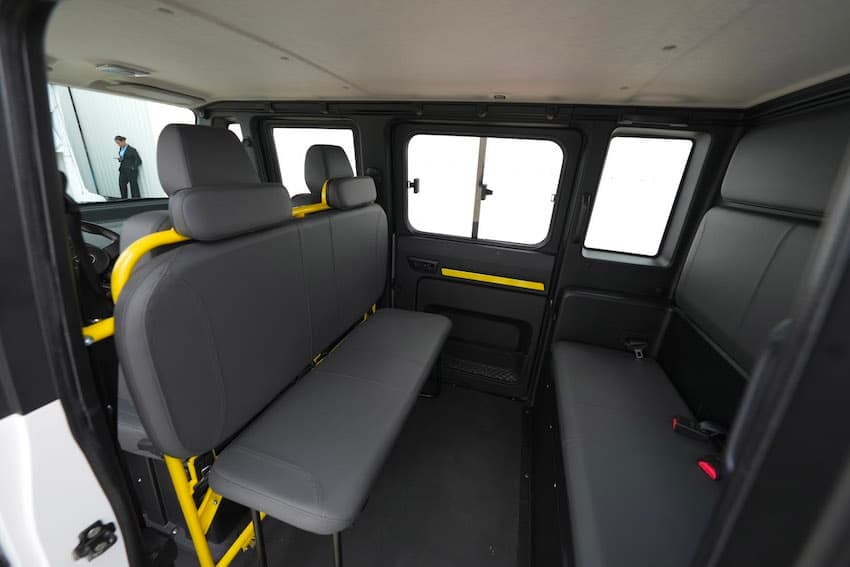
At Sunday’s presentation, Olinia’s engineers did a live demonstration of the vehicle’s accessibility features for wheelchair users, as well as its capacity to comfortably seat six passengers and store a spare tire in the back.
Furthermore, they noted that Olinia was designed with Mexico’s heavy rainy season in mind.
“We understand that a vehicle for Mexico needs to endure puddles, rain and floods. That’s why the car’s engine and battery have an IP 67 water protection resistance,” Director of Technology for Olinia Rafael Garayoa said.
Capuano said that Olinia’s line of models will continue to expand, with the next reveal featuring a freight transport vehicle, to debut in July after the 2026 FIFA World Cup.
With reports from Uno TV