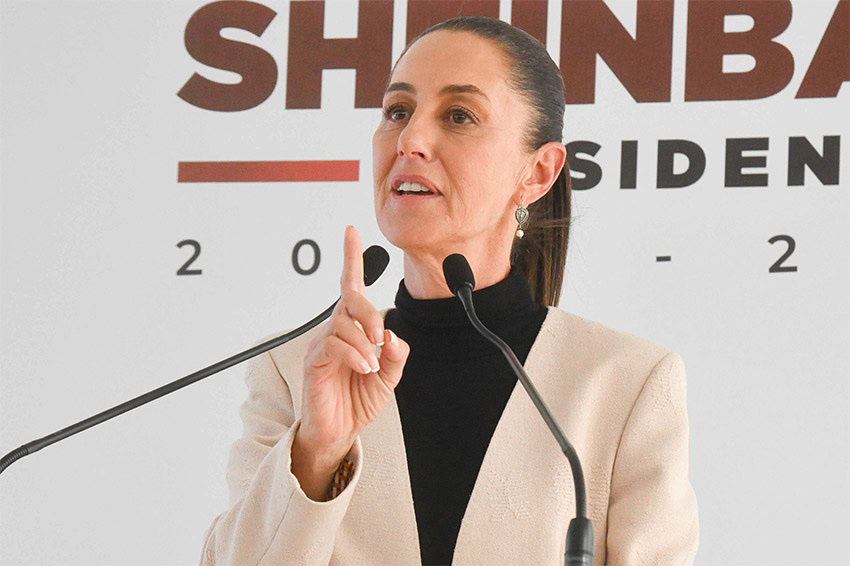
President-elect Claudia Sheinbaum has unveiled her administration’s plan to continue developing passenger train services in Mexico, expanding the country’s railway network by 3,000 to 3,500 kilometers. Much of this expansion will occur in the north.
“We have made the decision to continue building trains,” Sheinbaum said at a press conference on Monday. “Now we are going to head north.”
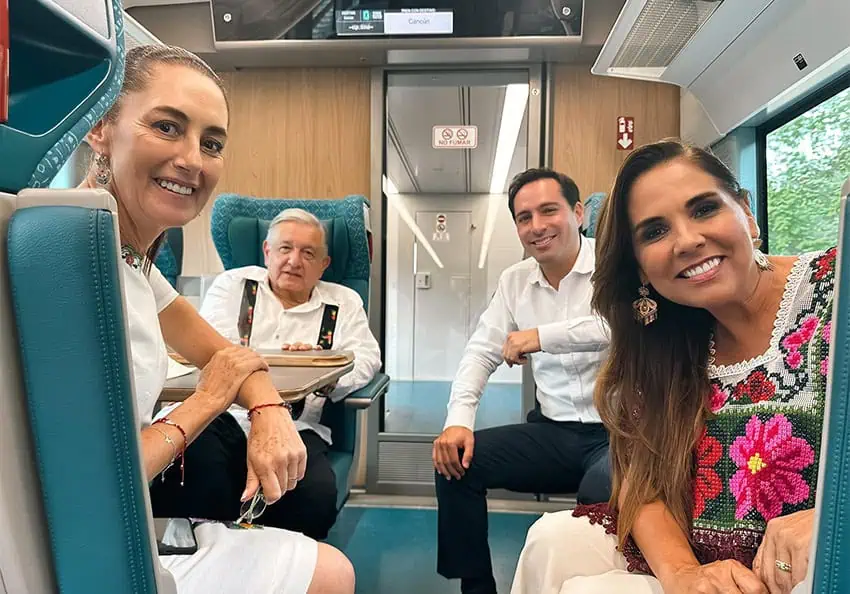
Her announcement followed a weekend in which Sheinbaum, who will assume office Oct. 1, took two rides on the Maya Train with outgoing President Andrés Manuel López Obrador.
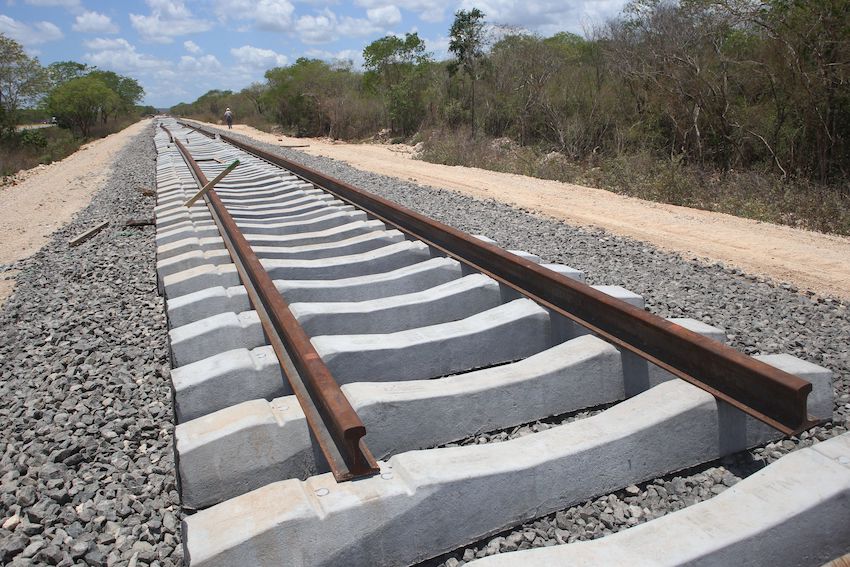
Sheinbaum said she is committed to continuing the AMLO-initiated infrastructure advancements and focus on reviving passenger trains, which includes the yet-to-be-completed Maya Train that traverses the Yucatán Peninsula.
The objective of her plan, which aims to double the 1,500 kilometers of passenger train infrastructure established under the current government, “would be to put [the train] out to tender in 2024, in order to be able to build it in 2025, with the available resources,” she said.
One of the routes would connect Mexico City to Nuevo Laredo, Tamaulipas, via the cities of San Luis Potosí and Monterrey, Nuevo León. Nuevo Laredo is just seven kilometers south of Laredo, Texas, across the United States border.
Sheinbaum said the train projects will follow the model used for the Maya Train — a blend of military engineering and private company oversight. More than 18,000 kilometers of railway tracks that were privatized by former President Ernesto Zedillo in the 1990s will be evaluated for some of the new routes, Sheinbaum added.

The former mayor of Mexico City emphasized that her administration’s National Infrastructure Plan will not only extend passenger train routes but also enhance freight transport connectivity as part of Mexico’s strategic push to attract and promote investments.
According to Sheinbaum’s plan, which is based on President López Obrador’s decree in November making passenger trains a priority for national development, the routes under consideration for passenger and freight services include:
- Mexico City to Querétaro to León to Aguascalientes
- Mexico City to San Luis Potosí to Monterrey to Nuevo Laredo
- Mexico City to Querétaro to Guadalajara
- Manzanillo to Colima to Guadalajara to Irapuato
- Mexico City to Querétaro to Guadalajara to Tepic to Mazatlán to Nogales
Other possible passenger routes include:
- Mexico City to Puebla to Veracruz
- Aguascalientes to Chihuahua to Ciudad Juárez
Other possible freight routes include:
- Mexico City to Veracruz to Coatzacoalcos
- Felipe Ángeles International Airport (AIFA) to Pachuca
- Guadalajara to Tepic to Mazatlán to Nogales
- Aguascalientes to Chihuahua to Ciudad Juárez
Sheinbaum’s plan also seeks to consolidate and expand current train projects, including the Maya Train and the Interoceanic Train. The latter, designed to connect the Gulf of Mexico with the Pacific Ocean, still requires two significant interconnections: a link to the Dos Bocas refinery in Tabasco, and the extension of the Maya Train to Puerto Progreso, Yucatán.
In 2018, the initial cost of the Maya Train was estimated at around 150 billion pesos (US $7.4 billion at the time), but the costs have mushroomed to approximately 480 billion pesos (US $26.8 billion based on current exchange rates).
With reports from Proceso, El Financiero and Forbes