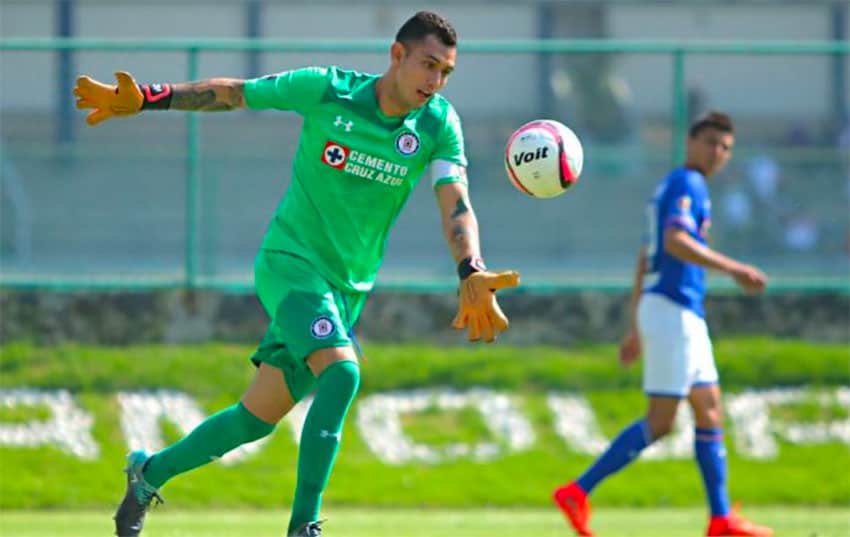
Premier League soccer player Jair Peláez claims that police in México state used extortion to force him to pay 10,000 pesos after a routine traffic stop on his way to Mexico City.
Peláez says police threatened him and his family if he did not pay the officers the money.
According to the soccer player, a goalie for the Cruz Azul Hidalgo team, he was driving from Hidalgo to Mexico City when police stopped him in Cuautitlán Izcalli and told him he had to pay a fine because his vehicle was in violation of the state’s Hoy No Circula anti-pollution regulations, which limit the number of cars on the allowed on roadw in México state on certain days based on their license plate number.
Peláez agreed to drive his car to a location that was supposedly a police station where he could pay his fine, but eventually the situation became worrying, he said on Twitter.
“Arriving at the place, it turned very suspicious,” he wrote. “They asked me to get out of my vehicle. I did so and asked where I could pay the fine and if I had to leave the vehicle at the impound lot where it was. There they began to intimidate and threaten me with doing something to my wife and children.”
According to Peláez, police told him that they would take him to the nearest ATM to withdraw money. Four officers escorted him on foot for about a half hour to two different ATMs.
Police told him that the 10,000 pesos was for Peláez to be able to return to his family “and guarantee that they would be fine,” he said.

He asked his Twitter followers to retweet his post about the incident and also posted photos, saying he hoped that “those responsible would be punished.”
Source: El Universal (sp), Récord (sp)