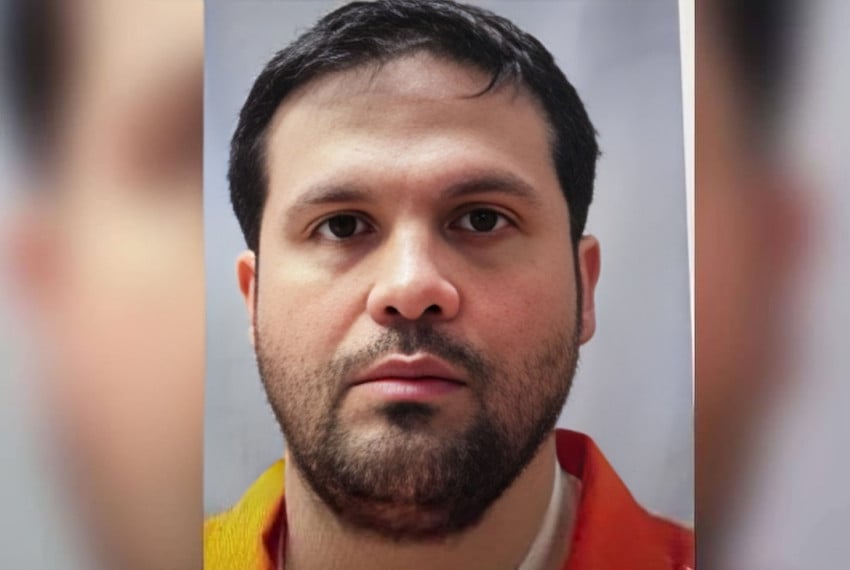
Joaquín Guzmán López, one of the sons of imprisoned drug lord Joaquín “El Chapo” Guzmán Loera, pleaded guilty to drug trafficking in a U.S. federal court on Monday, 16 months after he arrived at a New Mexico airport in the company of Sinaloa Cartel kingpin Ismael “El Mayo” Zambada.
In Federal District Court in Chicago, Guzmán López also acknowledged that he orchestrated the July 2024 kidnapping of Zambada, who pleaded guilty to drug trafficking charges during a court hearing in New York in August.
Joaquin Guzman Lopez — Son of ‘El Chapo’ and a Leader of Sinaloa Cartel — Pleads Guilty to Federal Drug Charges in Chicago https://t.co/cMVc4HCYWh pic.twitter.com/GEYuMUt6Qz
— FBI (@FBI) December 2, 2025
In a statement released a couple of weeks after his arrest at the Doña Ana County International Jetport on July 25, 2024, Zambada said that he was kidnapped and forced onto a U.S.-bound private plane after traveling to Culiacán, Sinaloa, with the belief that he was going to help resolve a dispute between the Sinaloa governor and a former mayor of the state capital. The former mayor, Héctor Cuén, was murdered the same day Zambada was arrested in the U.S.
After Guzmán López pleaded not guilty to drug trafficking charges in late July 2024, the 39-year-old’s lawyer, Jeffrey Lichtman, criticized — but did not refute — an allegation by Zambada’s lawyer that Guzmán López had “forcibly kidnapped” El Mayo and put him on a plane against his will.
Nicknamed “El Güero Moreno,” Guzmán López is one of four sons of El Chapo who are collectively known as “Los Chapitos.”

The four brothers are (or were in the case of two of them) leaders of a Sinaloa Cartel faction of the same name.
‘El Mayo’ releases statement on his arrest: ‘I was kidnapped’
Zambada, a septuagenarian, founded the Sinaloa Cartel with Guzmán Loera and others in the 1980s. Over a period of decades, El Mayo, El Chapo and other Sinaloa Cartel members built a multi-billion-dollar empire on cocaine and heroin, among other drugs, as well as human trafficking.
Prior to his arrest in the United States last year, Zambada had never been taken into custody. Before his kidnapping last year, the United States government was offering a reward of up to US $15 million for information that led to his arrest. Zambada is scheduled to be sentenced on Jan. 12.
Guzmán López’s plea agreement
Guzmán López reached a plea agreement with U.S. authorities that, according to Lichtman, is expected to allow him to avoid a sentence of life imprisonment.
In court in Chicago on Monday, he pleaded guilty to two counts of drug trafficking and continuing criminal enterprise. The New York Times reported that “most of the charges to which Mr. Guzmán López pleaded guilty were in an indictment unsealed in Chicago in April 2023, accusing him of joining his brothers in taking control of their father’s faction of the Sinaloa cartel after a federal judge in Brooklyn sent El Chapo … to prison for life in 2019.”
Dressed in orange prison garb during his court appearance on Monday, Guzmán López told U.S. District Judge Sharon Johnson Coleman in softly-spoken English that he was taking medication for anxiety and that he has a college degree, according to the Chicago Tribune.
When Coleman asked him what he did for a living, he said “drug trafficking,” to which the judge responded: “Oh, that’s your job. All right — there you go.”
Coleman did not set a sentencing date, but asked the parties to provide a status update on June 1, 2026, according to the Chicago Tribune. Assistant U.S. Attorney Andrew Erskine said in court that in exchange for Guzmán López’s ongoing cooperation, prosecutors would recommend a sentence that is more lenient than life imprisonment, but not less than 10 years behind bars. The defendant agreed to forfeit US $80 million as part of his plea deal.
According to the written plea agreement, Guzmán López’s drug trafficking career began “no later than in or about May 2008,” at which time the defendant was 21 years old and his father was at the helm of the Sinaloa Cartel.
The plea agreement states that Guzmán López “together with Ivan Archivaldo Guzmán Salazar, Jesús Alfredo Guzmán Salazar, Ovidio Guzmán López and others, did knowingly and intentionally engage in a continuing criminal enterprise.”
Another section of the 35-page agreement reads: “As a leader of the Sinaloa Cartel, Guzmán López employed individuals and provided security and territory for individuals who oversaw the manufacturing and distribution in Mexico, and the importation from Mexico into the United States for distribution, of large quantities of fentanyl powder and pills.”
He was also involved in the trafficking of large quantities of other drugs to the United States, including cocaine, heroin and methamphetamine. Guzmán López also admitted to bribing officials in Mexico and using firearms and other weapons to commit acts of violence, including murder, “against law enforcement, rival drug traffickers and members of their own trafficking organization.”
Ivan Archivaldo Guzmán Salazar, Jesús Alfredo Guzmán Salazar and Ovidio Guzmán López are brothers of Joaquín Guzmán López and fellow leaders of “Los Chapitos.”
Ovidio, who was extradited to the U.S. in 2023, pleaded guilty to drug trafficking charges in a U.S. federal court in Chicago in July. Ivan and Jesús are fugitives, and presumably continue to run the “Los Chapitos” faction of the Sinaloa Cartel.
The kidnapping of El Mayo
According to Guzmán López’s plea agreement, the kidnapping of Zambada — referred to as “Individual A” in the agreement — and his transfer to the United States occurred as follows:
- Prior to July 25, 2024, Guzmán López arranged for a meeting to take place in Sinaloa involving Zambada and others.
- Guzmán López lured Zambada to the meeting by telling him that his presence was needed to resolve a disagreement in which he “and others” were involved.
- When Zambada arrived at the meeting, Guzmán López asked him to “come speak to him in a private room in the building, in which, unbeknownst to Individual A, Guzmán López had removed the glass from a floor-to-ceiling window.”
- Guzmán López closed and locked the door after he and Zambada entered the room.
- Multiple men who “were working for Guzmán López” subsequently entered the room through the window, handcuffed Zambada and put a bag over his head.
- The armed men then carried Zambada through the window, “and placed him across their laps in the backseat of a waiting pickup truck.”
- Guzmán López got in the truck, which was driven for 10-15 minutes to an air strip where a small plane was waiting.
- The armed men put Zambada on the plane, which Guzmán López and a pilot — whose identity hasn’t been revealed — also boarded. Zambada was “zip-tied to one of the seats.”
- After the plane took off, Guzmán López “prepared a drink with sedatives, some of which he drank himself, and some of which he gave to Individual A.”
- “As Guzmán López had previously directed, the pilot flew the plane from Mexico into the United States, and the plane landed in New Mexico,” where Guzmán López and Zambada were arrested.
What was Guzmán López’s motivation for kidnapping Zambada?
According to the plea agreement, “Guzmán López coordinated and committed the kidnapping of Individual A, among other reasons, in the hopes of receiving cooperation credit from the United States government for himself and his brother [Ovidio].”
“However, Guzmán López acknowledges that the United States government did not request, induce, sanction, approve or condone the kidnapping. Guzmán López further acknowledges that … he will not receive cooperation credit for the kidnapping, nor will his brother,” the agreement states.
The U.S. government denied involvement in the kidnapping plot from the outset.
However, “experts thought it would be virtually impossible to pull off without U.S. authorities having some knowledge,” the Associated Press reported.
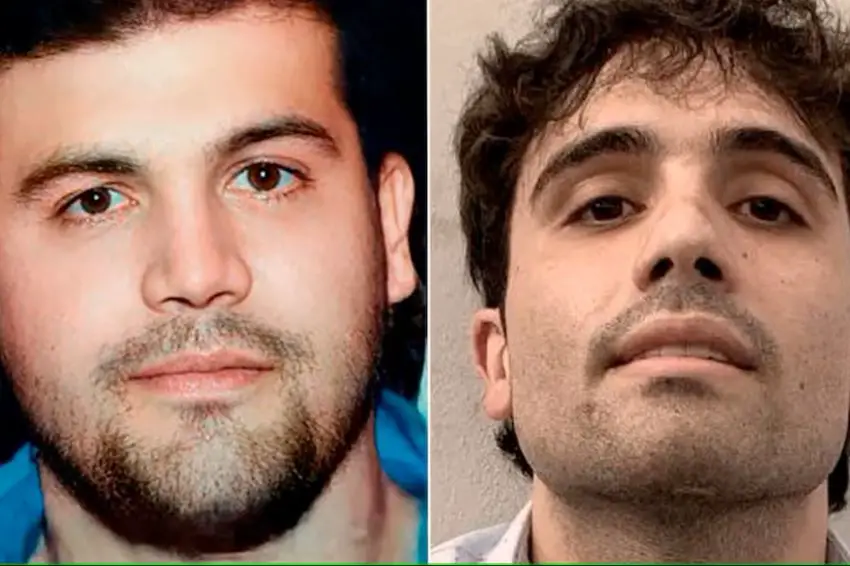
Former Mexican president Andrés Manuel López Obrador and current President Claudia Sheinbaum both asserted that the U.S. government had some kind of involvement in the abduction of Zambada and his subsequent transfer to the U.S.
Shortly before he left office in October 2024, López Obrador asserted that the United States shared blame for the eruption of violence in and around Culiacán because it carried out the “operation” that resulted in the arrest of Zambada, whose “Los Mayos” faction of the Sinaloa Cartel has now been involved in a virtual war against “Los Chapitos” for over a year.
By “operation,” he apparently meant a negotiation with Guzmán López that he believed resulted in the delivery of Zambada to U.S. law enforcement authorities in New Mexico.
In August 2024, Mexico’s Attorney General’s Office said it was investigating whether Guzmán López had committed treason, given that kidnapping a person in Mexico for the purpose of handing him or her over to the authorities of another country constitutes that crime.
The bigger picture
Guzmán López’s guilty plea came amid the Trump administration’s militarized crackdown on drug trafficking to the United States. In recent months, the U.S. military has carried out at least 21 strikes against alleged drug trafficking boats in the Caribbean Sea and the Pacific Ocean, killing more than 80 people. The legality of those strikes has been questioned by legal experts.
Earlier this year, the Trump administration designated a number of Western Hemisphere criminal groups as foreign terrorist organizations (FTOs). The Sinaloa Cartel and the Jalisco New Generation Cartel are among six Mexican organizations that were classified as FTOs.
Last month, U.S. President Donald Trump said he would be willing to launch military strikes against cartel targets in Mexico, just days after Secretary of State Marco Rubio declared that the U.S. wouldn’t be undertaking any unilateral actions in Mexico.
“Would I launch strikes in Mexico to stop drugs? It’s OK with me,” Trump told reporters in the Oval Office on Nov. 17. “Whatever we have to do to stop drugs.”
Sheinbaum has ruled out the possibility of U.S. military action on Mexican soil, and frequently asserts that Mexico would never accept any kind of violation of its sovereignty. In 2025, her government has transferred 55 cartel figures to the United States amid pressure from the Trump administration — including in the form of tariffs — to do more to stem the flow of fentanyl and other drugs across the Mexico-U.S. border. The Mexican government deployed 10,000 National Guard troops to the northern border region earlier this year and has taken a more proactive approach to combating cartels than the administration of ex-president López Obrador, whose so-called “hugs, not bullets” approach to security was criticized by U.S. authorities.
On Sunday, the federal government announced that a well-known fentanyl trafficker and high-ranking operative in the Sinaloa Cartel had been killed during a navy-led operation in Sinaloa. Pedro Inzunza Coronel was wanted in the United States on narco-terrorism, drug trafficking and money laundering charges.
With reports from AP, Chicago Tribune, BBC and The New York Times